We may earn a commission if you buy through links on this page. It never changes a score or a ranking. How we make money
Most 1–10-person teams don't need an AI detector for every draft: use one when editors need a second signal on submitted copy, not as an authorship judge. GPTZero is our best starting point for occasional checks because it has a free tier and starts at $12.99; Originality.ai suits batch review, while Quetext has shared access and a listed $29.98 team plan. Free tiers can help a tiny team assess fit, but budget for seats and human review before treating any score as proof.
Quick picksThe shortlist
 GPTZeroGPTZeroBest free · $12.99/mo
 Originality.aiOriginality.aiBest for batches · $12.95/mo
 QuetextQuetextBest team plan · $14.99/mo
 Winston AIWinston AIBest for publishers · $10/mo
 GrammarlyGrammarlyBest writing workflow · €12/mo
 QuillBotQuillBotBest writing suite · $8.33/mo
 SaplingSaplingBest for integrations · $12/mo
 DupliCheckerDupliCheckerBest budget toolkit · $9.17/mo
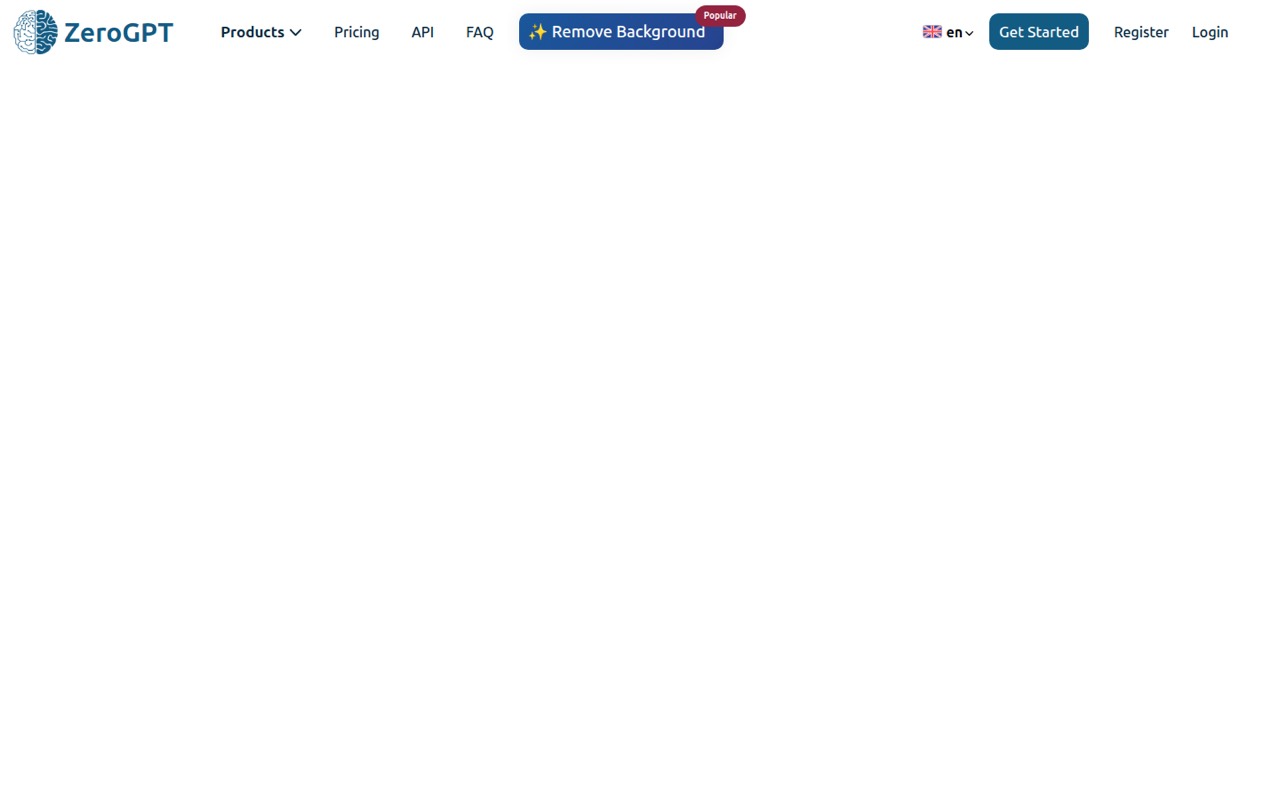
 ZeroGPTZeroGPTBest free toolkit · Free
 PangramPangramBest for editors · $20/mo
 CopyleaksCopyleaksBest for governance · $13.99/mo
 SmodinSmodinBest bundled tools · $10/mo
 iThenticateiThenticateBest for manuscripts · $125/mo
01Compared at a glance
| Tool | Score | From | Free plan | Trial |
|---|---|---|---|---|
| GPTZeroGPTZero | 6.8 | $12.99/mo | Yes | — |
| Originality.aiOriginality.ai | 6.3 | $12.95/mo | Yes | — |
| QuetextQuetext | 7.2 | $14.99/mo | Yes | — |
| Winston AIWinston AI | 5.8 | $10/mo | Yes | 14 days |
| GrammarlyGrammarly | 7.0 | €12/mo | Yes | 2 days |
| QuillBotQuillBot | 7.0 | $8.33/mo | Yes | — |
| SaplingSapling | 6.8 | $12/mo | Yes | 1 month |
| DupliCheckerDupliChecker | 6.3 | $9.17/mo | Yes | — |
| ZeroGPTZeroGPT | 5.8 | Free | Yes | — |
| PangramPangram | 5.8 | $20/mo | No | 7 days |
| CopyleaksCopyleaks | 5.8 | $13.99/mo | No | — |
| SmodinSmodin | 5.8 | $10/mo | No | — |
| iThenticateiThenticate | 6.2 | $125/mo | No | — |
02The picks, in detail
- Best freeGPTZeroGPTZero
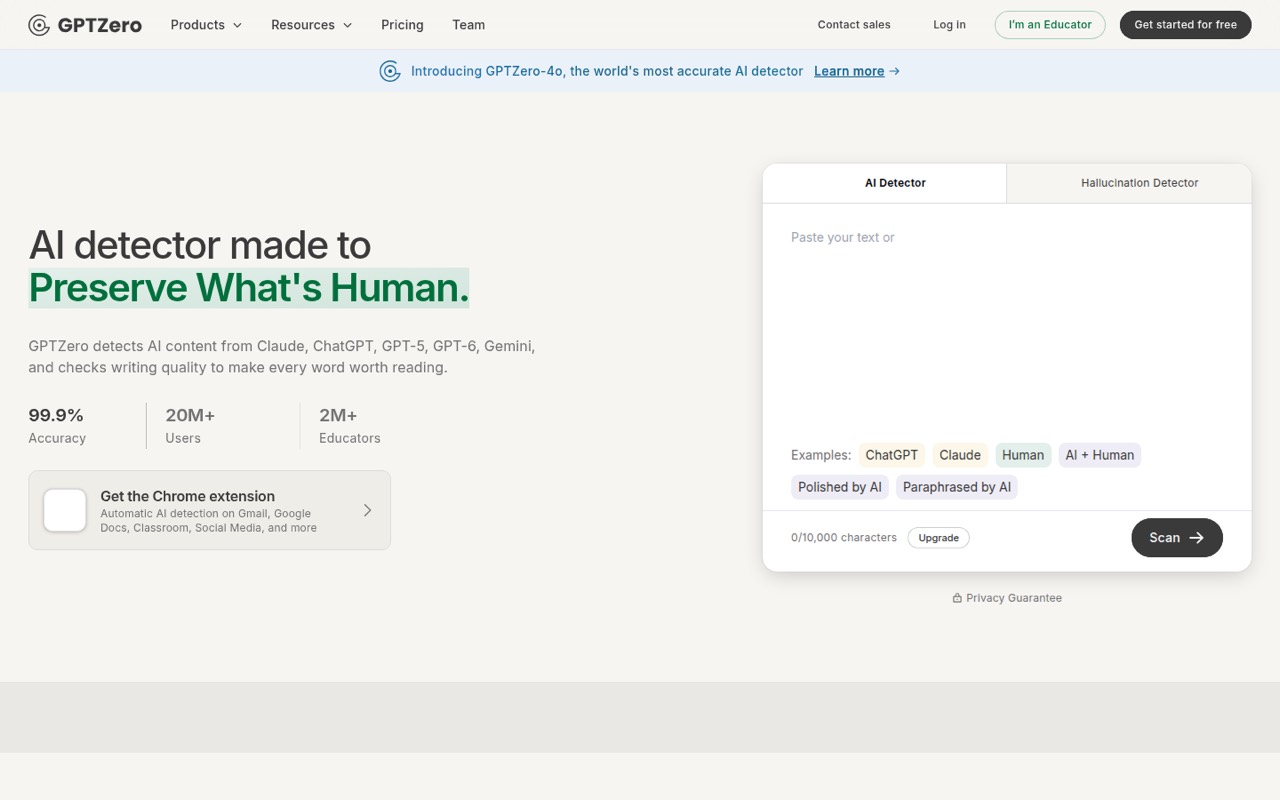
GPTZero is a practical first stop for occasional checks: it has a free tier, and its listed starting price is $12.99. The tool is also aimed at teams that want a second opinion, including educators using Canvas or Google Classroom. Keep its scores as signals rather than verdicts, and confirm the free plan's check limits and paid-seat pricing before rolling it out.
What works
- Free plan includes 10,000 words monthly
- Scans text from several major AI models
- Writing Replay shows typing and paste events
What doesn't
- Free scans cap at 10,000 characters each
- Free plan includes just one Advanced Scan
- Team plan requires at least two seats
- Best for batchesOriginality.aiOriginality.ai
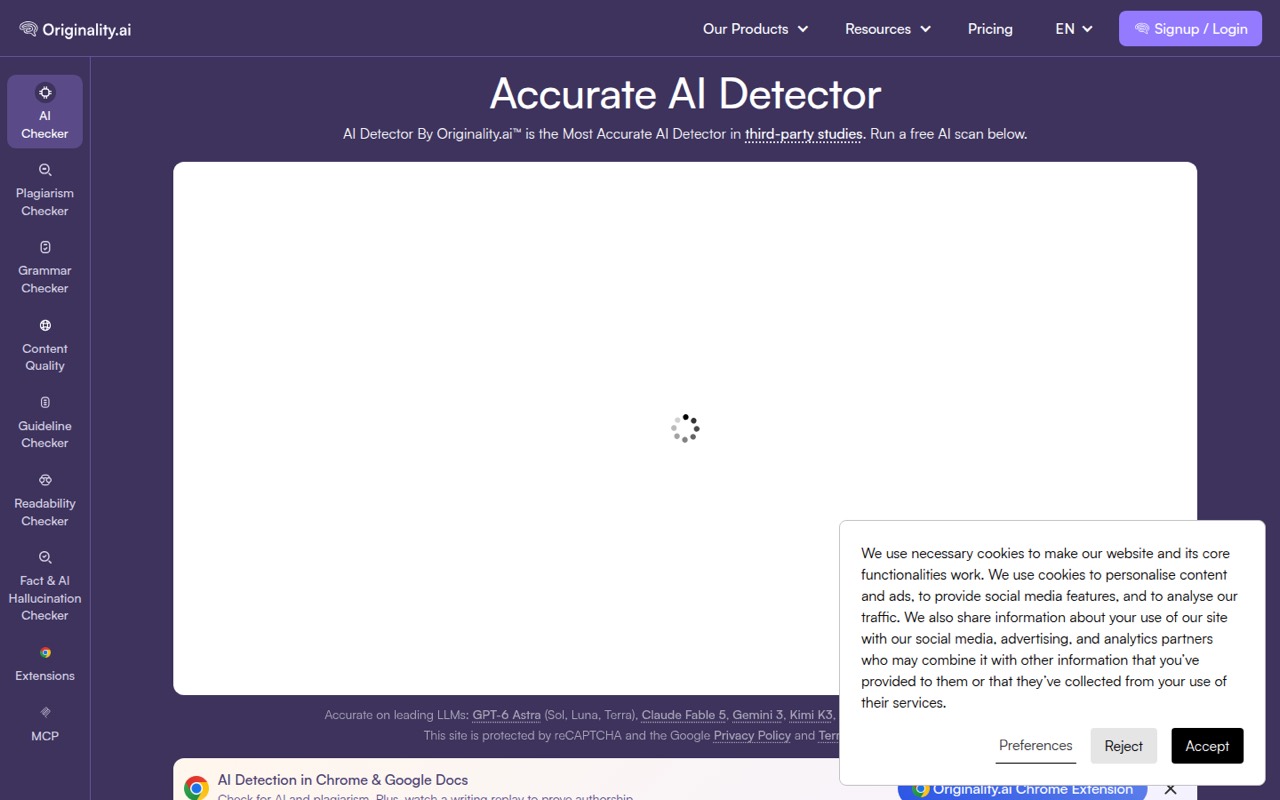
Originality.ai fits agencies and small editorial teams reviewing several pieces, with a range of checks and a free plan. Its listed starting price is $12.95. The key caution: don't use its AI score as standalone proof of authorship. Check how its credits, sharing and billing work for your team before committing; those details affect whether the starting price fits a multi-person workflow.
What works
- Free access includes several writing checkers
- Pro includes Deep Scan and Bulk Scan
- Checks plagiarism, grammar and readability
What doesn't
- Reddit users report false positives
- Detector scores are not proof of authorship
- Pro seat costs add up for teams
- Best team planQuetextQuetext
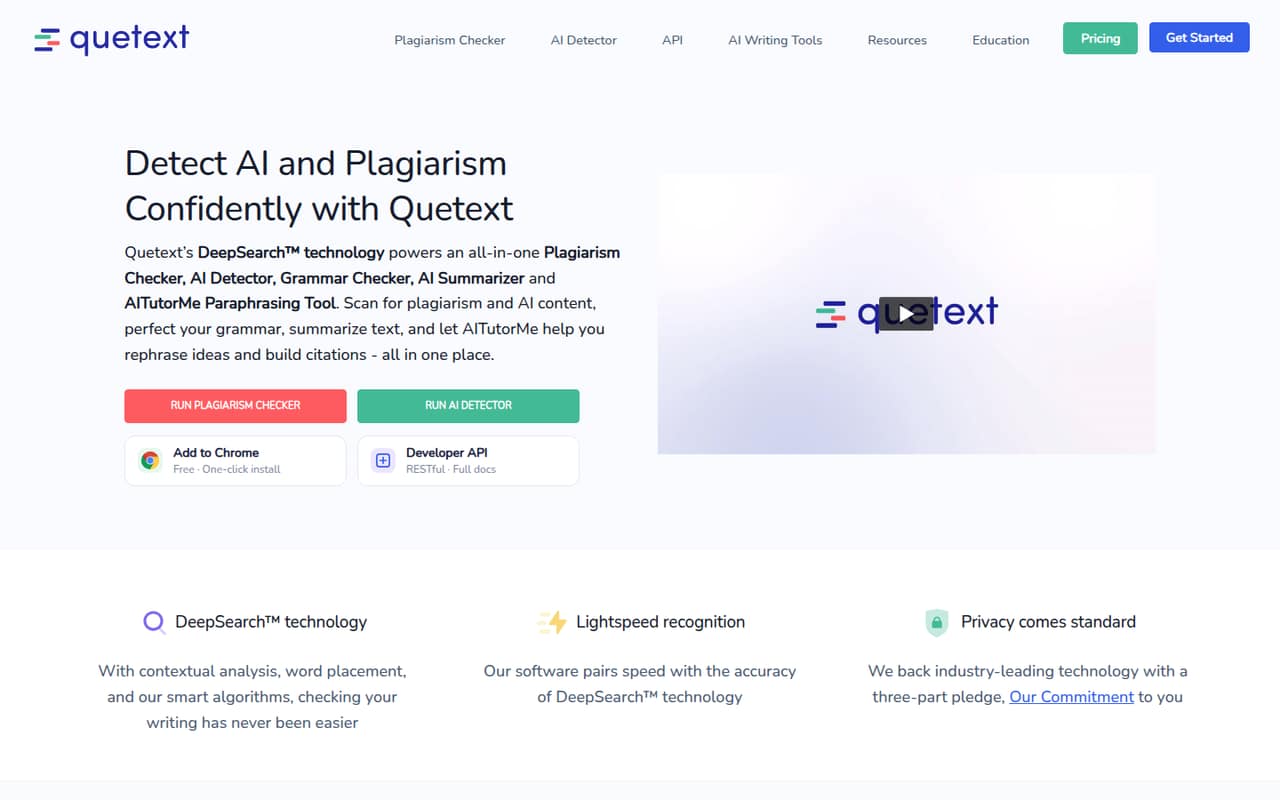
Quetext pairs a free tier with AI and plagiarism checking, and the listed team plan is $29.98. That gives a small team a concrete shared-plan price to compare against per-user options. It is also rated for shared user access. Confirm the plan's member count, check limits and billing period before budgeting; a shared price is useful only if it covers your actual workflow.
What works
- Free plagiarism and AI checks up to 1,000 words each
- Free summarizer covers up to 2,000 words
- ColorGrade distinguishes exact, near-exact, and fuzzy matches
What doesn't
- Free plagiarism and AI checks stop at 1,000 words
- Annual per-month prices and billing interval aren't stated
- Extra-word pricing isn't published
- Best for publishersWinston AIWinston AI
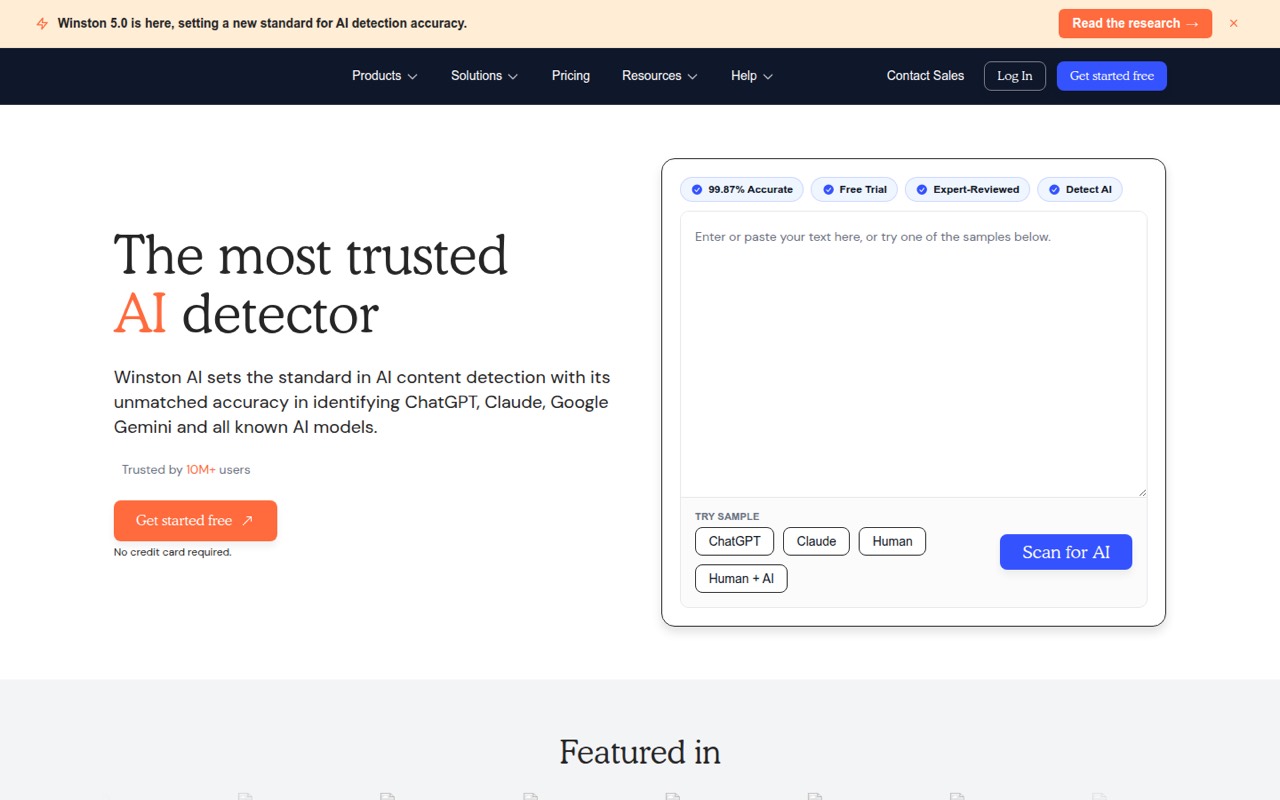
Winston AI suits small publishing and SEO teams that want AI checks alongside OCR and plagiarism checks. It has a free plan and starts at $10. Its detection scores still need human review, so don't turn a flag into an automatic rejection. Before choosing it, ask how its free and paid plans count checks and whether multiple editors can share access.
What works
- AI text and image detection in one tool
- Free plan lists 2,000 trial credits
- OCR covers documents, pictures, and handwriting
What doesn't
- Reddit users report false positives on human writing
- The free offer is limited to 14 days
- Top-up credit prices are not published
- Best writing workflowGrammarlyGrammarly
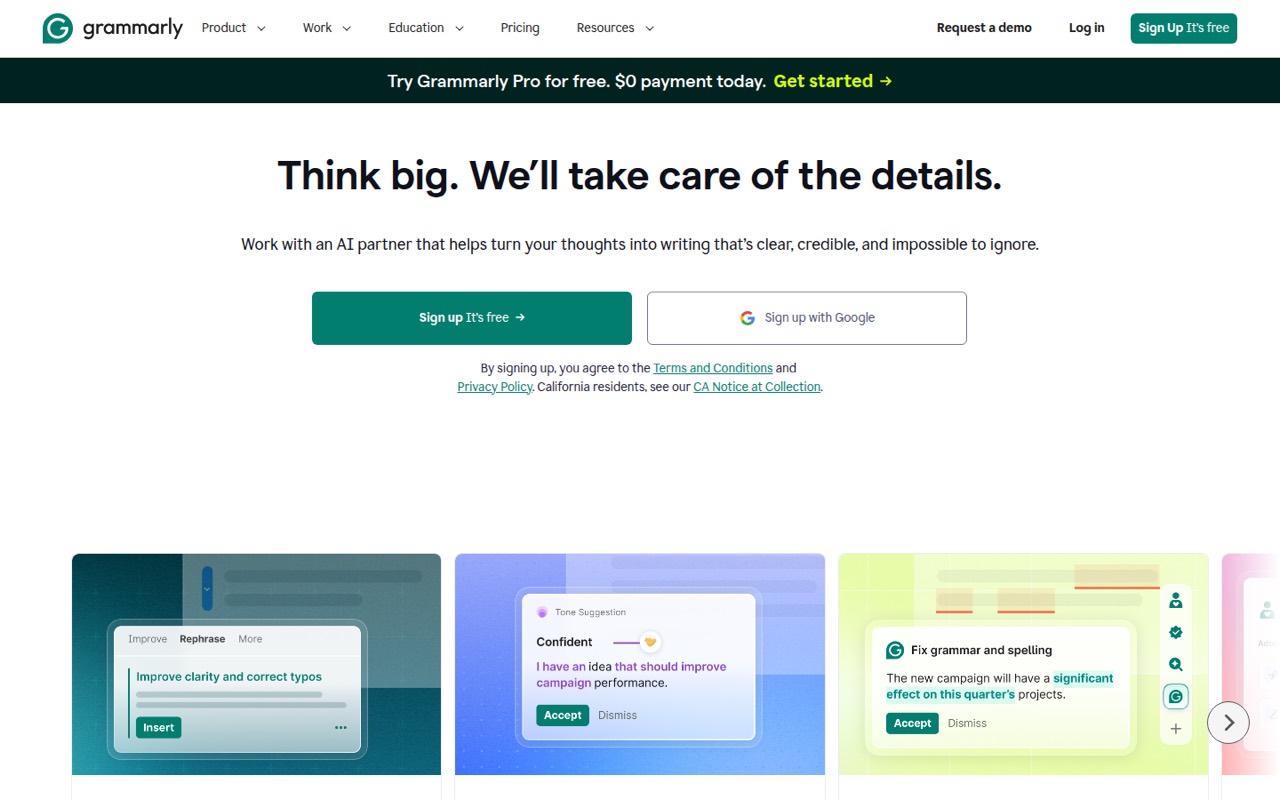
Grammarly is better suited to everyday proofreading and basic brand-tone consistency than detector-first work. Its free plan gives a small team a low-risk way to try those writing tools; the listing gives a $12 starting price and Pro at €12 per member monthly. We wouldn't buy it solely for AI detection based on the described strengths. Confirm which price and currency apply to your team.
What works
- Free plan includes 100 AI prompts monthly
- Works in Zendesk and other text boxes
- Pro adds full-sentence rewrites and tone adjustment
What doesn't
- Pro costs €12 per member monthly
- Free plan has a 100-prompt monthly limit
- Annual plan pricing is not published
- Best writing suiteQuillBotQuillBot
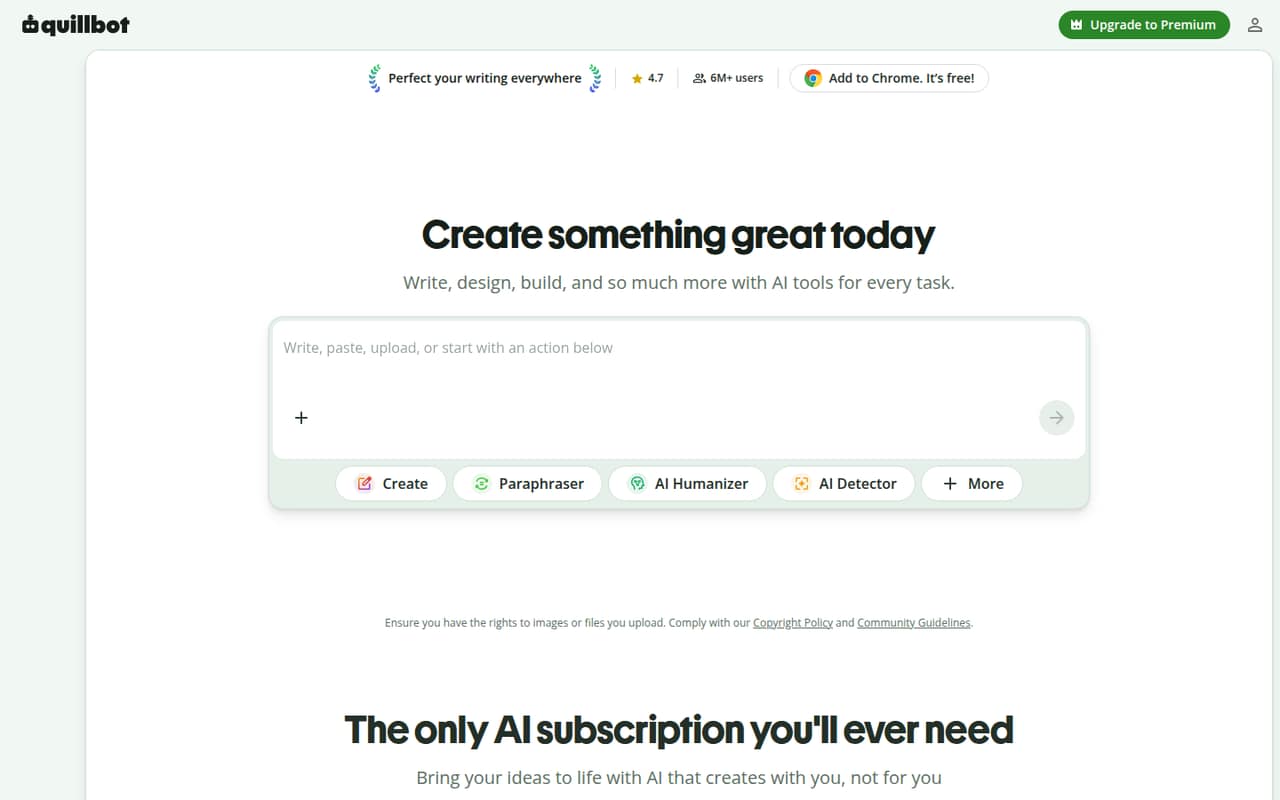
QuillBot brings several writing tools and PDF tools together, with a free plan and a listed starting price of $8.33. That may suit a small team that also paraphrases, but its free limits are tight and its humanizer has caveats. It is not our first pick for detector-only work. Check the limits and team-sharing terms before making it part of an editorial process.
What works
- Combines paraphrasing, grammar, detection, and PDF tools
- Free plan includes basic grammar corrections
- Premium offers unlimited paraphrasing
What doesn't
- Free paraphrases stop at 125 words
- Free plan has no Plagiarism Checker access
- Team requires at least two seats and annual billing
- Best for integrationsSaplingSapling
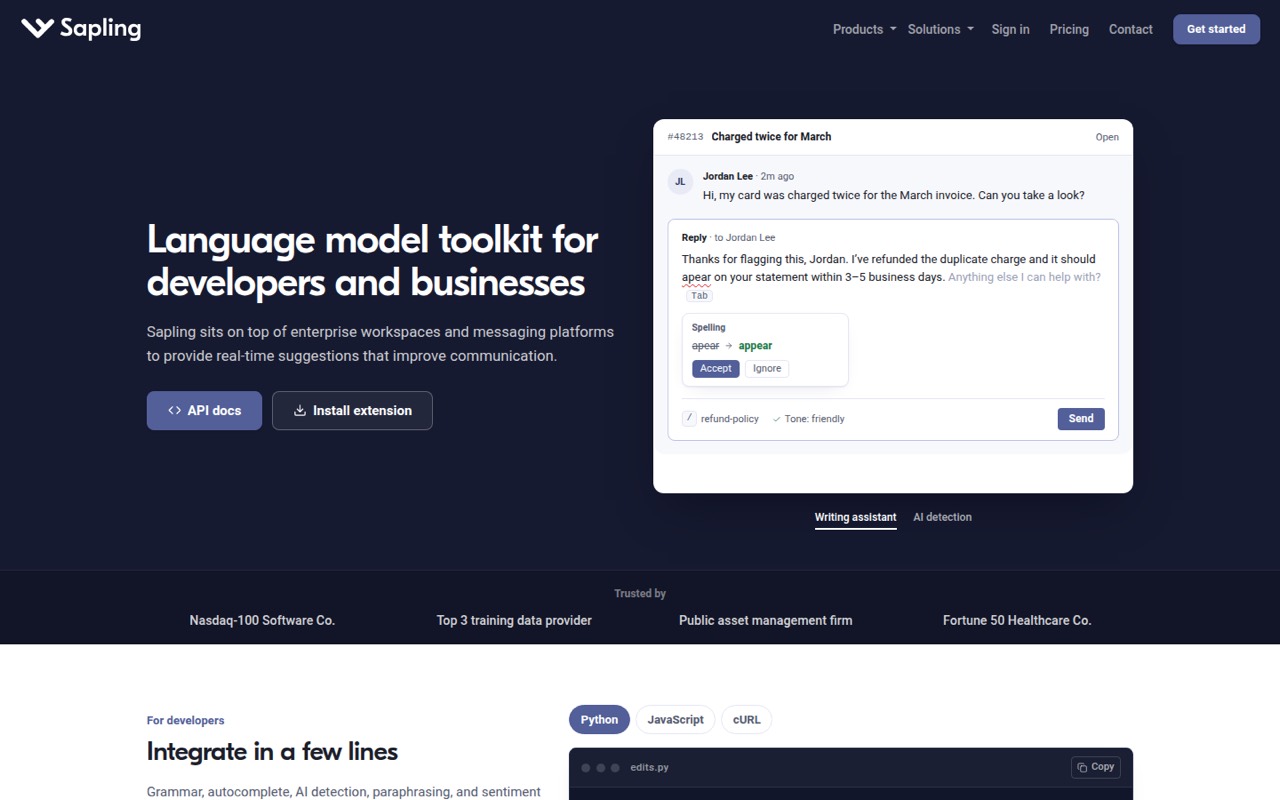
Sapling combines writing suggestions with developer integrations and a free plan; its listed starting price is $12. The main small-team catch is that team plans have a 10-seat floor, so a team with fewer than ten people may pay for seats it doesn't need. Ask the vendor what the plan includes and whether an individual plan supports your workflow before signing up.
What works
- Free plan includes basic writing suggestions
- Free detector checks allow 2,000 characters
- Pro includes unlimited snippets
What doesn't
- Enterprise starts at 10 seats
- Pro costs $25 monthly without annual billing
- API usage is metered by character
- Best budget toolkitDupliCheckerDupliChecker
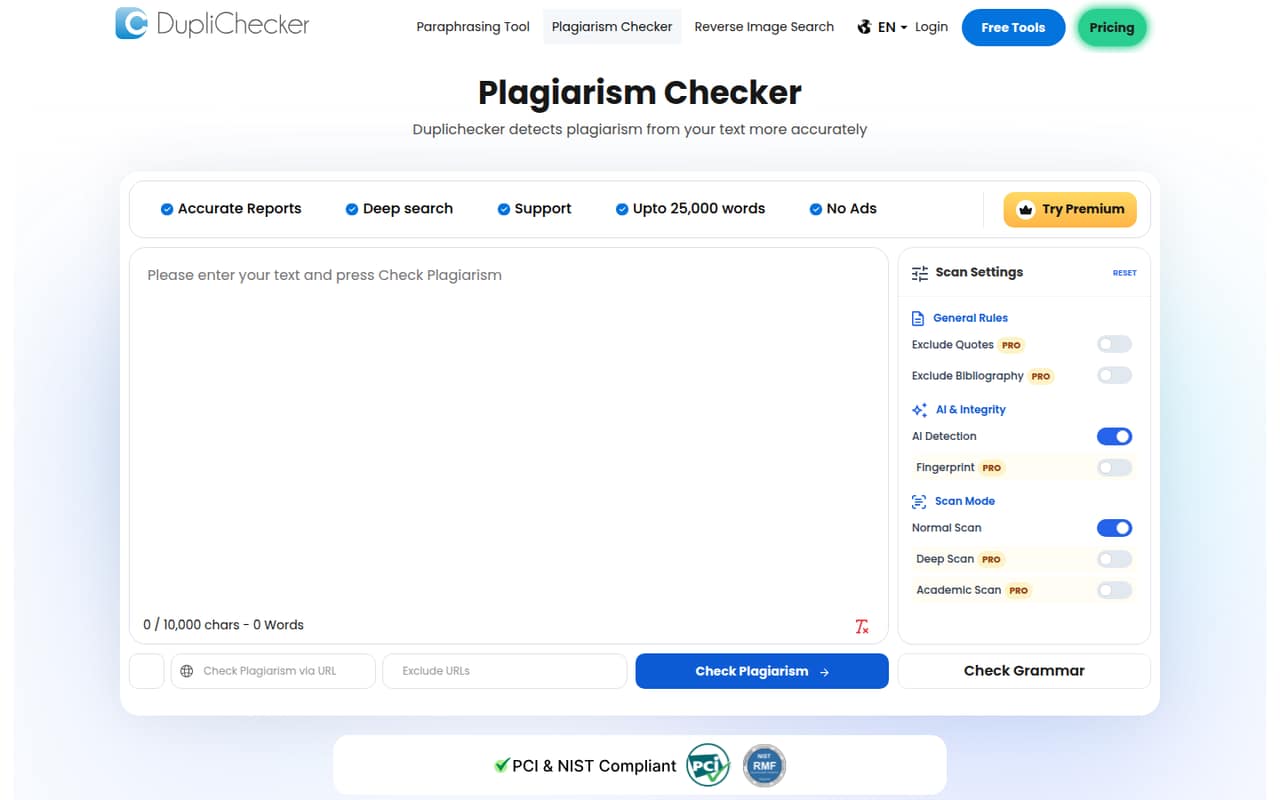
DupliChecker offers a free plan and a listed starting price of $9.17, alongside several writing tools and originality checks. That makes it worth considering for occasional checks on a tight budget. Its plagiarism flags should be verified elsewhere when the decision matters. Ask how its plans count checks and whether a few editors can use one account before relying on it across a team.
What works
- Accepts pasted text and several document formats
- Scans up to 25,000 words per search
- Includes paraphrasing and grammar tools
What doesn't
- Free-plan limits aren’t published
- Entry monthly plan has no seats listed
- Three-seat monthly plan costs $40
- Best free toolkitZeroGPTZeroGPT
ZeroGPT offers a free writing toolkit for occasional checks, which can suit a small team that doesn't want to commit to a paid plan. Its paid starting price is not listed, so don't build a future budget around an assumed upgrade cost. Treat the AI score as a signal, not proof, and confirm the free plan's limits and any paid pricing directly with the vendor.
What works
- Free plan costs $0
- 15,000 characters per detection scan
- Includes a humanizer and plagiarism checker
What doesn't
- Personal and Business / EDU prices aren't published
- Free plan allows zero batch files
- Free plagiarism check is limited to 300 words once
- Best for editorsPangramPangram
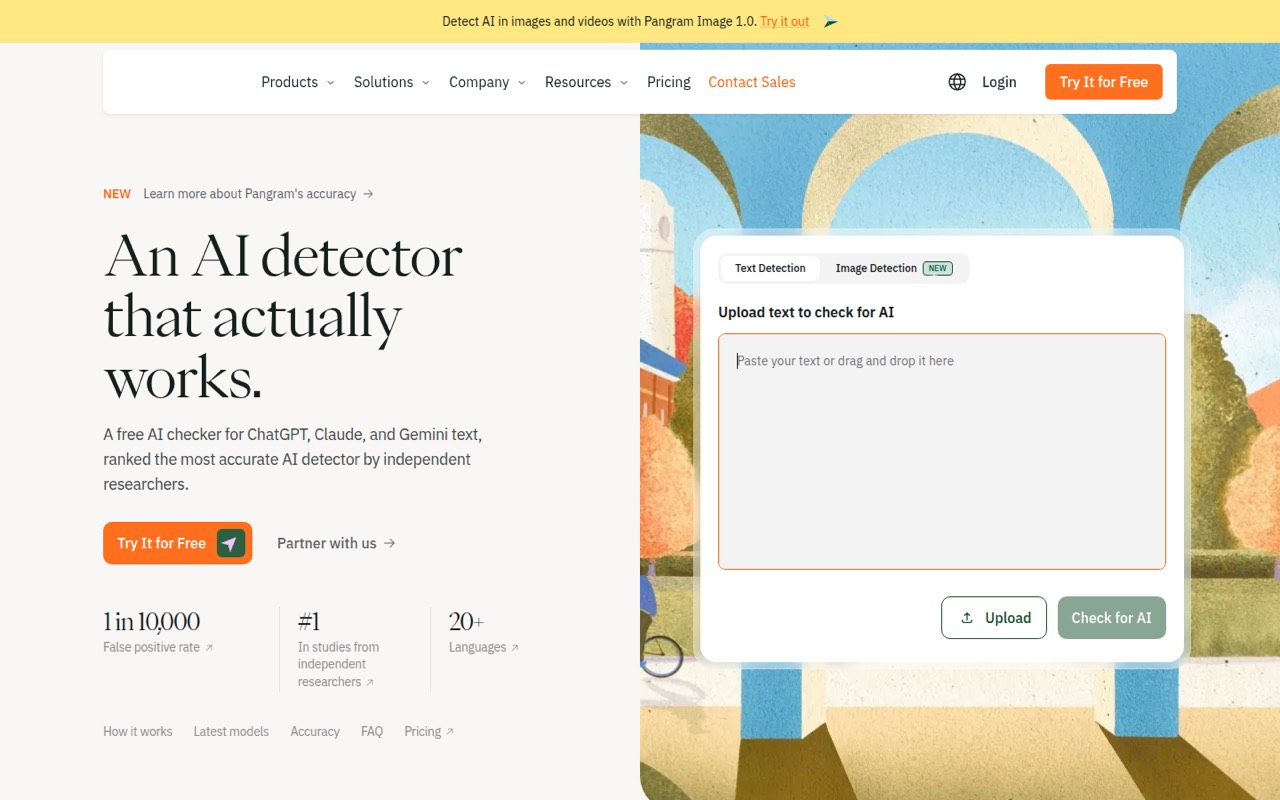
Pangram offers a seven-day trial, paid plans starting at $20, shared billing and checks for text and images. Those features may suit editors who need a more coordinated review process. There are also real concerns about false positives, so a human should review flags before they affect a writer. Confirm the trial terms, plan limits and cost for your number of users.
What works
- Checks text, images and videos
- Combines AI detection and plagiarism checks
- Highlights AI-assisted edits
What doesn't
- No free plan
- Individual starts at $20 monthly
- Trial inclusions are not published
- Best for governanceCopyleaksCopyleaks
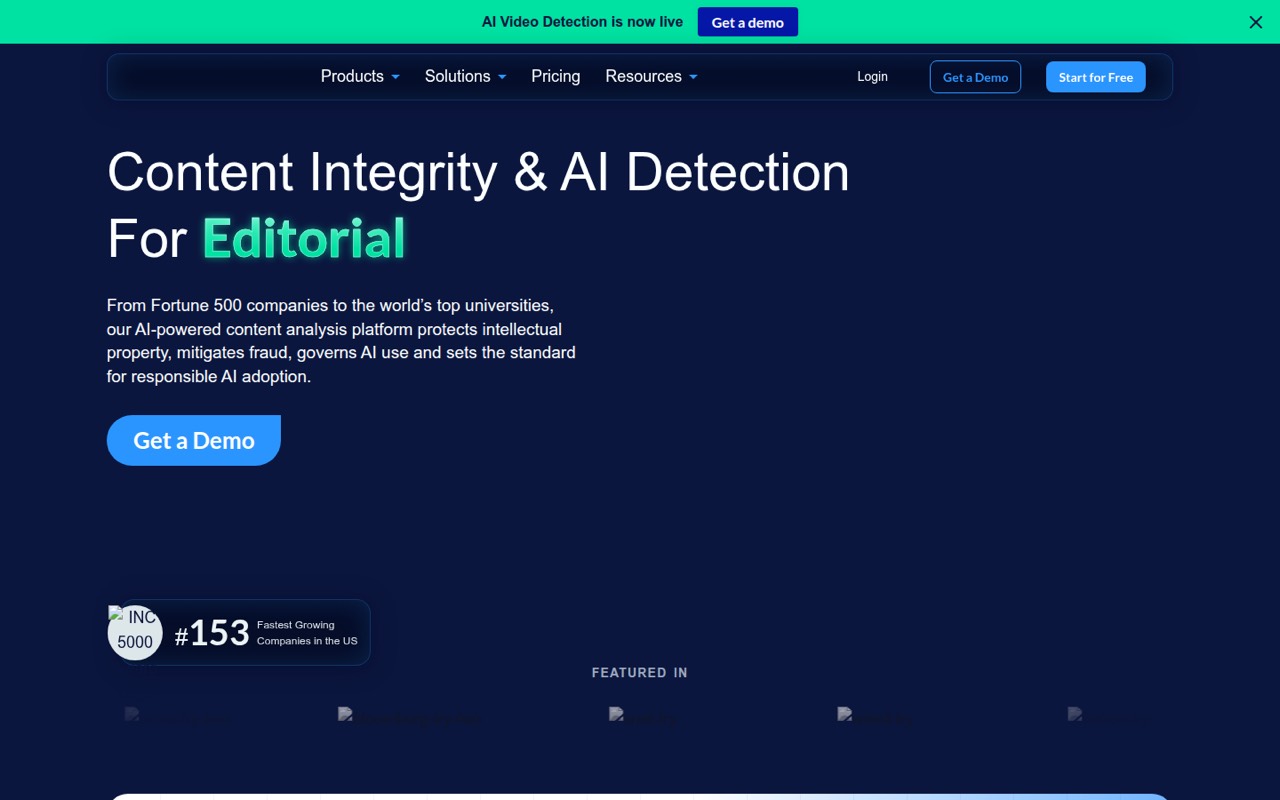
Copyleaks covers text and code detection, LMS integrations and governance needs, with a listed starting price of $13.99. It has no free tier, which makes it harder for a small team to check fit before paying. User reports also make this a cautious purchase. Ask for a suitable trial or demo, and confirm seat costs and review options before relying on its results.
What works
- Checks AI-generated text in 30+ languages
- Plagiarism detection covers 100+ languages
- Personal includes browser and Google Docs tools
What doesn't
- No free plan or published free trial
- Pro costs the same for up to 25 seats
- Extra seat prices are not published
- Best bundled toolsSmodinSmodin
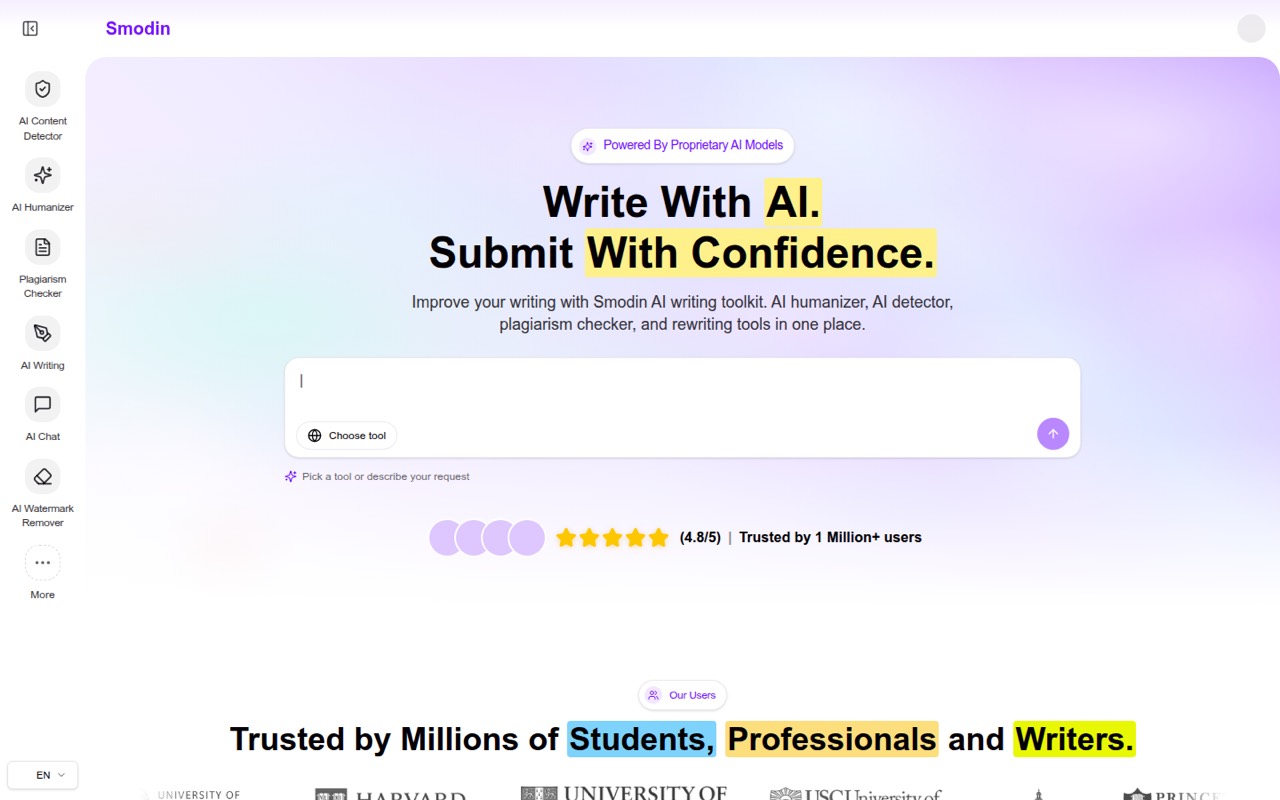
Smodin bundles several AI writing tools and plagiarism checks, with plans starting at $10. It may fit a small team with steady writing work, but there is no free plan to try and the listed pricing is per seat. That can add up as editors join. Ask about check limits, billing terms and whether every person who reviews work needs a paid seat.
What works
- Detection, humanizing, plagiarism checks, and drafting in one platform
- Starter includes standard writing tools and AI chat
- Premium adds a Chrome extension and extended API access
What doesn't
- No free plan or free trial is listed
- Starter writing output is limited
- Team seat billing and collaboration details are not published
- Best for manuscriptsiThenticateiThenticate
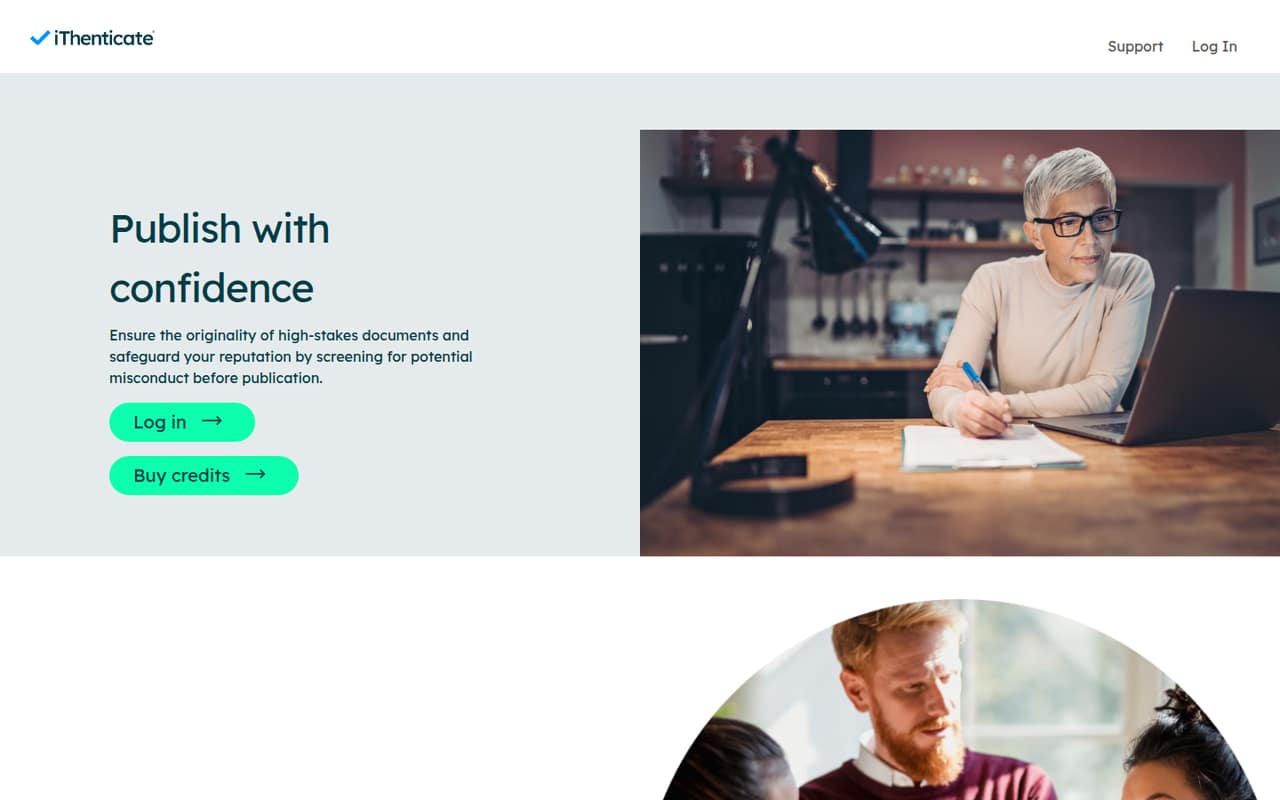
iThenticate is aimed at researchers, publishers and institutions screening high-stakes manuscripts, with AI detection among its uses. Its listed starting price is $125 and there is no free tier. It does not offer individual AI detection, which limits its fit for a small team checking ordinary web copy. Confirm the purchase terms and workflow requirements before budgeting for it.
What works
- Single package covers one manuscript up to 25,000 words
- Multiple package covers up to three manuscripts
- Multiple can cover one manuscript up to 75,000 words
What doesn't
- No free plan or trial is listed
- Cheapest package costs $125 per purchase
- Individual packages exclude AI writing detection
03How we chose
We weighed detector relevance, free plans, listed starting prices and whether the descriptions support a shared team workflow. For a team of 1–10, a free option or clear team price matters; a 10-seat minimum can change the cost. We considered setup clues such as named integrations, but no setup time is stated here, so ask vendors what onboarding involves. Documentation and Reddit sentiment can add context on limits and false-positive handling, but they don't establish accuracy. We did not run tests or benchmarks.
04Check the free plan and the real seat cost
A free plan is useful for checking whether a tool fits your review workflow, but don't assume it covers a whole team. Ask how many checks or credits are included, whether limits reset, and whether several editors can share access. Those allowances aren't specified for most options here.
Starting prices also need context. Grammarly lists Pro at €12 per member monthly, while Quetext lists a $29.98 team plan. Sapling's team plans have a 10-seat floor, a poor match if you have only a few reviewers. For other tools, confirm whether the listed starting price is per person, per account or tied to a billing period. Multiply a per-seat price only after confirming the number of paid users your workflow requires.
05Treat a detector flag as a reason to review
A detector score should start a conversation, not settle one. Originality.ai's AI score shouldn't be used as standalone proof of authorship; GPTZero's scores are signals, not verdicts; and Winston AI's scores need human review. Pangram has reported concerns about false positives, so check how the vendor expects editors to handle a flag before using it in a high-stakes decision.
Keep a human review step in your process: compare the flagged passage with the writer's brief, sources and revision history, then ask the writer for context. Don't reject or penalize work on one score alone. Before buying, ask about false-positive handling, how to appeal a result, and what guidance the vendor gives editors. For tools with integrations, confirm setup and access requirements; don't assume onboarding is instant.
Questions people ask
Can an AI detector prove that a person used AI?
No. Treat a detector result as a signal for further review, not proof of authorship. Originality.ai specifically should not be used as standalone proof, and GPTZero's scores are described as signals rather than verdicts. Ask the writer for context and review the work before making a decision.
Which AI detector has a free plan?
The listed free-plan options include Grammarly, QuillBot, Originality.ai, GPTZero, Winston AI, ZeroGPT, Sapling, DupliChecker and Quetext. Free-plan limits aren't specified for most of them here, so check the vendor's current terms for check or credit allowances and account sharing.
How much does an AI detector cost for a small team?
Listed starting prices range from $8.33 for QuillBot to $125 for iThenticate among these picks; Quetext lists a $29.98 team plan. Prices may not be comparable without knowing billing periods and seat rules. Confirm the cost for your number of users and expected checks before budgeting.
What should we do when a detector flags a draft?
Have an editor review the flagged passage rather than treating the score as a verdict. Compare it with the brief and supporting sources, and ask the writer for context. Before adopting a tool, ask the vendor how it handles false positives and what review or appeal process it recommends.