We may earn a commission if you buy through links on this page. It never changes a score or a ranking. How we make money
A small team only needs a communications API platform if it’s adding calls, messages, video, or real-time features to its own product. For a low-cost start, Daily and Telnyx list free plans; Twilio is a broader option, with a listed starting price of $15 and a free plan. Those prices aren’t per-seat quotes: usage can shape the bill, and building with APIs takes developer time. We’d match the tool to the channel you need, check its usage charges, and avoid paying for a wider toolkit than your product will use.
Quick picksThe shortlist
 DailyDailyBest for small teams · Free
 TelnyxTelnyxBest free APIs · $5,000/mo
 TwilioTwilioBest broad coverage · $15/mo
 GupshupGupshupBest for messaging · Free
 ClickSendClickSendBest for SMS alerts · $0.03/mo
 AblyAblyBest for app features · $29/mo
 AgoraAgoraBest for real-time media · Free
 LiveKitLiveKitBest for voice AI · $50/mo
 ZadarmaZadarmaBest small phone system · Free
 Amazon Simple Notification Service (SNS)Amazon Simple Notification Service (SNS)Best for notifications · Free
01Compared at a glance
| Tool | Score | From | Free plan | Trial |
|---|---|---|---|---|
| DailyDaily | 7.3 | Free | Yes | — |
| TelnyxTelnyx | 7.0 | $5,000/mo | Yes | — |
| TwilioTwilio | 7.1 | $15/mo | Yes | 14 days |
| GupshupGupshup | 6.4 | Free | Yes | — |
| ClickSendClickSend | 6.5 | $0.03/mo | No | — |
| AblyAbly | 7.8 | $29/mo | Yes | — |
| AgoraAgora | 6.8 | Free | Yes | — |
| LiveKitLiveKit | 8.1 | $50/mo | Yes | — |
| ZadarmaZadarma | 7.1 | Free | Yes | — |
| Amazon Simple Notification Service (SNS)Amazon Simple Notification Service (SNS) | 5.0 | Free | Yes | — |
02The picks, in detail
- Best for small teamsDailyDaily
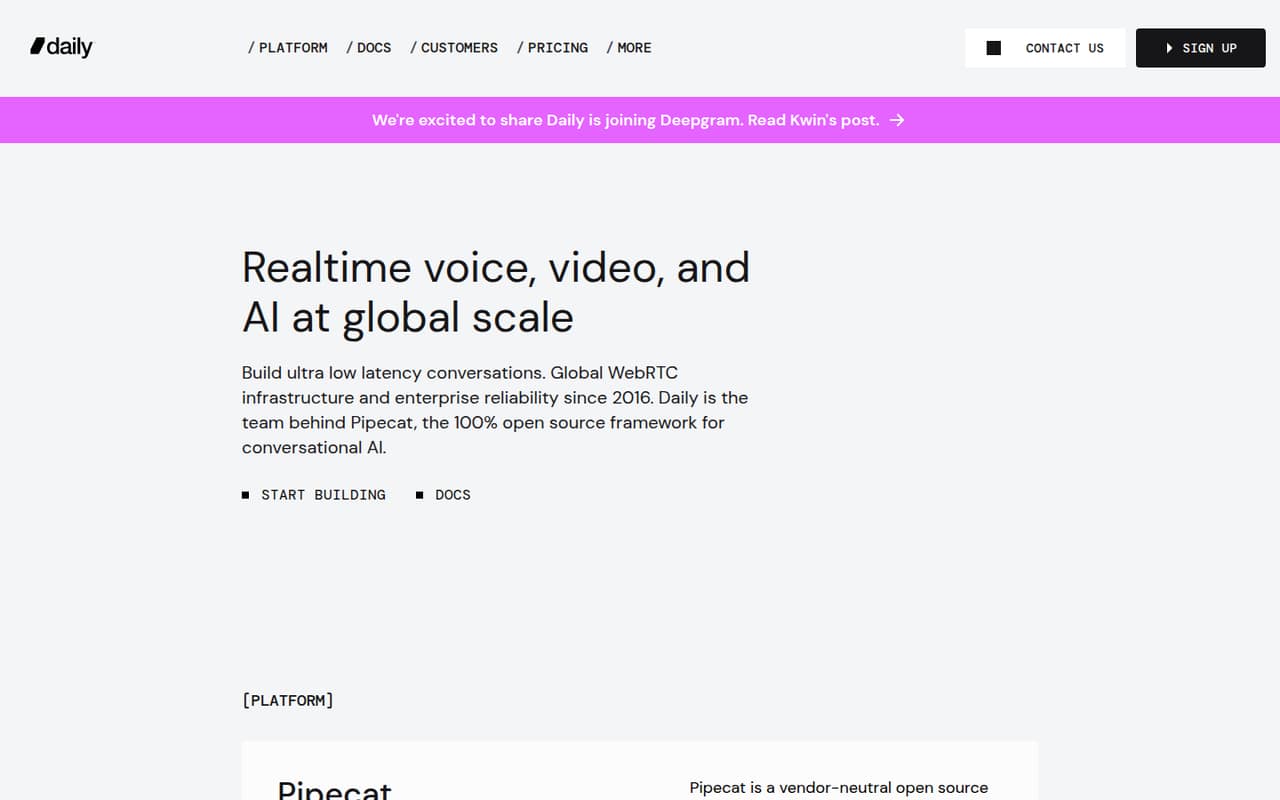
Daily tops our list for teams adding calls or building voice AI that want to start without a listed entry price: its starting price is $0, and it has a free plan. The trade-off is engineering work and a bill tied to participant-minutes, so it suits teams that can build and keep an eye on usage rather than buyers looking for a fixed per-seat subscription.
What works
- 10,000 participant-minutes included monthly
- No recurring base fee listed
- Usage-based pricing, not seat-based
What doesn't
- Monthly cost changes with call usage
- No per-seat price for budgeting
- No annual price listed
- Best free APIsTelnyxTelnyx
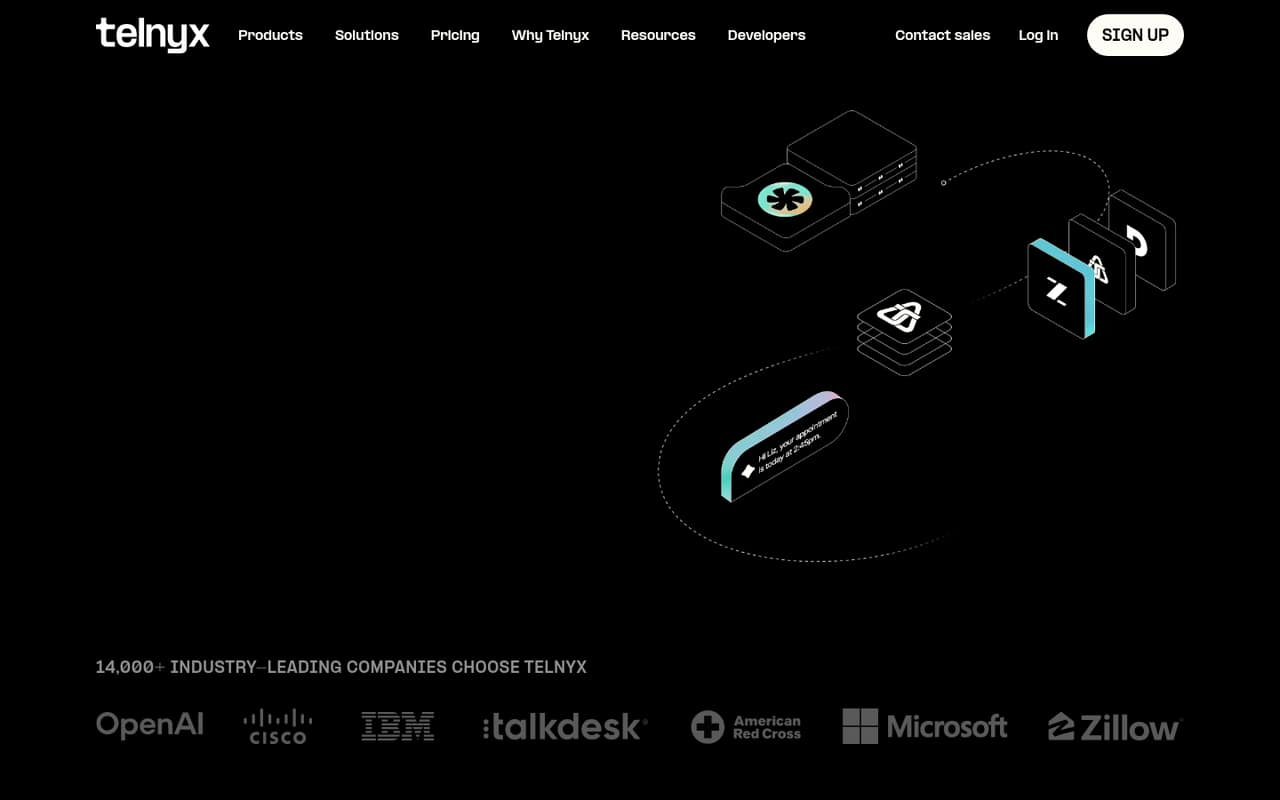
Telnyx lists a free plan and a $0 starting price, making it a reasonable first look for developers building real-time agents or working with carrier APIs. Its summary also includes AI inference, but the small-team fit depends on usage billing and the technical work of building with APIs. Confirm the charges for your expected traffic before treating the starting price as a budget.
What works
- Voice, messaging, numbering and inference share one platform
- Pay as you go has no contract requirement
- Automatic tier discounts as usage grows
What doesn't
- No free plan or free trial is listed
- Usage costs make monthly bills harder to predict
- Volume rate requires a custom forecast and commitment
- Best broad coverageTwilioTwilio
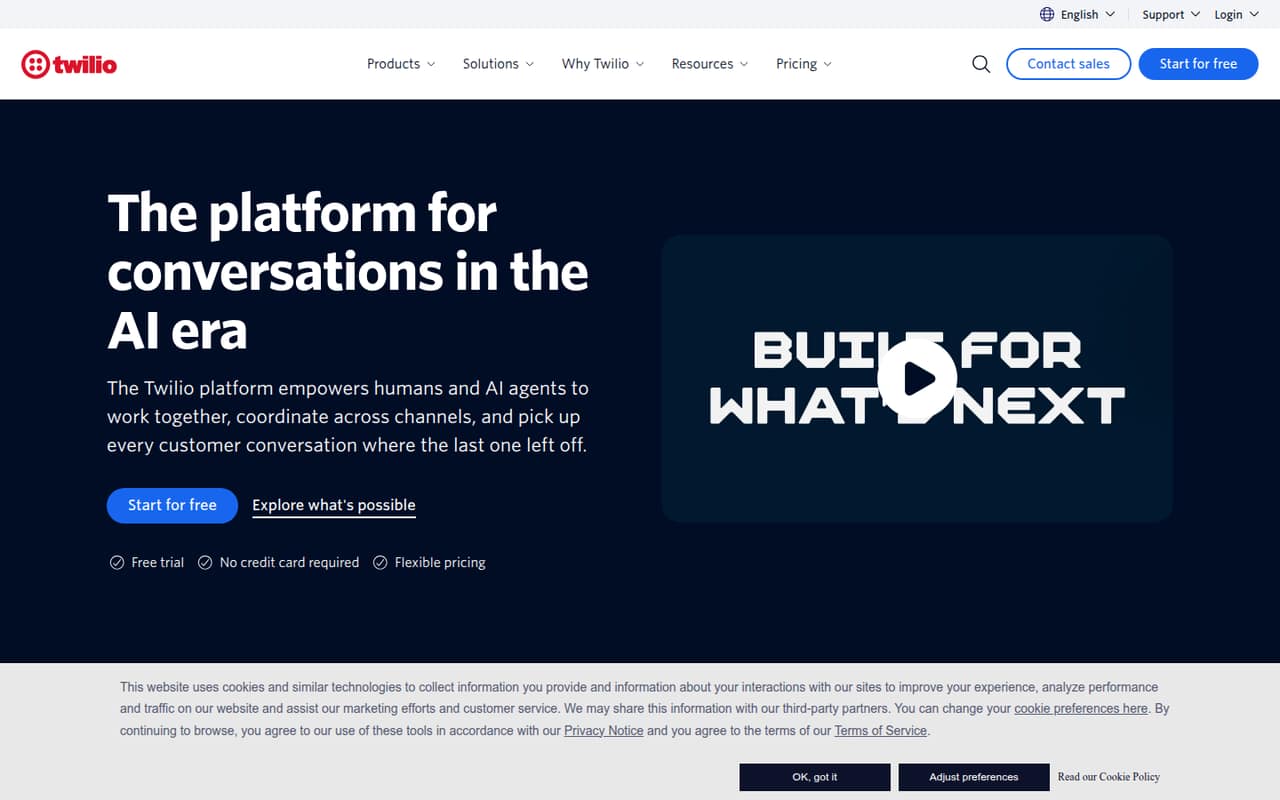
Twilio is a fit when a product needs several communication channels rather than a single-purpose API. The pricing summary lists a free plan and a starting price of $15. That is not a per-seat quote, and teams need to manage both setup and usage costs. It’s worth comparing if your developers want broad APIs, but a narrower tool may be easier to budget.
What works
- APIs cover messaging, email, voice, and authentication
- SMS starts at $0.0083 per message
- Free account signup and some free usage tiers
What doesn't
- No single all-in price for a complete setup
- Messaging verification can delay launch
- SMS restrictions may frustrate some senders
- Best for messagingGupshupGupshup
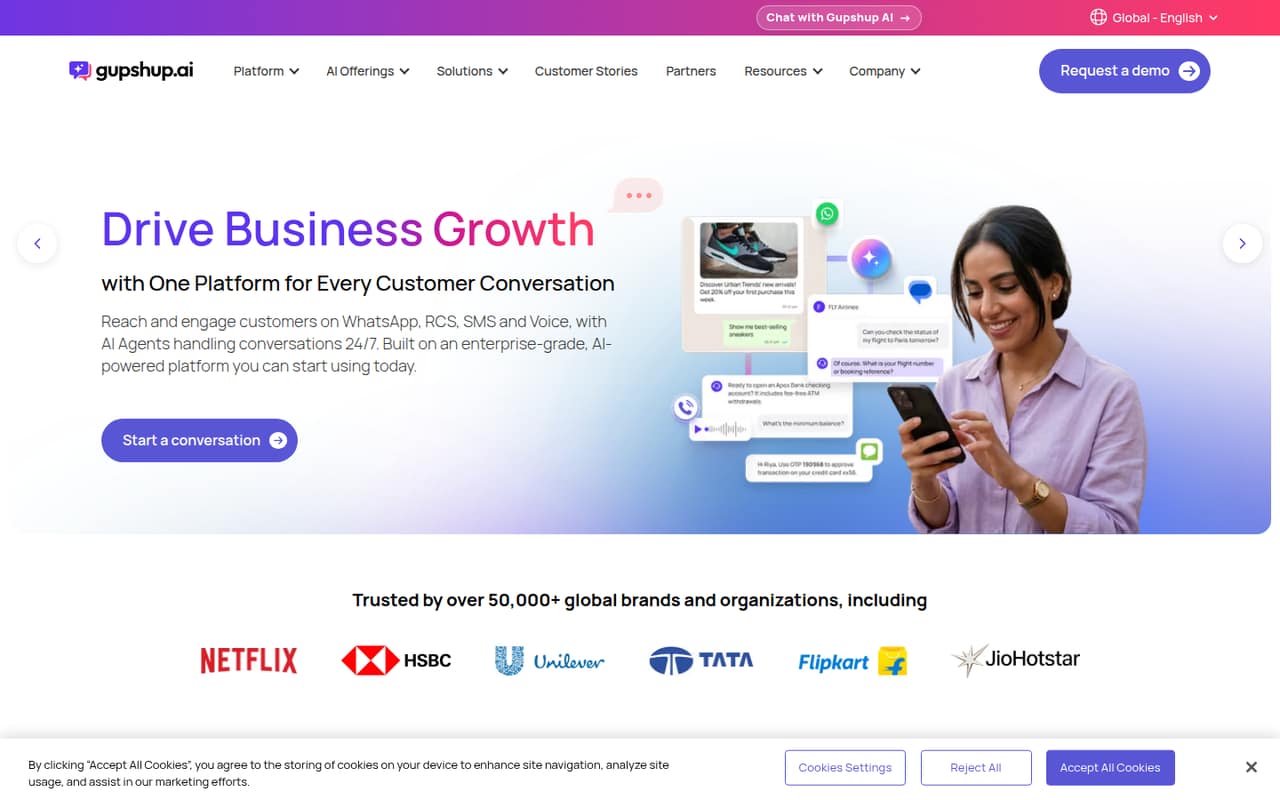
Gupshup lists a $0 starting price and suits teams automating customer conversations across several messaging channels. It can also support teams adding AI assistance. The catch is that the real bill depends on message volume and fees beyond Gupshup, so the starting price alone won’t tell a ten-person team what it will spend. Ask for a cost estimate based on your channels and expected volume.
What works
- No monthly platform subscription fee on Self-Serve
- Supports WhatsApp, Instagram, SMS, RCS and Voice
- AI agents can handle customer conversations
What doesn't
- No free plan or published free trial
- Meta/WhatsApp fees are billed on top
- Enterprise seat and usage limits are not published
- Best for SMS alertsClickSendClickSend
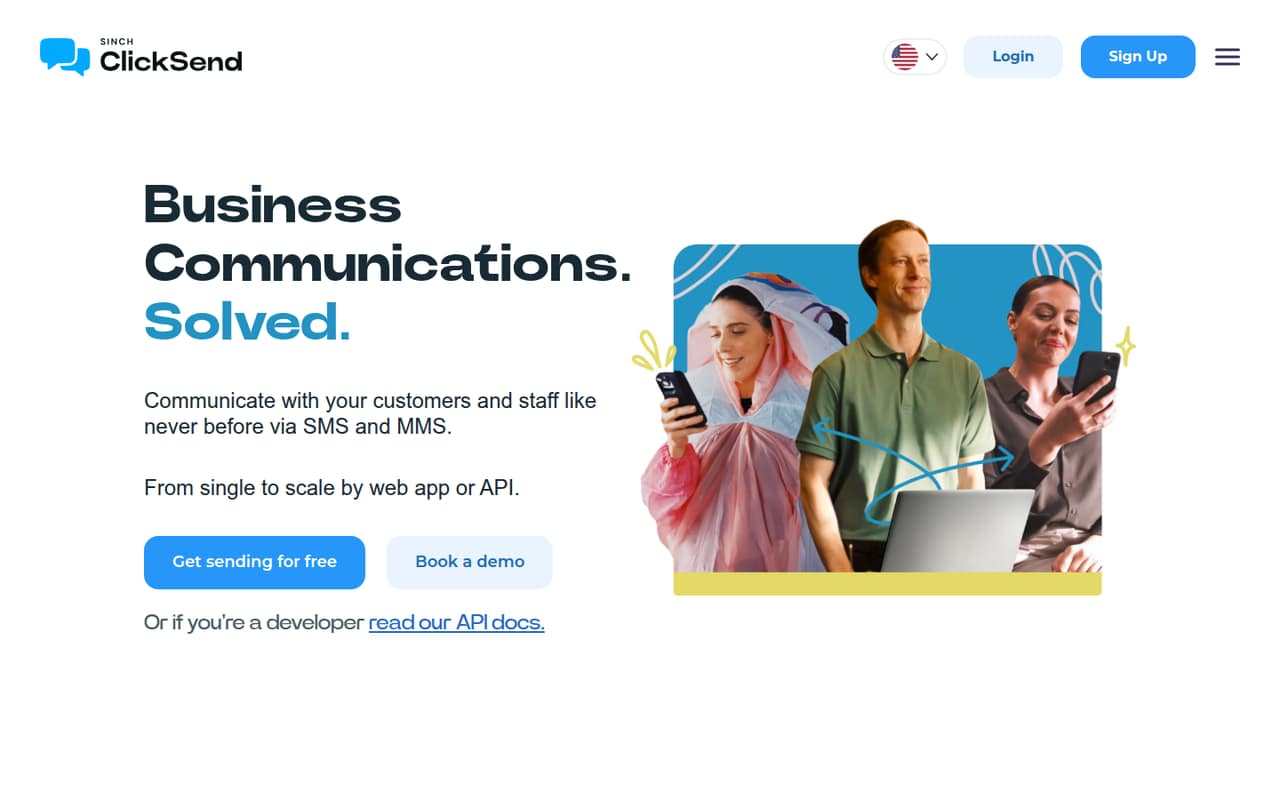
ClickSend is worth a look for customer alerts or small SMS campaigns that need to connect to software. Its listed starting price is $0.0287, and the summary says there are no seat fees. Message charges and top-ups can still add up, so forecast sends rather than multiplying a seat price. It’s a more focused fit than a broad communications toolkit when SMS is the main job.
What works
- Dashboard, API, and app integrations
- SMS, MMS, and rich messaging options
- Unlimited users with no seat charges
What doesn't
- No free plan
- SMS pricing varies by tier and carrier
- Carrier fees are not published
- Best for app featuresAblyAbly
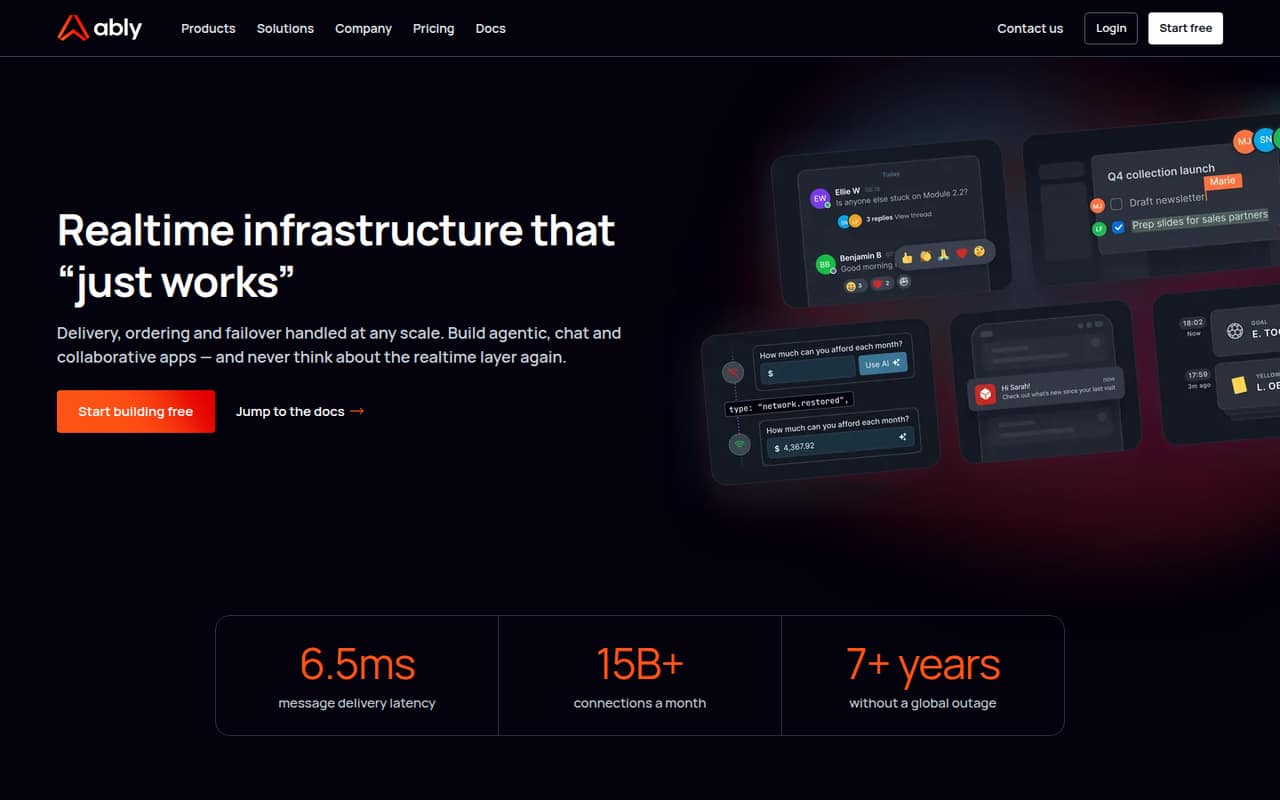
Ably fits teams adding real-time features such as chat or collaboration to an app. The listing gives it a free plan, a $29 starting price, and a free tier suited to prototypes under 500 monthly active users. Paid plans are annual-only, which matters if your team wants a monthly commitment. Check how your expected usage fits the plan before moving a prototype into production.
What works
- Free plan includes all products and features
- Free tier covers up to 500 MAUs
- Pro includes 1K MAUs
What doesn't
- Pro and Business are billed annually
- Free support is best effort
- Paid plan pricing is based on MAUs
- Best for real-time mediaAgoraAgora
Agora is aimed at app teams adding real-time voice, video, or chat, and its listing includes free usage. That gives a small team a way to explore the fit before committing to a paid option. Costs beyond free are described as unclear, so it’s hard to forecast a larger workload from the starting-price information alone. Ask the vendor how your expected usage would be priced.
What works
- RTC free tier lists 10,000 standard minutes monthly
- Voice, video, chat, and signaling products
- Includes conversational AI products
What doesn't
- Seat limit on the free plan isn’t published
- Paid starting price isn’t published
- Annual pricing details aren’t published
- Best for voice AILiveKitLiveKit
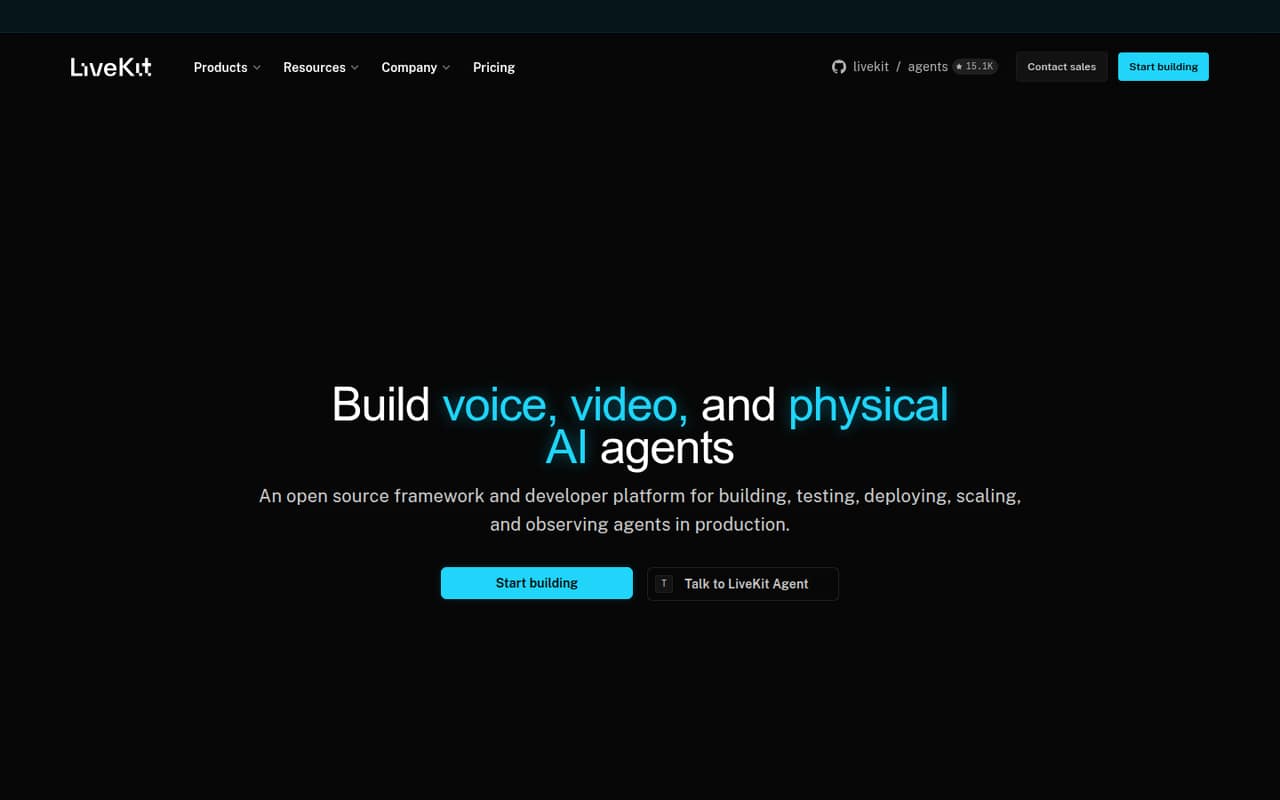
LiveKit is a strong shortlist option for developer-led teams testing real-time AI agents, especially if telephony and SIP are part of the project. It has a free plan, with a listed starting price of $50. That makes it less of a zero-cost paid step than Daily or Telnyx, and it still requires technical implementation. Check the plan’s usage limits before relying on it for a live product.
What works
- Free Build plan includes 1,000 agent minutes
- Open-source framework offers agent customization
- Cloud deployment and scaling are available
What doesn't
- Setup can require command-line and server knowledge
- Ship's included minutes are capped at 5,000
- Model usage beyond credits costs extra
- Best small phone systemZadarmaZadarma
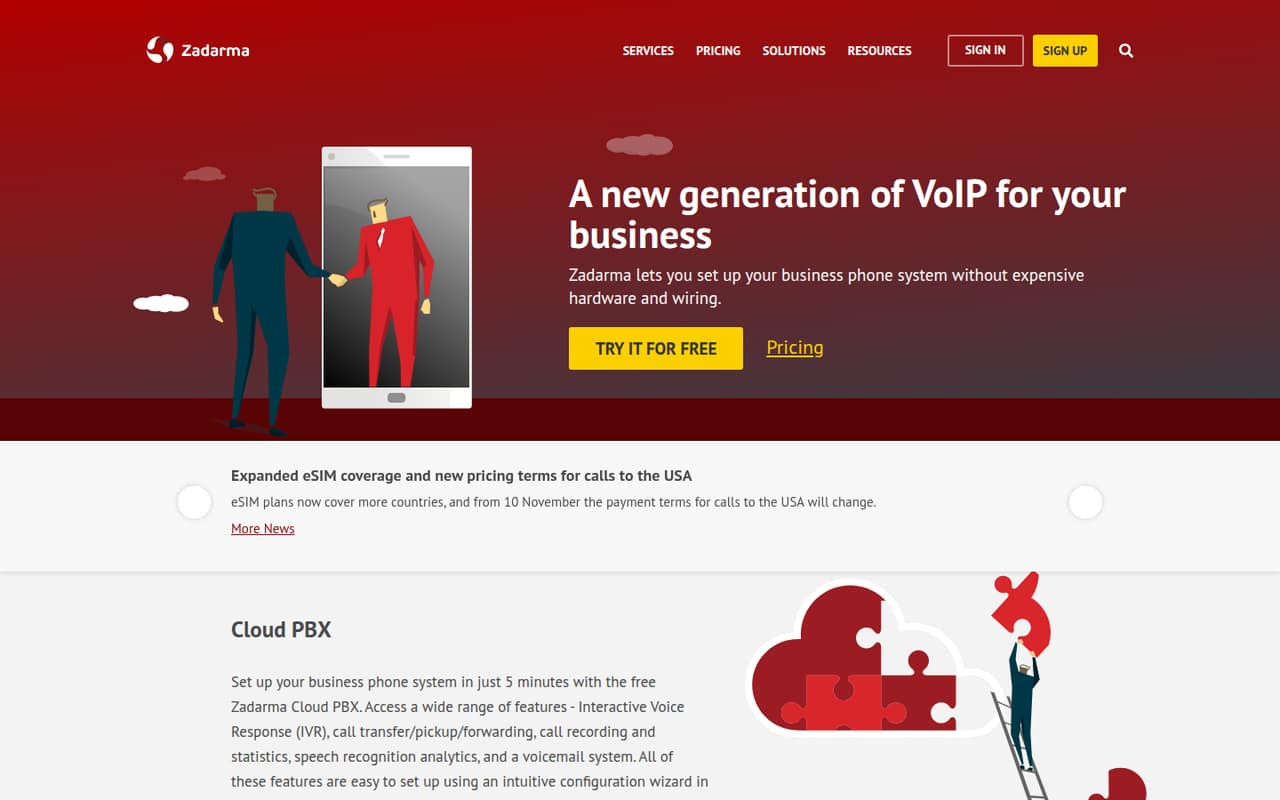
Zadarma stands out for a team of up to five that wants a free phone system combining PBX and CRM. The trade-off is configuration work, and phone numbers add costs. That makes it a different kind of fit from a developer API used to build communications into an app. Small teams should check number costs and whether the five-user limit fits their actual setup.
What works
- Free Standard plan includes five PBX and CRM users
- Standard includes IVR, recording storage and outgoing call capacity
- CRM includes customer profiles, deals, tasks and sales tracking
What doesn't
- Standard includes no virtual phone numbers
- Office and Corporation prices are not published
- Extra virtual-number and PBX feature costs are not published
- Best for notificationsAmazon Simple Notification Service (SNS)Amazon Simple Notification Service (SNS)
Amazon SNS is a possible fit for teams that need to send notifications and can plan around usage-based costs. The listing includes a free plan but no starting price, and notes limits to check, including SQS-bound FIFO delivery. It’s less appealing if your priority is a simple, predictable budget or a polished all-channel toolkit; confirm the relevant limits and setup requirements first.
What works
- Free tier includes several messaging allowances
- No monthly base fee listed for paid topics
- Standard topics support HTTP/S notifications
What doesn't
- AWS homepage does not explain SNS
- Setup effort and learning curve are unclear
- SNS-specific integrations are not described
03How we chose
We ranked these tools for a team of one to ten, weighing free access, listed starting prices, setup effort, and any plan limits stated in the summaries. A starting price is not automatically a per-seat quote, so we favored options with a clear free starting point while calling out usage charges and other cost uncertainty. Documentation and Reddit sentiment are useful checks for a buyer to make before choosing; we don’t use them here to make claims about pricing, setup quality, or product reliability.
04Work out what a few seats really cost
Communications APIs are usually a poor fit for a seat-count budget: the cost can depend on messages, calls, or participant-minutes. The listed starting prices are useful for comparison, but they don’t tell you what a team of five or ten will pay. Daily ties billing to participant-minutes; Gupshup says the real bill depends on message volume and fees beyond its own; ClickSend lists message charges and top-ups. Before choosing, write down your expected monthly usage by channel and ask the vendor for a quote or a cost calculation. Check whether the free plan has limits that change your bill once you launch. If you need a fixed per-person subscription, confirm that the vendor offers one rather than treating an API’s starting price as a seat price.
05Match the tool to your setup capacity
An API is a building block, not necessarily a ready-to-use team phone or messaging app. Daily’s listing calls out engineering work, while Telnyx and Twilio are positioned for developer-led builds. Make sure someone on your team can handle integration and ongoing changes before picking a tool because its free plan looks attractive. Then narrow the shortlist by channel: ClickSend is aimed at SMS alerts and campaigns; Agora covers real-time voice, video, and chat; Ably targets real-time app features. Check plan limits, usage charges, and the vendor’s setup documentation before committing. If your requirement is a phone system for a small team rather than communications inside your software, compare options like Zadarma and ask about number costs.
Questions people ask
Do communications APIs usually charge per seat?
Not necessarily. The listed prices here include usage-based billing, such as Daily’s participant-minute charges and ClickSend’s message charges. A starting price is not the same as a per-seat quote. Ask each vendor how your expected calls, messages, or other usage affect the bill.
Which communications API has a free plan?
Several options on this list have a free plan, including Daily, Telnyx, Twilio, Gupshup, Ably, Agora, and LiveKit. Free access doesn’t establish what limits apply or what a production workload will cost, so check the plan details and usage charges before launch.
What should a small team choose for SMS?
For software-connected alerts or small SMS campaigns, ClickSend is a focused option; its listing says there are no seat fees but that message charges and top-ups add up. Twilio offers broader communications APIs. Compare estimated message volume and any other fees before deciding.
Are communications APIs difficult to set up?
They can require developer time because they’re used to add communications features to software. Daily’s listing explicitly calls out engineering work, and Twilio’s notes say small teams need to manage setup. Check the vendor’s documentation and make sure someone can own implementation and maintenance.