
We may earn a commission if you buy through links on this page. It never changes a score or a ranking. How we make money
The bottom line
Arya covers several recruiting jobs, but quote-only pricing makes it hard to judge the cost for a small team.
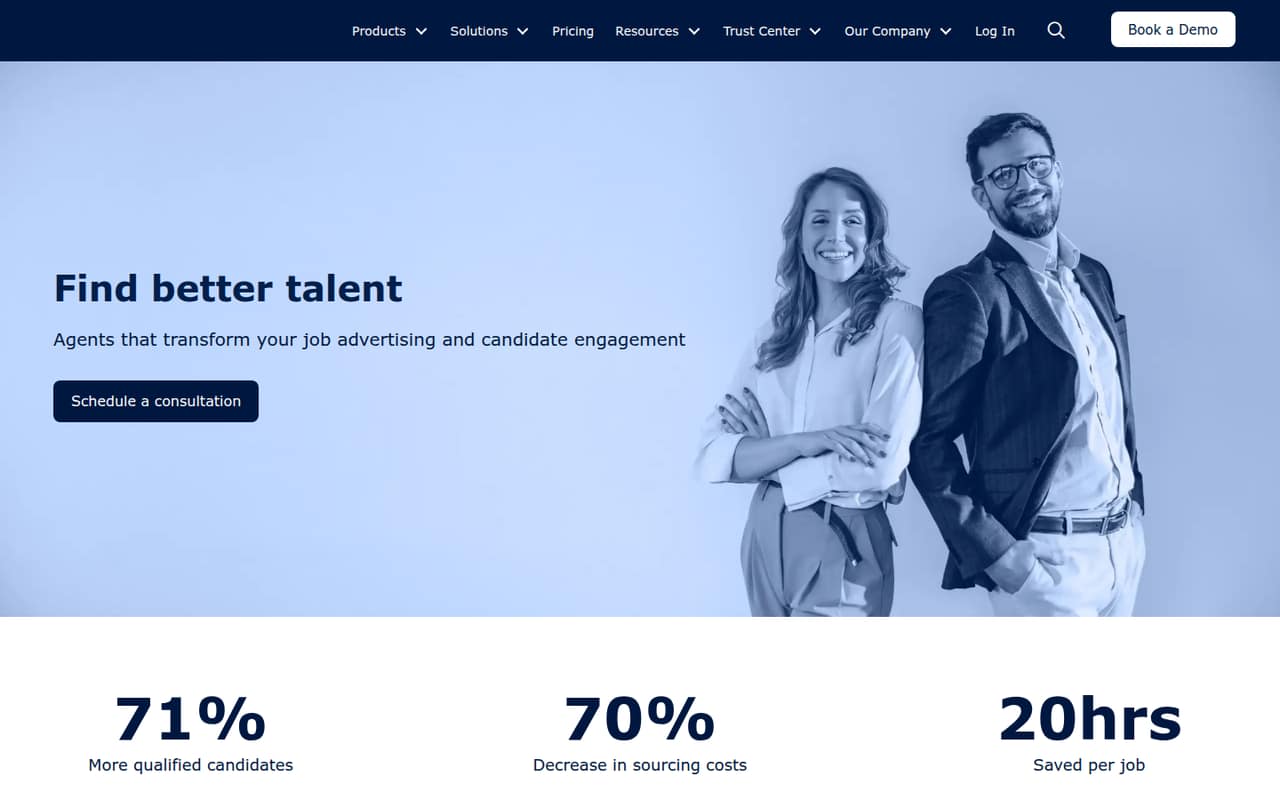
Arya uses AI recruiting agents for sourcing, screening, career-site engagement, and candidate rediscovery. It connects to an existing ATS, and its homepage says customers pay for qualified candidates rather than clicks.
There is no free plan, and monthly and annual rates are not published. Pricing is tailored to hiring volume, open roles, candidate database size, and site traffic, so ask for a quote that covers your team and any integrations.
Good fit if
- Teams with recurring open roles
- Recruiters already using an ATS
- Hiring teams seeking qualified candidates
Skip it if
- Teams needing a free recruiting tool
- Buyers requiring published seat prices
- Teams with only occasional hiring
ScoresHow it rates
What works
- Sources applicants using career-site traffic and recruitment media
- Screens candidates and delivers a vetted shortlist
- Personalizes career-site visits and candidate opportunities
- Can rediscover past applicants from ATS and job board subscriptions
- Connects to an existing ATS
What doesn't
- No free plan
- No published starting price
- Monthly and annual rates aren't published
- Optional integrations and services have custom pricing
- Setup effort and support terms aren't published
01Who Arya is for
Arya is for employers that need help finding and engaging candidates across ongoing hiring. Its agents can source applicants from career-site traffic and recruitment media, screen candidates into a vetted shortlist, engage career-site visitors, and rediscover past applicants. Leoforce says Arya connects to an existing ATS, so it is aimed at teams that already have a recruiting workflow in place.
A small team of one to ten people could consider it if hiring is frequent enough to justify a tailored recruiting service and the team has room in its budget for a custom quote. Leoforce doesn't publish a minimum team size or hiring volume. The homepage describes outcome-based pricing: customers pay for candidates who qualify, rather than clicks. Ask how the vendor defines a qualified candidate for your roles, and whether that definition and the ATS connection are included in your proposal.
02Arya free plan and trial
Arya has no free plan, and a free trial isn't listed. There is no self-serve tier to try before talking with the vendor. The cheapest way in is to request a tailored proposal; Leoforce doesn't publish a minimum price, so we can't name a lowest-cost package.
That proposal is configured around hiring volume and open roles, with scale also tied to candidate database size and site traffic. Optional ATS or CRM integrations, job advertising channels, workflows, and configuration services are priced per proposal. Before committing, ask whether a pilot is available, what it costs, which services it includes, and how the vendor measures a qualified candidate. Get those terms in writing so you can compare the proposal with your current recruiting costs.
03What a small team pays for Arya
Arya uses custom pricing, not a published per-seat rate. The vendor doesn't publish a monthly or annual starting price, so a one-person cost—and totals for three or five people—can't be calculated from public rates. There is no reliable seat-price math to apply, and the billing schedule isn't published.
The pricing information describes proposals configured around hiring volume and open roles. Candidate database size and site traffic also affect scale. Optional ATS or CRM integrations, job advertising channels, workflows, and configuration services are priced in the custom proposal; their individual costs aren't published. That means the quote may reflect more than the number of recruiters using Arya.
For a useful comparison, request a written quote for your expected roles, hiring volume, and team size. Ask for both monthly and annual terms, any setup or service charges, and the price of each integration or channel you need. Until Leoforce provides those figures, Arya's cost for a small team is unknown.
04Getting started with Arya
Leoforce describes Arya as connecting to an existing ATS, with optional ATS or CRM integrations, job advertising channels, workflows, and configuration set per proposal. That suggests a team should confirm its current systems and hiring workflow before signing. The vendor doesn't publish a standard setup timeline, a step-by-step onboarding process, or the effort required from your team.
For day one, ask which ATS connection is included, what data Arya needs, and who configures the sourcing, screening, and engagement workflows. Also confirm whether job advertising channels and career-site changes are part of the quote or additional services. The learning curve is hard to judge without published training details. A small team should request a kickoff plan, named implementation responsibilities, and an estimate of staff time before agreeing to the proposal.
05When small teams outgrow Arya
Arya's published pricing doesn't set a seat cap, hiring-volume limit, or database ceiling. Instead, proposals are configured around open roles, hiring volume, candidate database size, and site traffic. Leoforce doesn't publish thresholds that say when a team must upgrade, so ask how a higher hiring load changes the quote before your needs grow.
The clearest reason to move on may be budget predictability: if your team needs a fixed monthly price or a public per-seat plan, Arya's tailored proposal may be difficult to compare with alternatives. A growing team should also check whether added ATS or CRM integrations, job advertising channels, workflows, and configuration services raise the cost. Ask for pricing at your current scale and a realistic next stage, with each optional item listed. Without those figures, you can't know whether expansion will remain affordable.
Questions people ask
Is Arya worth the money?
Arya may be worth considering if your team hires regularly and wants sourcing, screening, career-site engagement, and candidate rediscovery in one recruiting service. The value is hard to judge without a quote: Leoforce doesn't publish a starting price or seat rates. Ask how it defines a qualified candidate and what your specific workflow will cost.
How much does Arya cost per month?
Leoforce doesn't publish a monthly price or starting rate. Arya is priced through a tailored proposal based on factors including hiring volume, open roles, candidate database size, and site traffic. Request a quote for your team, and ask for monthly and annual terms plus the price of optional integrations and services.
Does Arya have a free plan or free trial?
Arya has no free plan, and a free trial isn't listed. The way to explore it is to request a proposal from Leoforce. Ask whether the vendor offers a paid pilot, what it includes, and how it measures qualified candidates before agreeing to a larger engagement.
Can Arya connect to our ATS?
Leoforce says Arya connects to an existing ATS. ATS and CRM integrations are listed as optional and priced per custom proposal, so confirm whether your specific system is supported and whether the connection is included in your quote. Ask what configuration and data access the integration requires.
How does Arya's outcome-based pricing work?
Arya's homepage says customers pay for candidates who qualify rather than clicks. The public pricing details don't define the qualification criteria or state a rate per qualified candidate. Ask Leoforce to specify the criteria, how results are counted, and how those terms affect your proposal.