
We may earn a commission if you buy through links on this page. It never changes a score or a ranking. How we make money
The bottom line
Strong retail personalization features, but custom pricing makes small-team value hard to judge.
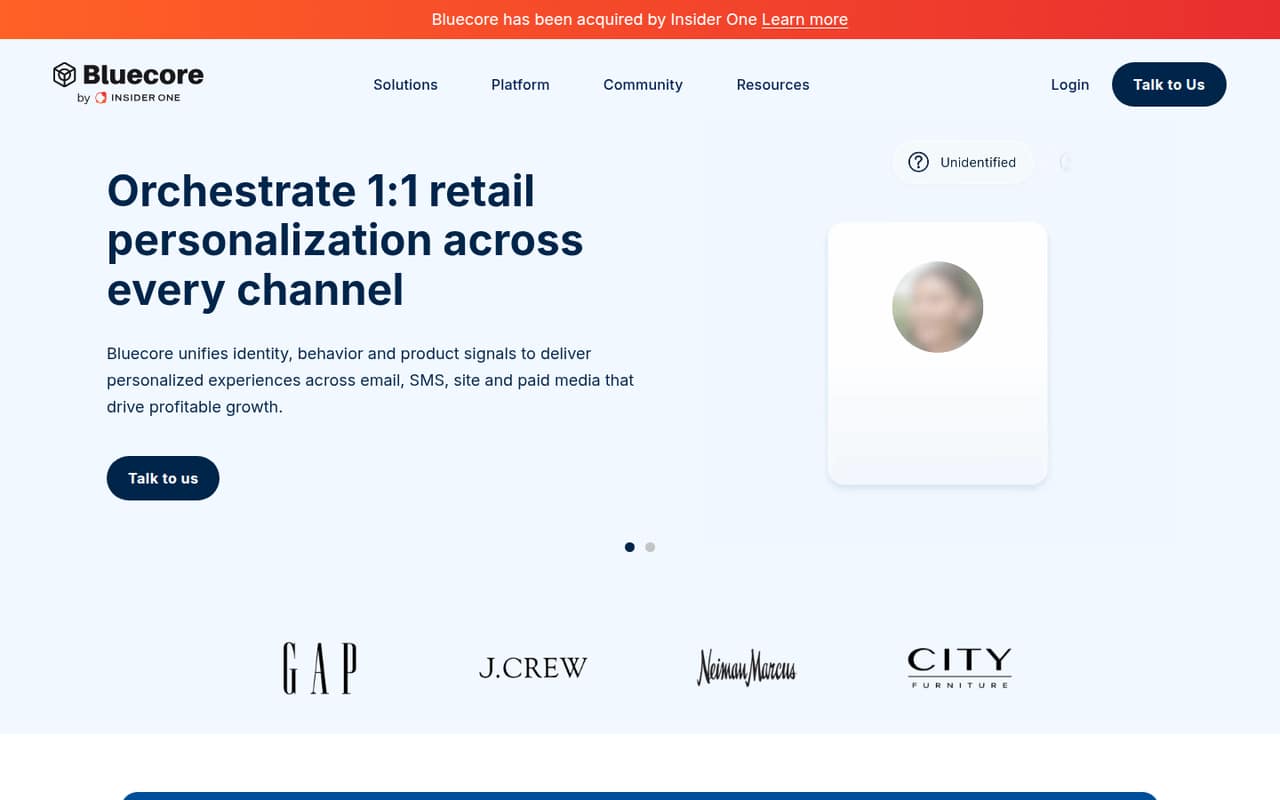
Bluecore combines shopper data, predictive models and campaign orchestration for retail brands. Its listed capabilities include personalized email and mobile, paid media and website experiences, plus AI tools for marketers and shoppers.
For a team watching every subscription, the main drawback is the buying process: the pricing page lists custom pricing through sales or a demo, with no starting price or billing details. There’s no listed free plan, and trial terms aren’t published.
Good fit if
- Retail brands with cross-channel campaigns
- Teams using shopper behavior for personalization
- Marketers needing retail-focused predictive models
Skip it if
- Teams that need a published starting price
- Small businesses seeking a free plan
- Teams wanting clear setup requirements upfront
ScoresHow it rates
What works
- Combines customer, behavior and product data
- Lists more than 20 predictive models
- Coordinates campaigns across channels
- Personalizes email and mobile messages
- Includes AI tools for marketers and shoppers
What doesn't
- Pricing is custom and not published
- No free plan is listed
- Trial details are not published
- Monthly and annual billing details are unavailable
- Setup steps and required integrations are unclear
01Who Bluecore is for
Bluecore is aimed at retail brands that want to coordinate personalized marketing across email, SMS, websites and paid media. It combines shopper identity, behavior and product data with predictive models, then uses that information to shape campaigns. The listed models include category affinity and next-best purchase; the platform also lists hundreds of cross-channel triggers.
For a team of 1–10, the fit depends less on headcount than on whether you need that breadth. A small retailer running a few straightforward email campaigns may not need a platform built around extensive data and orchestration. A lean team managing several channels and using shopper signals to tailor messages may find the feature set more relevant. Bluecore’s pricing page lists custom pricing through sales or a demo, so a small team should confirm the minimum commitment and total cost before investing time in evaluation.
02Bluecore free plan and trial
The pricing information lists no free plan. Trial availability and terms are not published, so don’t assume you can test the platform for free. The vendor’s stated way to explore pricing is through sales or a demo, which is also the cheapest route currently listed for getting a quote.
That means there’s no published self-serve tier for a one-person marketer or a small team to start with and expand later. Before booking a demo, ask whether a trial is available, what it includes, and whether access requires a contract or paid implementation. Also ask which features are included in the quoted package: the public pricing notes don’t identify plan tiers, feature limits or add-ons.
03What a small team pays for Bluecore
Bluecore’s pricing page lists custom pricing through sales or a demo. It does not publish a starting price, per-seat rate, minimum seat count, or monthly and annual billing details. As a result, we can’t calculate a grounded cost for one person, three people or five people, or compare monthly and annual totals. Ask the vendor for a written quote at your exact team size and billing term.
The pricing notes also don’t list add-ons or explain which features come with a standard package. That matters for a small team: Bluecore lists shopper profiles, predictive models, campaign orchestration, email and mobile personalization, a Marketing Agent and an AI Shopping Assistant, but the public price details don’t say whether these are bundled or priced separately. Request the total cost for the capabilities you need, plus any implementation fees, usage charges or contract minimums. Those charges are not published.
04Getting started with Bluecore
Bluecore’s public feature description outlines what the platform does, but doesn’t publish a step-by-step setup process, an implementation timeline or the integrations needed on day one. It describes shopper profiles that combine identity, behavioral and product data, so a team should ask how its existing data sources connect and what work is needed to prepare that data.
The range of features also points to a broader evaluation than switching on one email tool: the platform lists cross-channel campaign orchestration, email and mobile personalization, and AI tools for marketers and shoppers. We can’t verify how much configuration or training each requires from the published details. Before committing, ask for a setup plan, a list of required integrations, who handles implementation and what training is included. These answers will help a small team estimate the effort alongside the custom quote.
05When small teams outgrow Bluecore
Bluecore’s public pricing details don’t list seat limits, usage caps, plan tiers or upgrade thresholds, so there’s no published point at which a team must move to a higher package. They also don’t show whether growing channel use or adding the AI Shopping Assistant changes the price. Ask the vendor to explain those terms before signing, especially if your team expects to add people or campaigns.
A small team may instead outgrow the buying fit before it outgrows a product limit. If you need a free entry point, a published per-seat price or clear monthly and annual options, Bluecore’s current pricing details won’t answer those needs. If your retail program expands across channels and you need the listed predictive models and cross-channel triggers, the broader feature set may become more relevant—but confirm the cost and implementation requirements at your expected scale.
Questions people ask
Does Bluecore have a free plan?
Bluecore’s pricing information lists no free plan. Trial availability and terms are not published either. The vendor lists sales or a demo as the route to discuss pricing, so ask whether a trial is available and what access it includes before starting an evaluation.
How much does Bluecore cost?
Bluecore pricing is custom and available through sales or a demo. The vendor doesn’t publish a starting price, per-seat rate, or monthly and annual billing details. Ask for a quote based on your team size and the features you need, including any fees or usage charges.
What does Bluecore do?
Bluecore combines shopper data and marketing orchestration to personalize retail experiences across email, SMS, websites and paid media. Its listed capabilities include shopper profiles, predictive models, cross-channel campaign triggers, email and mobile personalization, a Marketing Agent and an AI Shopping Assistant.
What AI features does Bluecore include?
Bluecore lists a Marketing Agent that explains marketing performance and suggests next steps. Its AI Shopping Assistant helps shoppers discover, research and compare products across digital experiences. The platform also lists more than 20 predictive models, including category affinity and next-best purchase.
What should a small team ask before buying Bluecore?
Ask for the total price at your team size, the monthly and annual terms, and whether there is a minimum commitment. Confirm which features are included, whether a trial is available, what integrations and setup work are required, and whether implementation, usage or add-on fees apply.