
We may earn a commission if you buy through links on this page. It never changes a score or a ranking. How we make money
The bottom line
A capable all-in-one ATS, but no free plan and a steep published starting price.
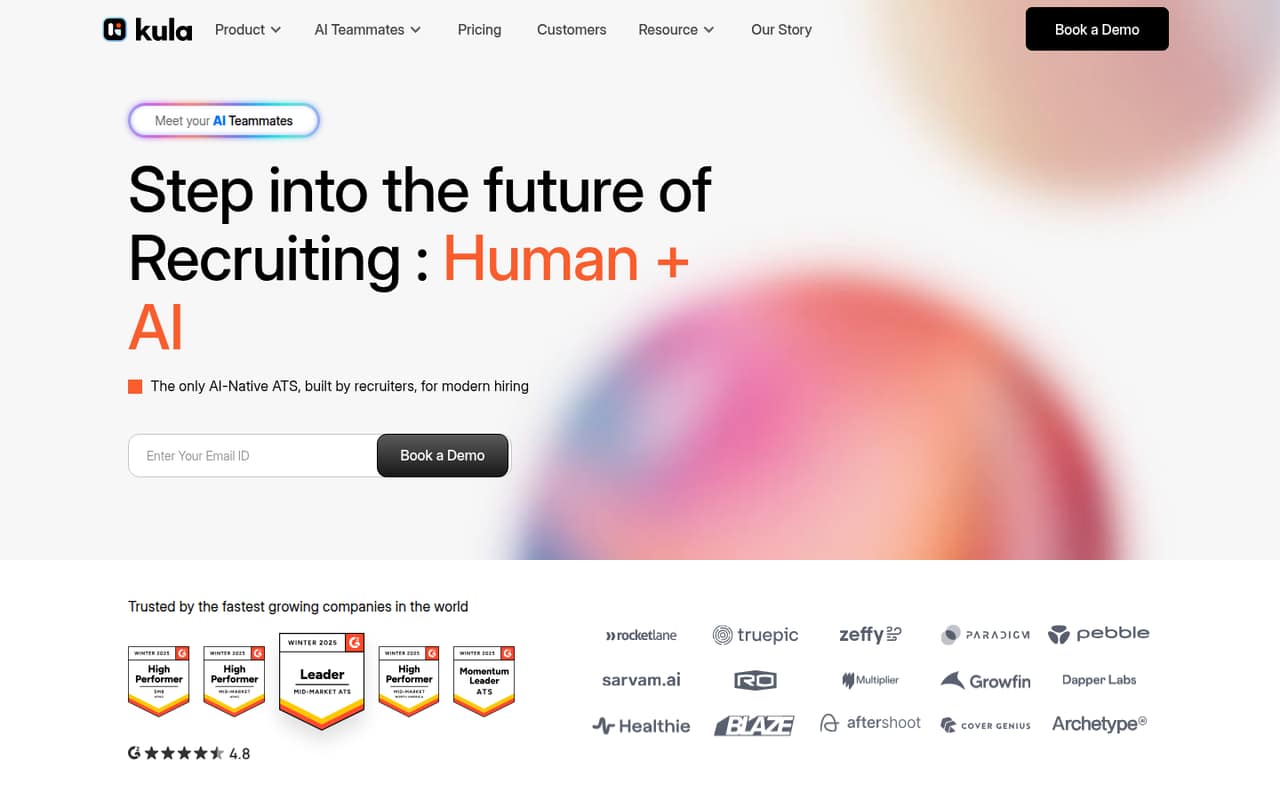
Kula combines an ATS with candidate sourcing, screening, scheduling, interview notes and analytics. That breadth could suit a team hiring regularly and looking to manage the process in one place.
The pricing page lists a starting price of $426.67 per company per month, billed annually, and no free plan. The price for a specific headcount is not published, so small teams should confirm their quote before budgeting.
Good fit if
- Startups hiring regularly
- Teams consolidating recruiting tools
- Hiring teams needing AI workflows
Skip it if
- Teams hiring only occasionally
- Buyers requiring a free ATS
- Teams needing predictable seat pricing
ScoresHow it rates
What works
- ATS, sourcing, screening and scheduling in one platform
- Unlimited AI and data enrichment on the listed plan
- More than 100 integrations
- Interview summaries and structured scorecards
- Slack and email support included
What doesn't
- No free plan is listed
- Starting price is $426.67 monthly equivalent
- Annual billing is standard
- Monthly pricing is not published
- Headcount-based price steps are not published
01Who Kula is for
Kula is for teams that hire often enough to want a dedicated recruiting workflow, rather than a basic applicant spreadsheet. It combines an ATS with candidate sourcing and CRM, resume screening, interview scheduling, notes, scorecards, offers, referrals and analytics. AI tools include candidate scoring, automated outreach and interview summaries.
For a small startup, the draw is keeping candidate history and hiring steps together instead of splitting them across separate tools. The listed plan includes full ATS access, unlimited AI and data enrichment, more than 100 integrations, and Slack and email support. That is a broad package, but the published starting price is $426.67 per company per month billed annually. Kula may fit a small team with steady hiring and budget for a dedicated system; teams filling only a role or two should weigh that cost against how much of the workflow they will actually use.
02Kula free plan and trial
Kula does not list a free plan, and a free trial is not published. That means there is no free tier to use as a lightweight ATS while a small team tests its hiring process.
The cheapest published way in is the Headcount-based plan, starting at $426.67 per company per month when billed annually. The pricing page says it includes full ATS access, unlimited AI and data enrichment, more than 100 integrations, and Slack and email support. Flexible payment terms are available upon request, but monthly pricing is not published. Before committing, ask Kula whether the starting price covers your current headcount, what happens as headcount changes, and whether your team can see the workflow before signing.
03What a small team pays for Kula
Kula lists Headcount-based pricing starting at $426.67 per company per month, billed annually. That works out to $5,120.04 for 12 months at the starting rate. This is a company price, not a published per-seat rate, so dividing it by one, three or five people would give a misleading comparison.
The price for a one-person company is not separately published. Nor does Kula publish a quote for a three- or five-person team, or the headcount thresholds that change the price. Since pricing scales by headcount, ask for a written quote for your current team size and likely growth. Monthly pricing is also not published; flexible payment terms are available upon request.
The pricing page lists no add-ons, but that does not establish whether every service or integration a team may need is included. The listed plan includes full ATS access, unlimited AI and data enrichment, 100+ integrations, and Slack and email support. Confirm any costs outside that bundle before budgeting.
04Getting started with Kula
Kula brings several recruiting steps into one platform, so setup will likely involve configuring the ATS workflow, screening steps, scorecards and interview scheduling around how your team hires. The vendor does not publish a setup timeline or a step-by-step implementation guide in the available pricing details, so we would ask what onboarding includes and who handles configuration.
The pricing page lists more than 100 integrations. The product description also includes calendar syncing, reminders and workflow triggers for scheduling. For day one, a small team should confirm its calendar and email connections, then check whether its existing recruiting tools are supported. Kula lists Slack and email support, but setup assistance and its cost are not specified. Treat the learning curve and migration effort as questions for the vendor rather than assuming setup is instant.
05When small teams outgrow Kula
Kula is designed to serve teams from startups through enterprise, so the likely pressure point for a small buyer is budget and headcount pricing, not a published limit on candidates or workflows. The pricing page does not publish a seat cap, usage limit or headcount threshold for the starting rate. It says pricing scales by headcount, which means a growing team should expect to request updated pricing rather than rely on a fixed per-seat calculation.
There is no listed free tier to fall back on if hiring slows, and monthly pricing is not published. A team may decide Kula no longer fits if it hires infrequently, cannot justify the annual commitment, or needs transparent seat-by-seat costs. Before expansion, ask for the price at the next headcount level and whether any integrations or services carry separate fees. Custom Pricing is available for teams with custom pricing needs; the vendor says it includes every feature and has no usage fees.
Questions people ask
What does Kula do?
Kula is an AI-native recruiting platform centered on an ATS. It brings sourcing, candidate screening, interview scheduling, interview notes, scorecards and hiring analytics into one workflow. Its AI features include candidate scoring, automated outreach and interview summaries.
Is Kula free?
Kula does not list a free plan, and a free trial is not published. Its lowest published option is the Headcount-based plan, starting at $426.67 per company per month billed annually. Ask the vendor whether a trial or flexible payment terms are available.
How much does Kula cost for a small team?
The pricing page lists a starting rate of $426.67 per company per month with annual billing. It does not publish separate prices for one, three or five people, and pricing scales by headcount. Request a quote for your team size before budgeting.
Does Kula include candidate sourcing and scheduling?
Yes. Kula’s recruiting workflow includes sourcing and CRM features, plus interview scheduling with calendar syncing, reminders and workflow triggers. Its listed Headcount-based plan includes full ATS access, though the pricing page does not break out feature-specific prices.
What support does Kula include?
The Headcount-based plan lists Slack and email support. The pricing details do not specify response times or whether onboarding and implementation help are included, so ask Kula about support coverage and setup assistance when requesting a quote.