
We may earn a commission if you buy through links on this page. It never changes a score or a ranking. How we make money
The bottom line
Good free capacity for technical teams; Growth costs $265 monthly, regardless of team size.
RudderStack collects customer events from websites, apps and backend systems, then routes and governs that data across warehouses and business tools. It also supports customer profiles, audience activation and agent-driven workflows.
The Free plan covers 250,000 events a month and includes warehouse destinations and Reverse ETL. That makes it worth a look for a small team with an engineering owner; Reddit users also report concern about changes to what subscriptions include.
Good fit if
- Technical teams routing customer events
- Small teams under 250,000 monthly events
- Teams using warehouses and Reverse ETL
Skip it if
- Teams seeking a no-code setup
- Teams needing predictable feature access
- Teams above 25 million monthly events
ScoresHow it rates
What works
- Free plan includes 250,000 events monthly
- Free plan includes 16 SDK sources
- Free plan includes 200+ cloud destinations
- Warehouse destinations and Reverse ETL are included
- Growth includes unlimited team members
What doesn't
- Growth starts at $265 per month
- Event overage amounts are not published
- More than 25 million events requires sales
- Setup time and effort are not published
- A Reddit customer reports subscription inclusions changed
01Who RudderStack is for
RudderStack is for teams that need to collect customer events from websites, apps and backend systems, then send them to warehouses and business tools. It can also help unify customer identifiers into profiles, activate audiences and apply governance rules such as event validation and PII handling.
For a team of one to ten, the best fit is usually a technical group with someone who can own event tracking, data destinations and governance. The Free plan can suit a startup or small team that stays under 250,000 events a month. If you need more volume, Growth costs $265 monthly or $225.25 per month with annual billing. That price includes unlimited team members, so the bill does not rise just because a few more colleagues need access. RudderStack describes agent workflows for data and business teams, but the core job remains customer-data collection and activation—not a general-purpose analytics dashboard.
02RudderStack free plan and trial
The Free plan costs $0 and includes 250,000 events per month, 16 SDK sources, 200+ cloud destinations, warehouse destinations and Reverse ETL. For a small team testing event collection or routing a modest workload to a warehouse and business tools, that is a meaningful starting allowance.
The free tier stops at 250,000 monthly events; the pricing page lists Growth event tiers from 1 million to 25 million per month. Growth also adds unlimited team members, 30-minute warehouse sync, two workspaces and 25 Reverse ETL connections. RudderStack lists a 30-day free trial, but does not specify which plan or feature set the trial includes. Ask the vendor before relying on trial access to a paid capability.
03What a small team pays for RudderStack
Growth is listed at $265 per month, or $225.25 per month with annual billing. It includes unlimited team members, so there is no published per-seat charge. For one person, that works out to $265 monthly or $225.25 per month on the annual rate. For three people, the effective allocation is $88.33 each monthly or about $75.08 each on the annual rate. For five, it is $53 each monthly or $45.05 each annually. Those are split-cost calculations, not per-seat prices; the plan bill stays the same.
The annual rate totals $2,703 for the year, compared with $3,180 at the monthly rate. Free remains the cheapest option if 250,000 events a month and its included features are enough. Growth has event tiers from 1 million to 25 million monthly, with 25 Reverse ETL connections. Above 25 million events, the pricing page says to contact sales. Event overage amounts are not published; its FAQ describes a Starter overage charge as the difference between the next tier's price and the current tier's price.
04Getting started with RudderStack
RudderStack's work involves more than adding a tracking snippet: a team needs to choose event sources and destinations, define what to collect, and decide how to handle schemas, consent and PII. The platform supports web, mobile and server-side sources, event transformations, schema management and data routing. Those capabilities give technical teams room to shape their data flow, but also mean someone needs to own the setup decisions.
The vendor does not publish a setup-time estimate in the pricing details. For day one, map the sources you need, the warehouse or business tools receiving events, and whether you need Reverse ETL or audience activation. The Free plan lists 16 SDK sources and 200+ cloud destinations; Growth lists 25 Reverse ETL connections. A Reddit commenter says the implementation in Go looks good, but that is one user's impression, not a setup guide or guarantee. Budget engineering time to configure and validate your event flow.
05When small teams outgrow RudderStack
The first clear threshold is event volume: Free includes 250,000 events per month, while Growth starts at 1 million and runs through 25 million. Growth may also be the next step if your team needs its listed 30-minute warehouse sync, two workspaces or 25 Reverse ETL connections. The price is flat for team members, but the monthly bill still jumps from zero to $265—or $225.25 per month with annual billing.
Above 25 million events, the pricing page directs teams to sales. It does not publish event overage amounts, so confirm the likely bill before scaling traffic. A Reddit user said their subscription inclusions had changed twice and worried about features moving into Enterprise; another called for a promise that included features would stay. Those are individual reports, but they are a reason to confirm which plan includes each capability you depend on and what happens if packaging changes.
From the threadsWhat users say
Reddit sentiment is mixed but leans cautious: one user praised the product while criticizing changing subscription inclusions. Another former customer also said what was included changed twice.
The product in itself is good, no question about it
I used to be their customer, before they changed what was included in the subscription, twice
we need reverse ETL, transformation of data before ingestion, ingestion into warehouse
A promise that features you have now, will stay with you
RudderStack in the news
Questions people ask
What is RudderStack used for?
RudderStack collects customer events from websites, apps and backend systems, then routes and governs that data across warehouses and business tools. It also supports customer profiles, audience activation, data transformations and agent-driven workflows for data and business teams.
Is RudderStack a CDP?
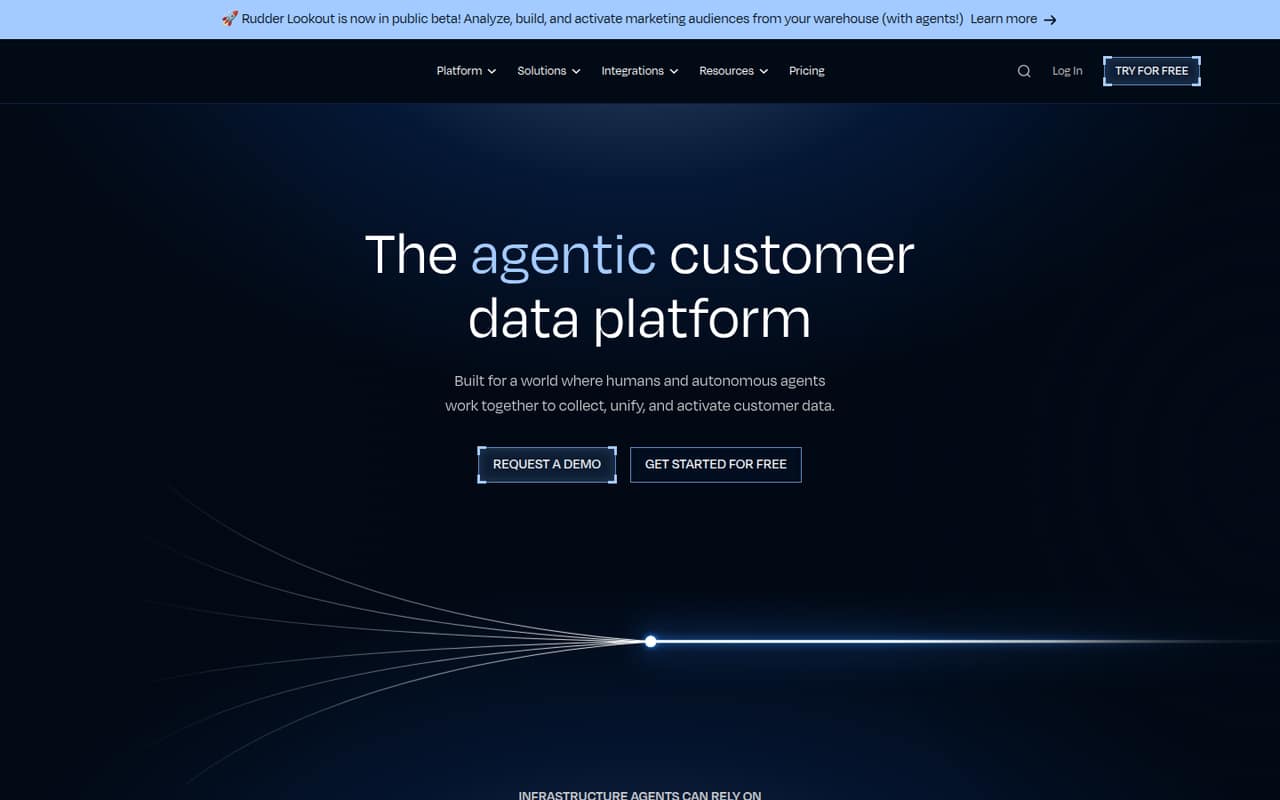
Yes. RudderStack describes itself as an agentic customer data platform. Its capabilities include event collection, customer profiles, audience activation, data governance and routing customer data to warehouses and business tools.
How much does RudderStack cost?
The Free plan costs $0 and includes up to 250,000 events a month. Growth is listed at $265 monthly or $225.25 per month with annual billing. Enterprise pricing is custom. Above 25 million monthly events, the pricing page directs customers to contact sales.
Does RudderStack's free plan include Reverse ETL?
Yes. The Free plan lists warehouse destinations and Reverse ETL, along with 250,000 events per month, 16 SDK sources and 200+ cloud destinations. It does not list a number of Reverse ETL connections; Growth lists 25.
Can RudderStack handle PII?
RudderStack lists transformations that can mask PII and governance capabilities for consent and PII handling. Enterprise also lists HIPAA and SSO. Confirm with the vendor which plan and configuration meet your team's specific privacy and compliance requirements.