We may earn a commission if you buy through links on this page. It never changes a score or a ranking. How we make money
The bottom line
A generous free starting point for mobile paywalls, with a revenue fee to watch as you grow.
A small app team doesn’t need Superwall if a basic StoreKit setup already covers its paywalls. But teams that want to change paywalls remotely, target audiences and run experiments without an app release get a lot to work with, starting on the free Indie plan.
Indie is listed at $0 per month up to $10k MAR, with a 1% charge beyond that per the plan listing. Startup starts at $49 per month plus 1% of MAR. There’s no published per-seat price, so three or five people don’t change the listed monthly fee.
Good fit if
- Mobile app teams testing paywalls
- Founders who want remote experiments
- Teams using audience targeting
Skip it if
- Apps happy with basic StoreKit paywalls
- Teams avoiding third-party dependencies
- Businesses seeking fixed costs at scale
ScoresHow it rates
What works
- Free Indie plan listed up to $10k MAR
- Edit paywalls without an app release
- Build branching onboarding flows
- Target users with filters
- Run A/B tests and holdouts
What doesn't
- Paid plans add a 1% MAR fee
- Annual prices and discounts aren't published
- Collaborator limits aren't published
- Third-party dependency may concern some teams
- Support response times aren't published
01Who Superwall is for
Superwall is for mobile app teams that want to change how they sell subscriptions without waiting for an app release. A founder or a team of one to ten can use it to build paywalls, set up onboarding flows, target audiences and test different offers. Its revenue tools include dashboards and customer timelines for reviewing paywalls, purchases and entitlements.
The free Indie plan makes it worth considering for a small team watching its monthly software bill. It includes the IAP SDK, webhooks, integrations, paywalls, campaigns, audiences and templates. The fit is less clear if you only need a basic iOS paywall: some Reddit users argue that StoreKit 2 is enough for simpler needs. Superwall makes more sense when remote changes, experiments or audience targeting are work you’d otherwise have to build and maintain.
02Superwall free plan and trial
The pricing page lists Indie at $0 per month for apps up to $10k MAR. Its listed features include webhooks, integrations, the IAP SDK, paywalls, campaigns, audiences and templates. The plan listing says a 1% charge applies after $10k MAR; billing details say the 1% applies only to paywall-attributed revenue, so confirm how that applies to your app before launch.
The free plan is a practical place for a small team to start if those features cover its needs. Superwall doesn’t publish a free-trial period, and the number of collaborators included on each plan isn’t published. Startup is the cheapest paid plan, listed at $49 per month plus 1% of MAR. It adds surveys, localization, AI localization and collaborators.
03What a small team pays for Superwall
Indie is listed at $0 per month up to $10k MAR. The plan listing says a 1% charge applies after that; the billing details say the fee applies only to paywall-attributed revenue. Startup costs $49 per month plus 1% of MAR. That makes the fixed monthly cost $49 for one person, three people or five people: the pricing is not listed per seat. The same fixed-fee math applies to Scale at $199 per month plus 1% of MAR.
Superwall doesn’t publish annual billing prices or discounts, so we can’t compare monthly and annual totals. It also doesn’t publish collaborator limits, so ask whether the collaborators on Startup cover your team before upgrading. Enterprise has custom flat-rate pricing. For a small team, the main variable cost is the MAR percentage, not another listed charge for each seat. Confirm how the fee is calculated against paywall-attributed revenue before settling on a budget.
04Getting started with Superwall
Getting started involves connecting the app’s purchase setup to Superwall and configuring the paywall content and products. The Indie plan lists an IAP SDK, webhooks and integrations. One Reddit commenter describing an iOS setup says they configured revenue tracking, added products and used Superwall’s purchase call; that commenter also mentions a no-code integration. That’s one user’s account, not a setup-time guarantee.
Once connected, teams can create paywalls and onboarding flows, set audience filters and run experiments without an app release, according to the feature details. The exact time to implement Superwall and the learning curve aren’t published. A small team should check the docs for its platform and purchase flow before committing, then decide who will own product setup, paywall copy and experiment results.
05When small teams outgrow Superwall
You may need to move up from Indie when you want surveys, localization, AI localization or collaborators, which the pricing page lists on Startup. Startup costs $49 per month plus 1% of MAR; Scale is $199 per month plus 1% and adds a dedicated account manager, Demand Score, Refund Protection and Transaction Abandon. Enterprise has custom flat-rate pricing, implementation and dedicated Slack support. Published collaborator limits aren’t available, so ask whether your team size fits before upgrading.
The other reason to reconsider is the revenue fee or reliance on a third party. In Reddit discussions, some developers favor StoreKit 2 for simpler iOS needs or worry about depending on an outside service. Others value changing paywalls and experiments remotely. If your team is comfortable maintaining its own solution and no longer needs Superwall’s remote tools, weigh that work against the fee and the service dependency.
From the threadsWhat users say
Reddit sentiment is mixed. Developers value remote paywall changes and testing, while others prefer StoreKit 2 for simpler iOS apps or worry about relying on a third party.
Whereas Superwall are fully customisable
you should try that first
I can literally setup and modify my A/B testing in a few minutes instead of it taking days
Neither. My view is that, paywall is the most essential part of the app business
Questions people ask
What is Superwall used for?
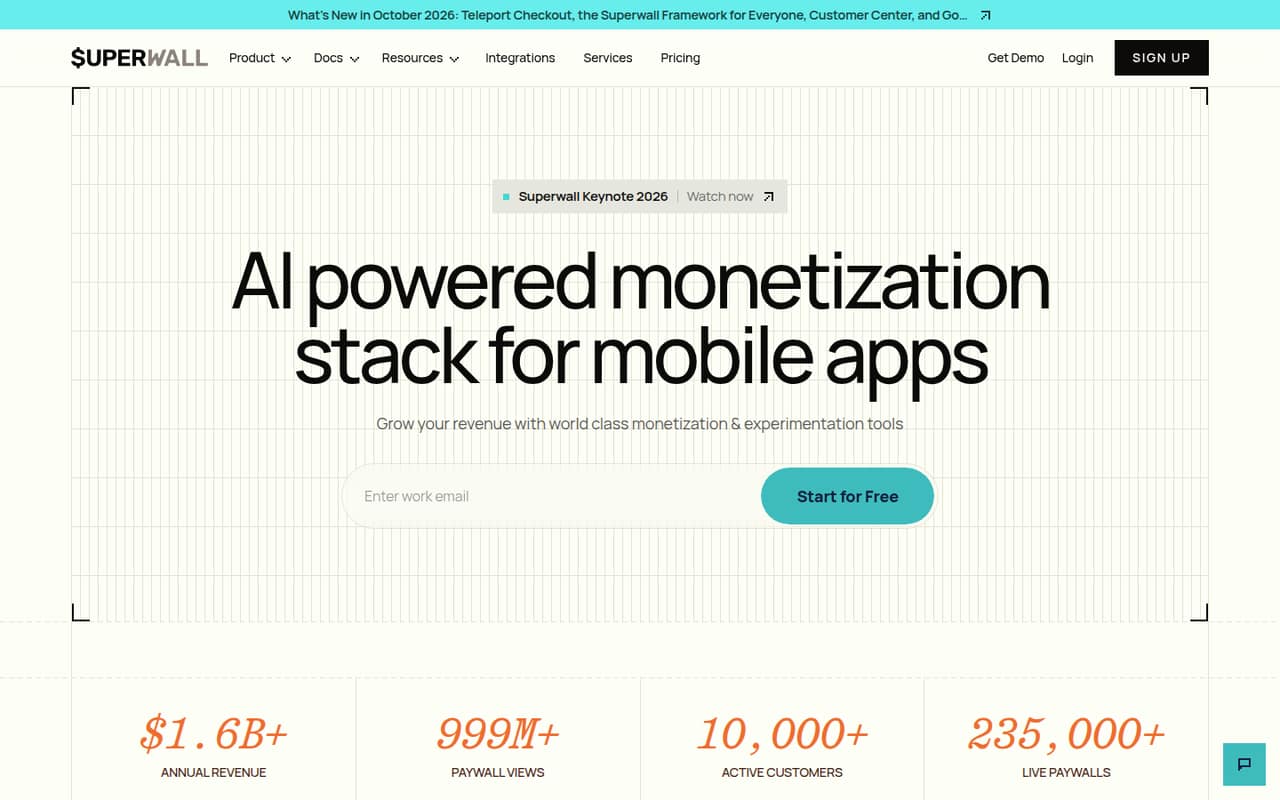
Superwall helps mobile app teams build and manage paywalls, onboarding flows and subscription experiments. It also lists audience targeting, revenue analytics, customer timelines and web checkout among its tools. Teams can change paywalls and test variants without an app release.
Does Superwall have a free plan?
Yes. The pricing page lists Indie at $0 per month for up to $10k MAR, with a 1% charge after that per the plan listing. Billing details say the charge applies only to paywall-attributed revenue. Indie includes the IAP SDK, paywalls, campaigns, audiences, templates, webhooks and integrations.
How much does Superwall cost for a small team?
Startup is listed at $49 per month plus 1% of MAR, and Scale at $199 per month plus 1%. The listed prices are monthly, not per seat, so the fixed fee is the same for one, three or five people. Annual billing and collaborator limits aren’t published.
Can I change Superwall paywalls without an app release?
Yes. Superwall’s feature details say teams can edit paywalls and test variants without an app release. Reddit users also describe remote paywall changes and experiments as a reason to use the service. Your app still needs its Superwall integration and product setup.
What are alternatives to using Superwall?
For a basic iOS setup, some Reddit commenters recommend starting with StoreKit 2 rather than adding a third-party service. Others say Superwall is useful for remote paywall changes and experiments. The right choice depends on whether those extra tools are worth the fee and service dependency for your app.