
We may earn a commission if you buy through links on this page. It never changes a score or a ranking. How we make money
The bottom line
A performance-focused CTV platform with useful measurement tools, but no free entry or published prices.
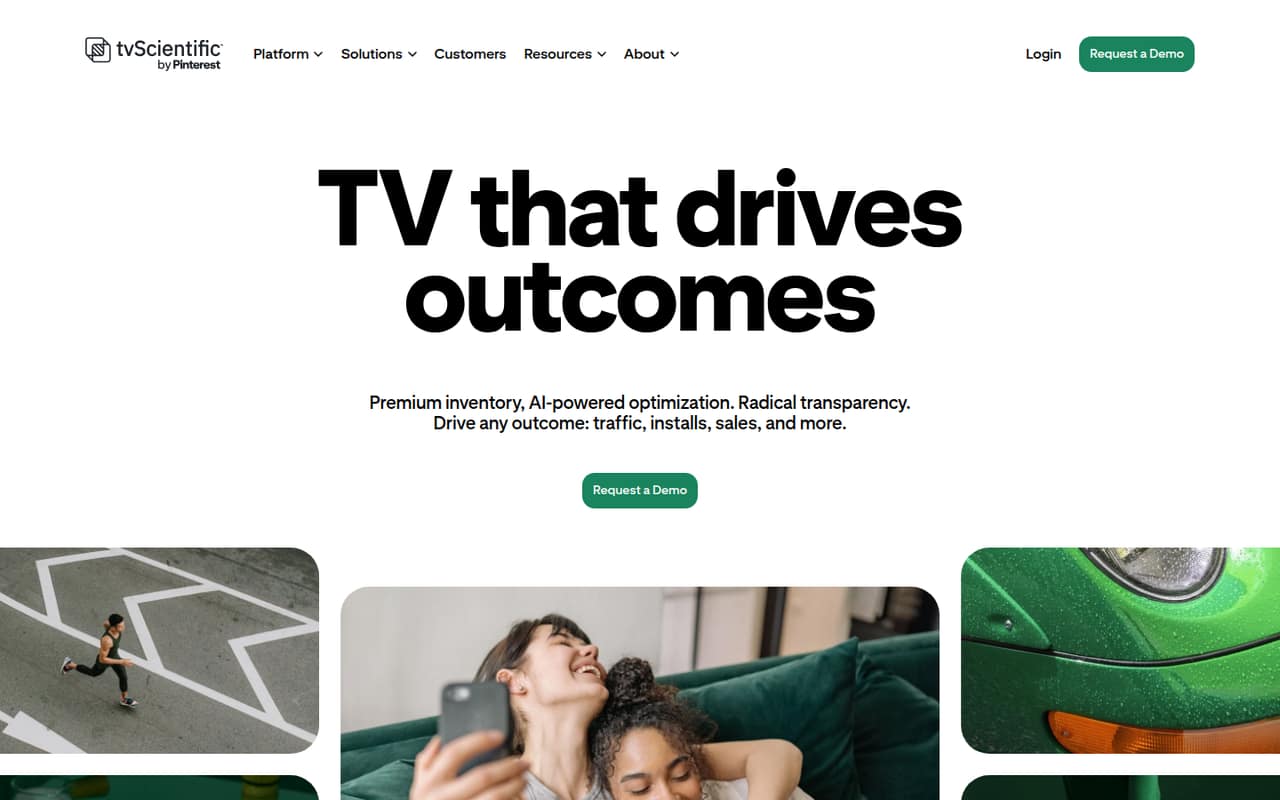
Small teams don’t need a dedicated CTV platform unless they have budget for streaming ads and a way to judge results. tvScientific offers outcome campaigns, audience and placement controls, dashboards, attribution, and AI optimization; it’s described as tvScientific by Pinterest.
There’s no listed free plan or trial, and pricing is custom and performance-based. Reddit users debate how much CTV attribution can prove and raise questions about inventory transparency, so ask for clear pricing, delivery controls, and measurement details before committing.
Good fit if
- Consumer brands testing CTV outcomes
- Teams with dedicated ad budgets
- Marketers needing campaign attribution
Skip it if
- Teams needing a free CTV tool
- Very small, fixed test budgets
- Buyers requiring published seat prices
ScoresHow it rates
What works
- Campaigns can target traffic, installs, sales, and other outcomes
- Controls include placements, run dates, and audiences
- Dashboards show performance, targeting, and attribution
- Offers proprietary attribution and third-party validation
- AI optimization analyzes variables in real time
What doesn't
- No free plan or trial is listed
- Pricing is custom and performance-based
- Monthly and annual billing terms are not published
- Per-seat costs and minimum spend are not published
- Reddit users question attribution and inventory transparency
01Who tvScientific is for
tvScientific is aimed at consumer brands buying connected-TV ads to drive measurable actions, not small teams looking for a free way to promote a product. A team of one to ten could use it if someone owns paid acquisition, the business has a meaningful CTV budget, and the team can define what success means before launch. The platform describes campaigns for traffic, installs, sales, and other chosen outcomes.
In plain terms, tvScientific helps a brand choose audiences and where and when ads run, then track campaign performance and attribution in dashboards. It also offers premium CTV inventory and AI optimization for selected outcomes. That makes it relevant to performance marketers who want to treat TV as more than a brand-awareness channel. If your team has a strict test budget or needs predictable CPMs, ask about pacing and delivery controls before buying. One Reddit thread argues that measurement should be considered alongside other methods, since attribution alone may not establish incremental growth.
02tvScientific free plan and trial
tvScientific has no listed free plan or free trial. The available pricing details list custom, performance-based pricing, with no monthly or annual billing terms published. That means there’s no free tier for a one-person marketing team to use for a low-risk test, and no public trial offer to evaluate before discussing a paid campaign.
The cheapest way in is a paid arrangement with pricing set by the vendor; the minimum spend and contract details are not published. Ask whether a small campaign can run with a fixed budget, what counts as a billable outcome, and whether any setup or measurement fees apply. Also ask what happens if a campaign doesn’t meet its delivery or outcome goals. Those details matter more than a per-seat comparison here, since tvScientific is priced as an advertising platform rather than a standard seat-based app.
03What a small team pays for tvScientific
There’s no published starting price or seat-based plan to use for a one-person, three-person, or five-person cost comparison. The available pricing details describe tvScientific as custom and performance-based in USD, but do not list a price, minimum spend, or fee schedule. Monthly and annual billing terms are also not published. So the total for one marketer and the total for a team of three or five are all unknown; there’s no honest per-seat math to do.
The platform’s pricing is tied to advertising campaigns, not simply how many colleagues log in. Ask the vendor for a written quote based on your intended campaign budget and outcomes, and confirm whether the quote includes inventory, measurement, and any platform or service fees. Add-ons and their prices are not published either. For a small team watching every subscription, don’t compare tvScientific with a typical monthly SaaS plan: first find out the minimum campaign commitment and whether you can set a hard spend cap.
04Getting started with tvScientific
tvScientific describes campaign controls for choosing audiences, where ads run, and how many days they run, plus dashboards for performance and attribution. That gives a performance marketer levers to manage, but the vendor does not publish a step-by-step setup process, implementation timeline, or details about how much support is included. We can’t tell from the published details how much work a small team should set aside before its first campaign.
Integration requirements and a list of supported analytics, ecommerce, or ad platforms are not published. Before signing, ask what tracking or data access is needed, how the team defines an outcome, and whether third-party measurement requires a separate vendor or fee. Reddit users also debate the value of view-through attribution, so agree on how results will be interpreted before spending. The learning curve may depend on your existing measurement setup; the vendor should clarify onboarding and training for your team.
05When small teams outgrow tvScientific
A team may outgrow tvScientific if it needs a low-cost self-serve test, clear per-seat pricing, or published limits for spend and users. The vendor does not publish seat costs, campaign minimums, inventory limits, or billing terms, so it’s hard to predict when a growing team will need a larger commitment. If your media team expands, ask whether access, reporting, and campaign management change with team size.
Reddit discussions point to two issues to examine as spend grows: attribution and inventory transparency. One commenter says attribution can be useful when paired with other measurement approaches, while others caution that a platform’s attribution may not prove that ads caused a sale. In another thread, commenters question transparency about the underlying buying technology and advise advertisers to verify inventory claims. Those are opinions, not confirmed tvScientific limitations. Before scaling, request placement and delivery reporting, agree on measurement rules, and compare the results with your own incrementality method.
From the threadsWhat users say
Reddit sentiment is mixed and often skeptical, especially about attribution claims and inventory transparency. Some commenters see a role for CTV measurement, but the discussions do not establish whether tvScientific will work for a particular brand.
No single impression or touch point owns the customer intent
They’ll never tell you what it’s sitting on
they can still be incredibly useful
you’re almost always going to overpay for inventory
Questions people ask
Does Pinterest own tvScientific?
tvScientific is described as tvScientific by Pinterest, and Reddit discussions refer to Pinterest’s acquisition of the company. The available product details do not explain how the acquisition affects campaign buying, support, or integrations. Ask the vendor what has changed for advertisers and whether any platform or service terms differ.
Does tvScientific have a free plan or trial?
No free plan or free trial is listed. The available pricing details describe custom, performance-based pricing instead. If you want to test the platform, ask the vendor about its minimum campaign commitment, whether a fixed-budget test is available, and what measurement and service fees are included.
How much does tvScientific cost?
The available pricing details list custom, performance-based pricing, but no starting price, seat price, or minimum spend. Monthly and annual billing terms are not published. Request a quote for your campaign budget and ask for a breakdown of platform, inventory, measurement, and any other fees.
Can tvScientific show whether TV ads drive sales?
tvScientific offers campaign attribution and third-party validation, and describes campaigns optimized for sales and other outcomes. Attribution is not the same as proof that an ad caused a purchase. Reddit commenters debate view-through measurement, so agree on the attribution method and consider an additional incrementality approach before relying on results.
What should a small team ask before starting?
Ask about campaign minimums, spend caps, pacing controls, onboarding, supported integrations, and fees for measurement or services. The vendor does not publish all of those details. Also request information about placements and reporting, then agree on the outcome and measurement method your team will use to judge the campaign.
Sources
- tvScientific homepage
- tvScientific pricing, compiled via web search from vibe.co, starti.ai, tvscientific.com, sourceforge.net
- Reddit: Comparing VIbe co vs tvScientific vs Simpli.fi on predictable spend and CPM control
- Reddit: is tvscientific a dsp?
- Reddit: Pinterest to Acquire tvScientific, Expanding Performance Advertising to Connected TV
- Reddit: How does real ctv inventory compare between Vibe.co, MNTN, and tvScientific?