We may earn a commission if you buy through links on this page. It never changes a score or a ranking. How we make money
A small team may not need a full data governance platform yet. If your immediate need is monitoring, website checks, or a free catalog, start with a tool that matches that job rather than paying for a broad governance suite. Soda offers free monitoring, Collate lists a five-user free tier, and ObservePoint has a free plan. Paid costs vary sharply: Soda lists Team at $750 per month, while many vendors don’t publish pricing. We rank the options by small-team fit and flag where you’ll need a quote or a clearer setup plan.
Quick picksThe shortlist
 SodaSodaBest for monitoring · $750/mo
- CollateCollateBest free governance · Free
 ObservePointObservePointBest for website checks · $208.33/mo
 Melissa Data Quality SuiteMelissa Data Quality SuiteBest for contact data · Custom
 TrackingplanTrackingplanBest for event data · Custom
 GableGableBest for code controls · Custom
 Precisely Data Integrity SuitePrecisely Data Integrity SuiteBest for complex data · $50/mo
 BigeyeBigeyeBest for sensitive data · $3,750/mo
 Collibra Data Intelligence PlatformCollibra Data Intelligence PlatformBest for broad governance · Custom
 Alation Data Intelligence PlatformAlation Data Intelligence PlatformBest for catalog and lineage · Custom
 TamrTamrBest for record unification · Custom
- Duco Data Automation PlatformDuco Data Automation PlatformBest for reconciliation · Custom
- truedattruedatBest for self-hosting · Custom
 Profisee PlatformProfisee PlatformBest for MDM specialists · Custom
 Informatica MDMInformatica MDMBest for Informatica users · Custom
01Compared at a glance
| Tool | Score | From | Free plan | Trial |
|---|---|---|---|---|
| SodaSoda | 6.5 | $750/mo | Yes | — |
| CollateCollate | 6.0 | Free | Yes | — |
| ObservePointObservePoint | 7.2 | $208.33/mo | Yes | — |
| Melissa Data Quality SuiteMelissa Data Quality Suite | 6.2 | Custom | No | Yes |
| TrackingplanTrackingplan | 6.2 | Custom | No | 9 days |
| GableGable | 6.0 | Custom | No | — |
| Precisely Data Integrity SuitePrecisely Data Integrity Suite | 5.8 | $50/mo | No | 30 days |
| BigeyeBigeye | 5.1 | $3,750/mo | No | — |
| Collibra Data Intelligence PlatformCollibra Data Intelligence Platform | 5.8 | Custom | No | — |
| Alation Data Intelligence PlatformAlation Data Intelligence Platform | 5.5 | Custom | No | — |
| TamrTamr | 5.8 | Custom | No | — |
| Duco Data Automation PlatformDuco Data Automation Platform | 5.8 | Custom | No | — |
| truedattruedat | 5.2 | Custom | No | 1 month |
| Profisee PlatformProfisee Platform | 5.0 | Custom | No | — |
| Informatica MDMInformatica MDM | 5.0 | Custom | No | — |
02The picks, in detail
- Best for monitoringSodaSoda
Soda is our first pick for a small team whose immediate need is data monitoring and shared quality checks. It has a free monitoring plan, which gives a team a way to start without a paid commitment. The pricing page lists Team at $750 per month, though, so budget carefully before moving beyond free. It also suits data engineers who need issue diagnostics.
What works
- Free plan includes unlimited users
- Free plan covers metrics observability
- Includes alerting and ticketing integrations
What doesn't
- Team starts at $750 per month
- Annual Team rates aren’t published
- Additional SPU rates aren’t published
- Best free governance
CollateCollate
Collate is a strong starting point for a small team that wants a catalog and more formal governance without paying for its first five users. It is also relevant for teams already using OpenMetadata and exploring commercial features. The main drawback is paid pricing: it is not published, so ask for a quote and confirm what happens when your team grows beyond the free tier.
What works
- Free Tier lists five users and 500 assets
- Unlimited data source connectors on listed plans
- Includes lineage and no-code quality tests
What doesn't
- Monthly and annual prices are unpublished
- Free Tier is limited to five users
- Free Tier refreshes data weekly
- Best for website checksObservePointObservePoint
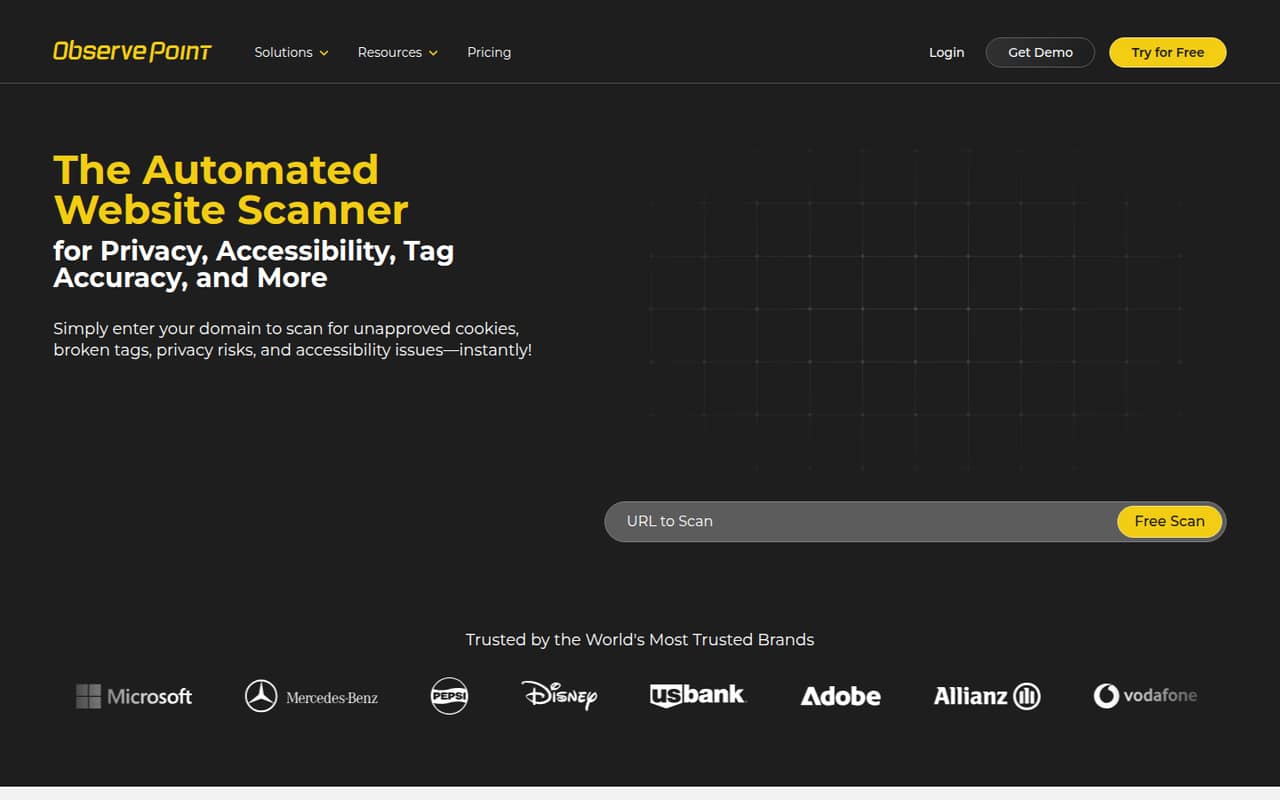
ObservePoint is the most focused fit here for a small team auditing website privacy, tags, consent, analytics, or customer journeys. It has a free plan, making it worth considering before paying for a broader data governance platform. The price of paid plans is not published, and journey monitoring may affect the budget, so ask which plan covers your required checks.
What works
- Free plan has no per-seat cost
- Includes 100 page scans per year
- Checks privacy, accessibility, tags, and consent
What doesn't
- Free plan includes only 25 journey runs yearly
- Paid journey packages are billed annually
- Support-request overage costs aren't published
- Best for contact dataMelissa Data Quality SuiteMelissa Data Quality Suite
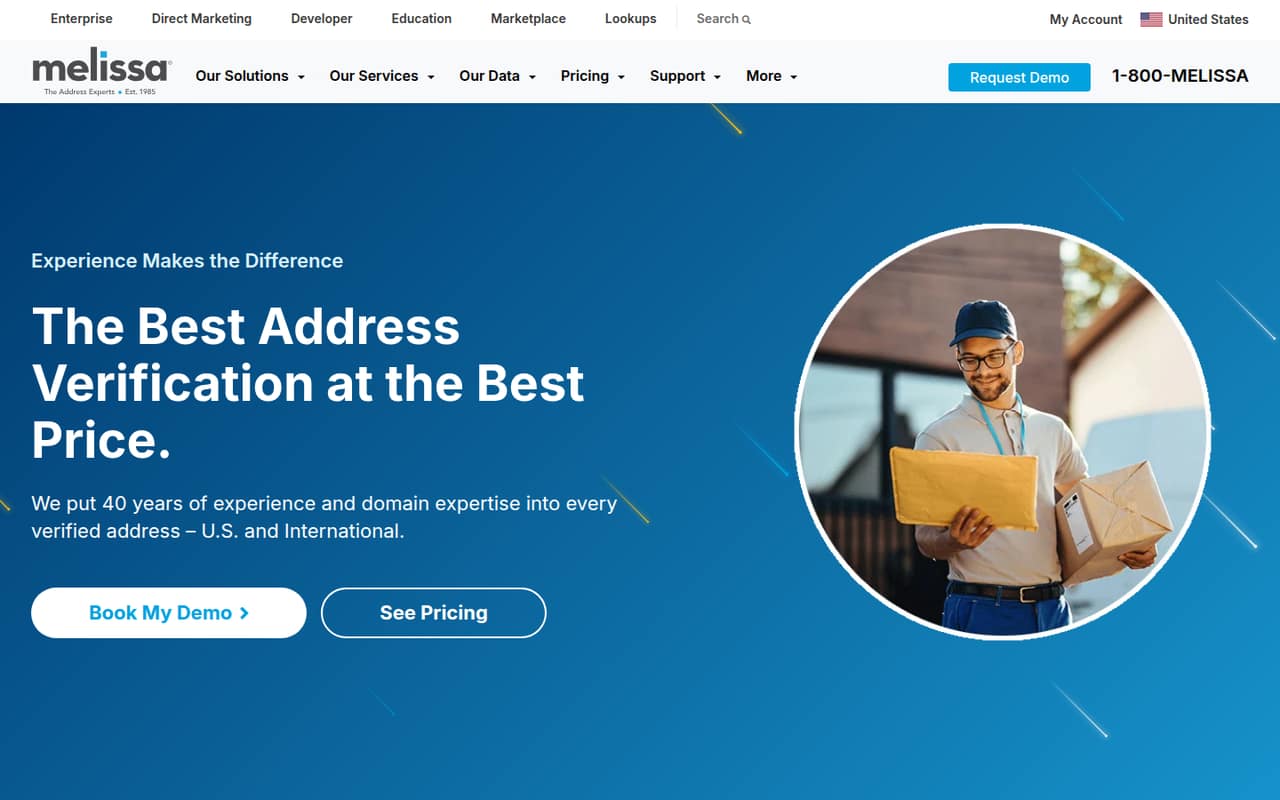
Melissa Data Quality Suite is a fit when the governance problem is specifically cleaning customer contact records, matching records, or enriching data. Its listed use cases also include businesses managing high record volumes. The price is not published, so a small team should request a quote before comparing it with lower-cost options. Ask which capabilities are included for your record volume.
What works
- Verifies addresses, phone numbers, emails and names
- Includes matching and duplicate-record cleanup
- Can create a consolidated golden record
What doesn't
- No free plan is listed
- Full-suite pricing requires a custom quote
- No fixed monthly or annual price is published
- Best for event dataTrackingplanTrackingplan
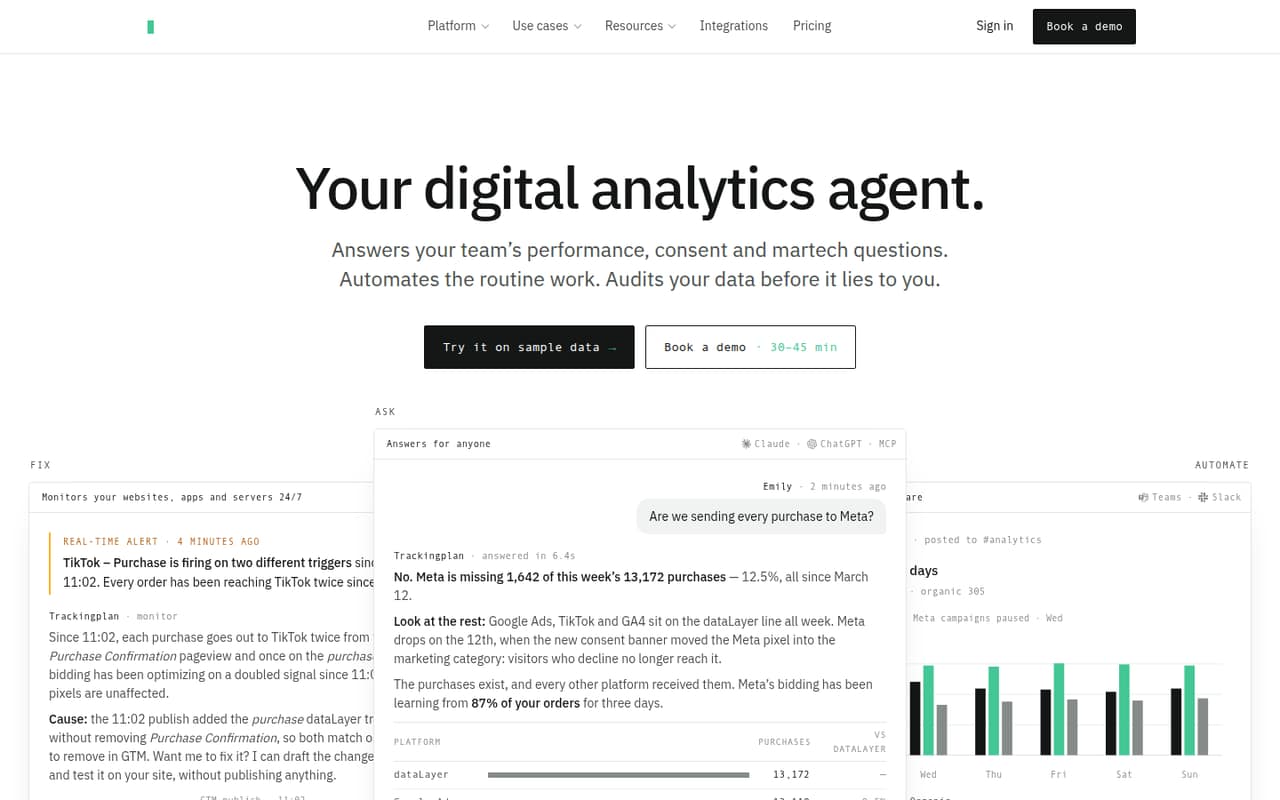
Trackingplan is worth considering if your small team manages several tracking properties or needs to check consent and attribution across complex event data. That focus makes it more relevant than a general-purpose governance platform for some marketing teams. Plan prices are not published, so ask for the cost at your expected scale and confirm which tracking properties and checks are included.
What works
- Monitors web, app and server-side events
- Flags tracking and consent issues live
- Checks requests to 170+ analytics and ad providers
What doesn't
- No free plan
- Starter and Growth prices are not published
- Trial lasts only 9 days
- Best for code controlsGableGable
Gable suits teams that want data contracts in CI/CD, code-level lineage, or governance work connected to Git changes. That makes it a specialized option for data teams building controls into development workflows. Pricing is not published, which makes it hard to estimate the cost for a few seats. Ask for a quote and clarify setup requirements before choosing it.
What works
- Scans Java, TypeScript, and Python code
- Checks YAML contracts during CI/CD
- Can warn or block merges
What doesn't
- No published starting price
- No free plan listed
- Trial availability is not published

- Best for complex dataPrecisely Data Integrity SuitePrecisely Data Integrity Suite
Precisely Data Integrity Suite is aimed at teams managing data across systems, building governed AI data, or needing location context. Its listed starting price is $50, but the billing period and a few-seat total are not specified here. Small teams should confirm what that price covers and ask about setup before committing, especially if the work spans several systems.
What works
- Covers integration, quality, governance, and enrichment
- Includes a 30-day trial with 2,500 credits
- Basic starts at $50 per month
What doesn't
- No free plan
- Taxes and overages are extra
- Overage prices are not published

- Best for sensitive dataBigeyeBigeye
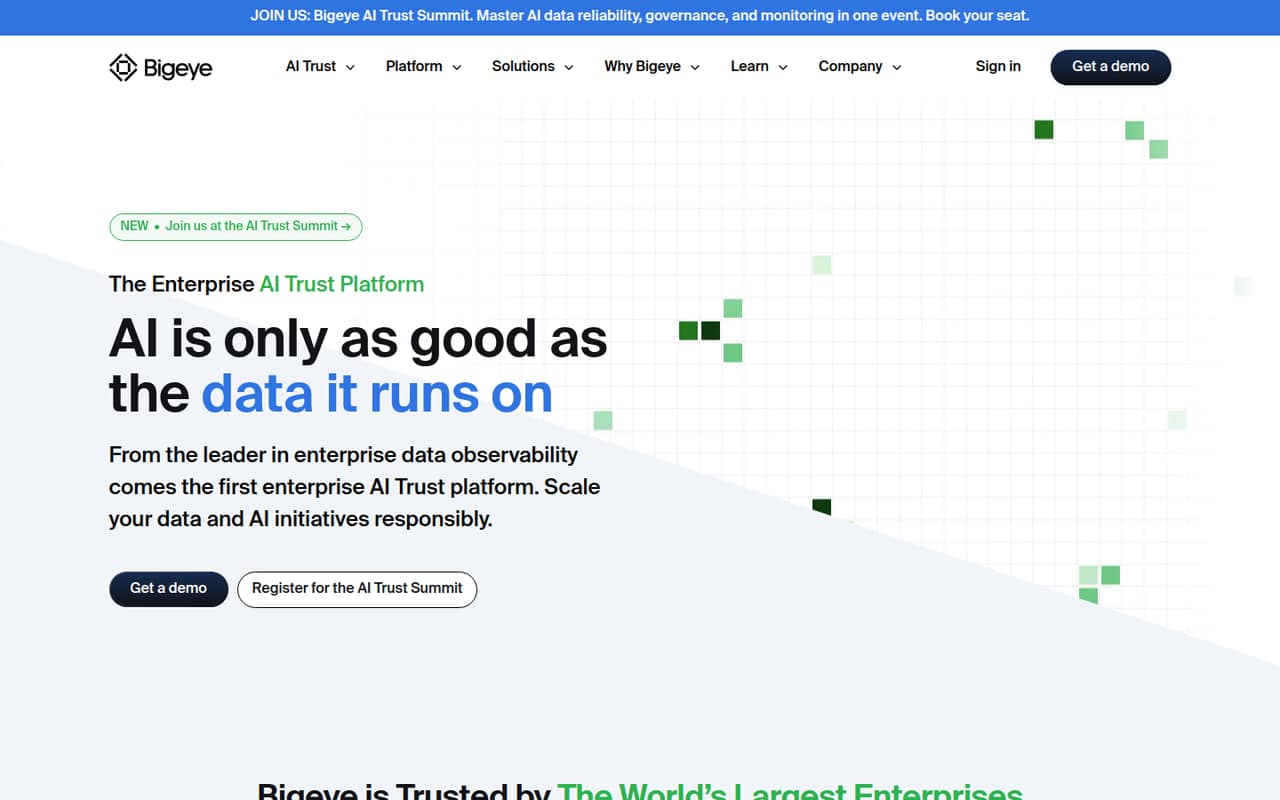
Bigeye is aimed at teams governing sensitive data, enforcing data access policies for AI, or needing lineage and monitoring. Those controls may suit a team with complex requirements, but the listed starting package is $3,750 annually, a steep commitment for many small teams. Ask what the package includes and whether the cost changes with users, data sources, or required capabilities.
What works
- Combines observability, lineage, and governance
- Starter covers 100 active monitored tables
- Sensitivity scanning covers structured and unstructured data
What doesn't
- No free plan or published free trial
- Starter requires a 12-month contract
- Starting package costs $3,750 per year
- Best for broad governanceCollibra Data Intelligence PlatformCollibra Data Intelligence Platform
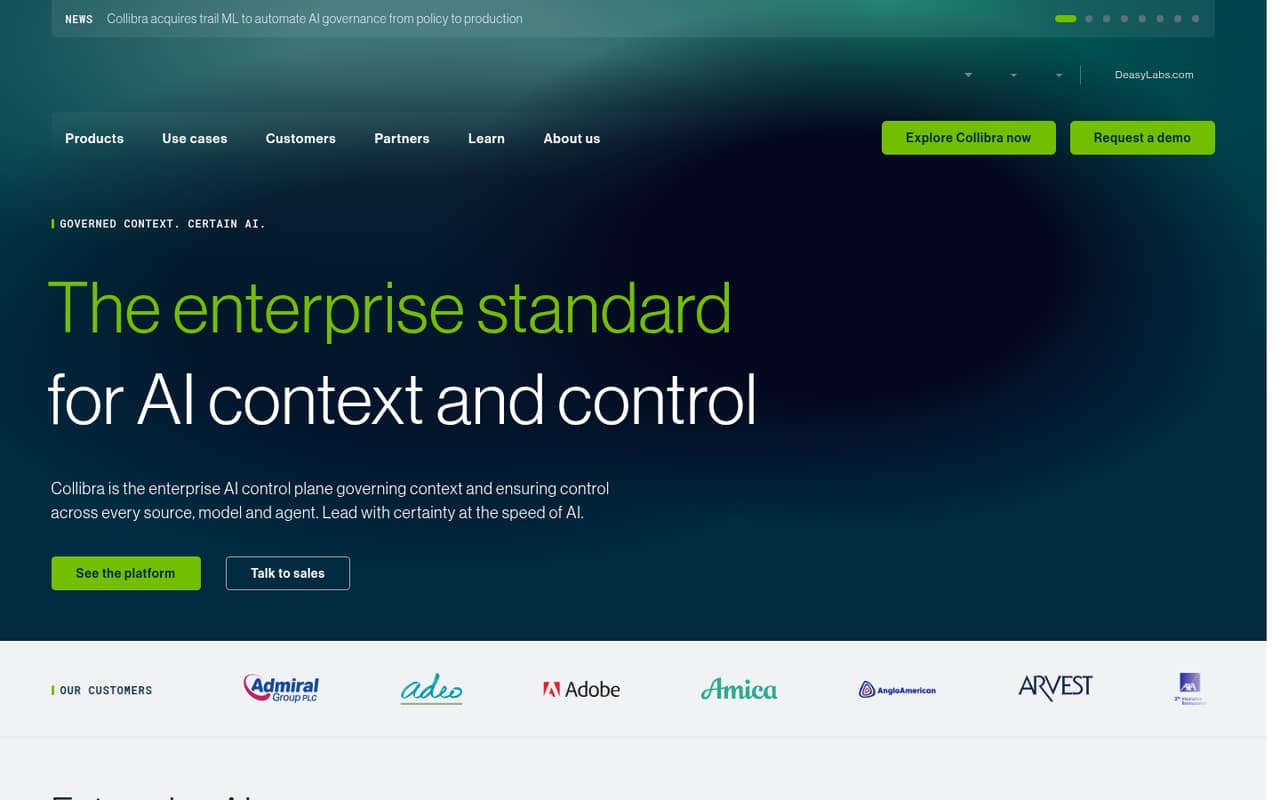
Collibra Data Intelligence Platform is designed for organizations formalizing governance, governing AI models and agents, or managing governed data products. That breadth can be more than a 1–10-person team needs. Pricing is custom, and plan limits are not published, making a budget difficult to set from the outset. Ask for a small-team quote and the minimum scope required.
What works
- Covers data governance and AI lifecycle oversight
- Connects business concepts to governed AI context
- Packages data with meaning, lineage and quality signals
What doesn't
- Pricing is custom and not published
- Seat and usage limits are not published
- No free plan is listed
- Best for catalog and lineageAlation Data Intelligence PlatformAlation Data Intelligence Platform
Alation Data Intelligence Platform covers data and AI governance, with catalog and lineage among its listed uses. It may fit a team standardizing AI and BI metrics, but it has no free entry point and uses custom pricing. Small teams should ask for the minimum purchase, included users, and implementation expectations before spending time on a sales process.
What works
- Catalogs data assets for discovery and governance
- Traces data relationships with lineage
- Includes data quality and pipeline observability
What doesn't
- No free plan is listed
- No free trial is listed
- Enterprise pricing requires a custom quote

- Best for record unificationTamrTamr
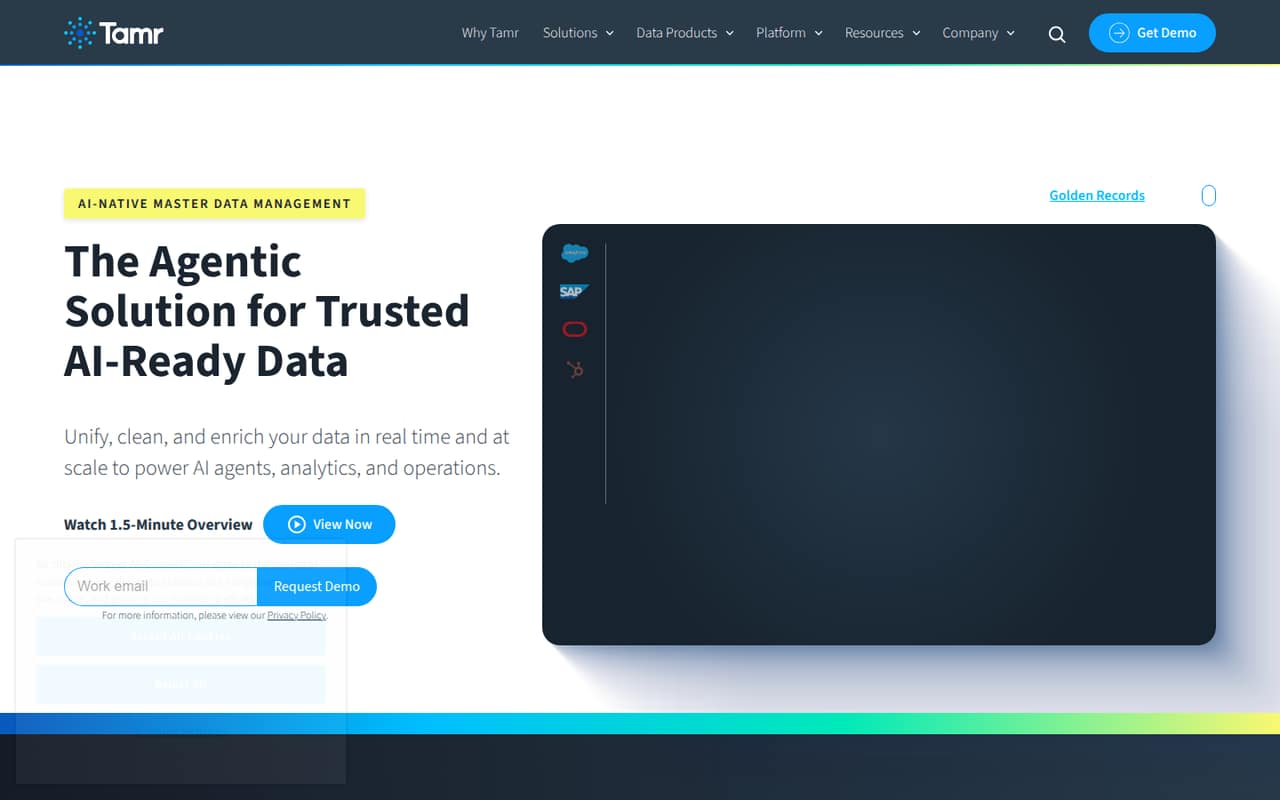
Tamr is a candidate for teams unifying customer or supplier records, handling complex master data, or needing real-time record access. Its focus is narrower than a general data catalog, so it makes most sense when record unification is the core problem. Pricing is custom and setup is unclear; ask the vendor for both a small-team cost and an implementation outline.
What works
- AI-powered matching and record unification
- Unlimited users; no per-seat pricing
- Includes at least one data product
What doesn't
- No free plan is listed
- Starting price is not published
- Capacity-based pricing can be hard to budget
- Best for reconciliation
Duco Data Automation PlatformDuco Data Automation Platform
Duco Data Automation Platform is a fit for financial operations teams with reconciliation-heavy workflows or spreadsheet processes to replace. That specialization may justify a closer look if those workflows are a major source of work. There is no public price or free option to test fit, so ask for a quote and a concrete explanation of what setup and onboarding involve.
What works
- Data preparation without third-party ETL tools
- Processes PDFs, emails, Word files and scanned images
- Plain-English rules for non-technical users
What doesn't
- No free plan listed
- Free trial terms are not published
- Starting price is quote-based
- Best for self-hosting
truedattruedat
truedat is aimed at teams formalizing governance, data stewards managing shared definitions, and organizations able to self-host. That self-hosting requirement is important for a small team to assess against its technical capacity. Team costs are unclear, so ask for pricing and the work required to run the software before choosing it over a hosted option.
What works
- Connects business context with technical metadata
- Includes glossary management and bulk edits
- Catalogs technical assets with customizable views
What doesn't
- Free access lasts only one month
- Lite is priced hourly, not monthly
- Per-seat pricing is not published
- Best for MDM specialistsProfisee PlatformProfisee Platform
Profisee Platform is geared toward standardizing records across systems, organizations with MDM specialists, and companies using AI agent workflows. It is a specialized option rather than an obvious first governance tool for a small team without MDM expertise. Pricing and setup details are unclear, so ask about the minimum deployment, team cost, and support needed to get started.
What works
- Covers customer, product, supplier, and location records
- Lists data quality and governance capabilities
- Unlimited data domains at no extra cost
What doesn't
- No published starting price
- No free plan or trial listed
- Seat limits are not published
- Best for Informatica usersInformatica MDMInformatica MDM
Informatica MDM is worth exploring for organizations with complex master data or teams already using Informatica services. It is also aimed at data governance and integration groups, so a small team should check whether it needs that broader context. Pricing is quote-only, making few-seat costs hard to judge; ask for a scoped quote and clear setup expectations.
What works
- Creates golden records for customers, products, and suppliers
- Connects data across 50,000+ sources
- Homepage lists 300+ data integration connectors
What doesn't
- No free plan or published free trial
- No published monthly or annual starting price
- Pricing depends on usage and per-domain records
03How we chose
We ranked these tools for a team of 1–10, prioritizing a free way to start, a clear cost for a few seats, and a defined use case. We also considered setup effort and plan limits where those details are available; when price or implementation details are unclear, we ranked cautiously and suggest asking the vendor directly. Vendor documentation and Reddit user reports can help validate fit, but they don’t replace a written quote that spells out users, limits, and onboarding.
04Start with the job, then check the free plan
Data governance can mean different things in a small company: monitoring data quality, cataloging assets, checking website tags and consent, cleaning contact records, or governing master data. Start by naming the problem you need to solve now. Soda offers free monitoring, Collate lists a five-user free tier, and ObservePoint has a free plan, but those starting points serve different jobs.
Before signing up, check what the free plan actually covers: user limits, data sources or properties, monitoring or catalog capabilities, and whether the features you need are included. If the plan details aren’t clear, ask the vendor. A free plan is useful only if it lets your team try the relevant workflow—not just create an account. Avoid paying for a broad governance suite until you know which controls your team will maintain.
05Work out the few-seat cost and setup burden
Compare the price for your actual team size, not just a starting figure. Soda lists Team at $750 per month, and Bigeye lists an annual starting package of $3,750. Precisely lists a starting price of $50, but the billing period and a few-seat total aren’t specified. For many other tools, pricing is custom, quote-only, or not published. Ask whether the quote depends on seats, data volume, features, or other usage.
Setup matters too. Ask who needs to configure the tool, whether self-hosting is required, and what work is needed to connect your data or establish governance rules. Confirm plan limits, support, and what happens when you add users or data sources. If the vendor can’t give a clear scope and cost, treat the purchase as a larger commitment than its headline price suggests.
Questions people ask
Which data governance tool has a free plan?
Soda offers free monitoring, Collate lists a free tier for five users, and ObservePoint has a free plan. Their use cases differ, so check whether the free option covers the work you need—such as data monitoring, cataloging, or website checks—before choosing based on free access alone.
How much does data governance software cost for a small team?
Prices vary, and many vendors don’t publish them. Soda lists Team at $750 per month; Bigeye lists a $3,750 annual starting package; Precisely lists a starting price of $50 without a stated billing period. Ask for a written quote based on your users and required features.
What should a small team ask before buying?
Ask what the quoted plan includes, how many users or data sources it covers, and which limits apply. Also confirm implementation work, self-hosting requirements if relevant, and the cost of adding capacity. If pricing or setup is unclear, request a scoped quote before comparing options.
Do small teams need a full data governance platform?
Not always. A team focused on one problem—such as monitoring quality, cataloging assets, or checking website consent—may be better served by a more focused tool. Consider a broader platform when your team has specific governance needs across data, AI, or multiple systems that a narrower tool can’t address.