We may earn a commission if you buy through links on this page. It never changes a score or a ranking. How we make money
A small team may not need a dedicated data warehouse yet: if your analytics needs are modest, first check whether your existing tools are enough. If you do need one, Vertica is our best starting point here, thanks to its free tier and fit for teams with data engineering skills. Dremio and Oxla are worth a look for Iceberg-focused work; Apache Pinot suits real-time projects if you can handle the operations. Cloudera is the hardest fit to budget for. Few-seat paid costs aren’t clear across most of this list, so ask vendors for a quote before planning a rollout.
Quick picksThe shortlist
 VerticaVerticaBest for small teams · Free
 DremioDremioBest for Iceberg · Free
 OxlaOxlaBest for Redpanda · $50/mo
 Apache PinotApache PinotBest for real-time · Free
 Cloudera Data PlatformCloudera Data PlatformBest for hybrid estates · $6.67/mo
01Compared at a glance
| Tool | Score | From | Free plan | Trial |
|---|---|---|---|---|
| VerticaVertica | 6.8 | Free | Yes | 30 days |
| DremioDremio | 6.5 | Free | Yes | 30 days |
| OxlaOxla | 6.4 | $50/mo | Yes | — |
| Apache PinotApache Pinot | 6.2 | Free | Yes | — |
| Cloudera Data PlatformCloudera Data Platform | 5.8 | $6.67/mo | No | — |
02The picks, in detail
- Best for small teamsVerticaVertica
Vertica ranks first for a small team that has analytics workloads to evaluate and someone with data engineering skills. Its free tier gives you a way to start, while hybrid and on-premises deployment are listed as strengths. The trade-off is budgeting: commercial pricing requires a request, so ask for a quote covering your expected use and team size.
What works
- Community Edition has a free license
- Free tier allows up to 1 TB
- Free tier allows up to three nodes
What doesn't
- Commercial pricing is quote-based
- No published per-seat price
- Free tier is limited to three nodes
- Best for IcebergDremioDremio
Dremio is a strong match if your team is building on Apache Iceberg or wants managed cloud, and its free plan gives you a starting point. The product also lists analytics teams connecting AI agents among its intended users. Paid pricing and setup need careful checking; ask what your specific workload and a few seats would cost before you commit.
What works
- Queries Apache Iceberg data without format conversion
- Open Apache Polaris catalog supports Iceberg REST engines
- MCP connects Claude, ChatGPT and Gemini
What doesn't
- Free-plan limits aren’t published
- No per-seat price or monthly estimate
- Enterprise consumption rate isn’t published
- Best for RedpandaOxlaOxla
Oxla is worth considering for teams using Redpanda and Iceberg that want live-stream operational SQL queries. A free plan is listed, with a starting price of $50; the billing period and what that price includes aren’t stated here, so confirm both before comparing it with alternatives. Its listed fit for non-commercial proofs of concept may suit teams evaluating the approach.
What works
- Queries live Redpanda topics and Iceberg history together
- Uses Postgres SQL dialect and wire protocol
- Can query data without ETL pipelines
What doesn't
- Developer Edition excludes commercial use
- Seat and data limits are not published
- Capacity costs depend on CPU use
- Best for real-timeApache PinotApache Pinot
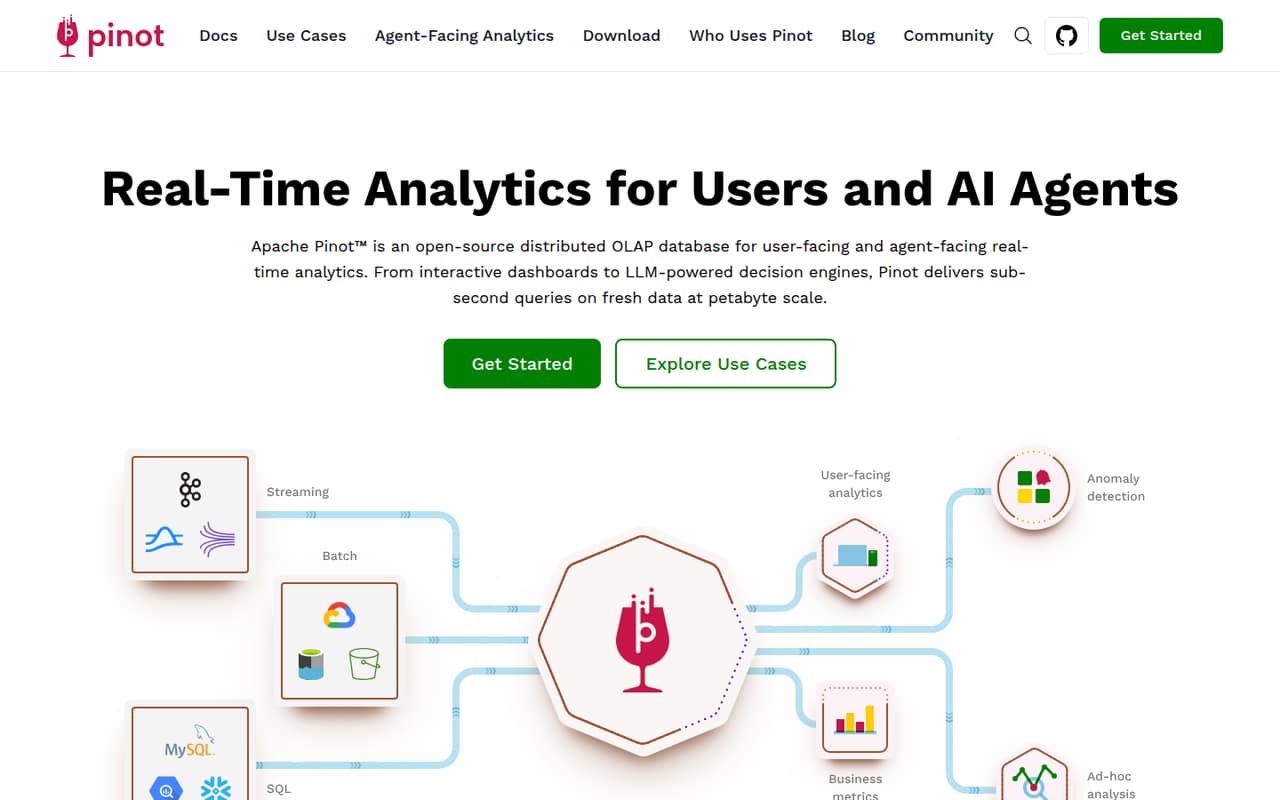
Apache Pinot is aimed at teams building real-time analytics or products that query fresh event data, and a free plan is listed. The catch for a 1–10-person team is operational effort: this is a better fit for engineers comfortable running distributed systems. The software may be free to start, but account for the work of operating it when comparing total cost.
What works
- Open-source software under Apache License 2.0
- Supports sub-second queries on fresh data
- Ingests from Kafka, Pulsar, and Kinesis
What doesn't
- Monthly and annual rates aren't published
- Seat and usage limits aren't published
- Small teams still need to manage infrastructure
- Best for hybrid estatesCloudera Data PlatformCloudera Data Platform
Cloudera Data Platform is a better fit for teams with hybrid data estates, data engineering and AI groups, or a need for centralized governance than for a small team watching a tight budget. Its usage pricing can make the bill hard to predict. Ask for an estimate based on your expected usage before treating it as affordable for a few seats.
What works
- Designed to run across clouds, data centers, and the edge
- Combines data management, analytics, and AI capabilities
- Includes centralized security and governance
What doesn't
- No free plan is listed
- Monthly cloud totals aren’t published
- Seat and usage limits aren’t published
03How we chose
We ranked these platforms for a team of 1–10, weighing whether a free plan is listed, what a few seats might cost, and how much engineering effort the stated use case implies. We also considered plan limits, documentation, and Reddit sentiment as signals a buyer should check; where a specific limit or price isn’t stated, we don’t fill in the gap. The ranking favors a useful low-cost starting point and a clear small-team fit over a wider enterprise feature set. We did not run tests or claim hands-on experience.
04Work out the real cost before choosing
A free plan is useful for evaluating a platform, but it doesn’t tell you what a production workload or a few seats will cost. Vertica lists a free tier and says commercial pricing requires a request. Dremio and Apache Pinot also list free plans, without a paid starting price here. Oxla lists a free plan and a starting price of $50, but confirm the billing period and what it covers. Cloudera’s usage pricing can make a small team’s bill hard to predict.
Ask each vendor for a written estimate based on your expected usage, deployment choice, and team size. Also ask which plan limits apply and what happens if you exceed them. If the vendor won’t give a useful estimate, budget uncertainty is part of the cost.
05Match the platform to your team's capacity
The right tool depends on the work your team can take on, not just the free tier. Vertica is listed for teams with data engineering skills and hybrid or on-premises deployments. Dremio is aimed at teams building on Apache Iceberg and offers managed cloud as a listed fit. Oxla is positioned for Redpanda and Iceberg use, while Apache Pinot targets real-time analytics and expects engineers comfortable running distributed systems. Cloudera is aimed more at hybrid data estates and data engineering or AI groups.
Before buying, read the docs for setup and ongoing operations, then look for user reports about the same deployment style. Ask who will manage the platform when it needs attention. If one person must handle both the warehouse and everything else, a technically capable option may still be a poor small-team fit.
Questions people ask
Which option is best for a small team?
Vertica is our top pick for a small team evaluating analytics workloads, especially if you have data engineering skills. Its free tier offers a starting point, but commercial pricing requires a request. Get a quote for your expected usage before deciding whether it fits your budget.
Which platforms list a free plan?
Vertica, Dremio, Apache Pinot, and Oxla are listed with a free tier or plan. Cloudera Data Platform is not listed with one here. Check each vendor’s current plan terms and limits before relying on free access for production.
What does Oxla cost?
Oxla is listed with a starting price of $50 and a free plan. The billing period and what the starting price includes aren’t stated, so ask the vendor to clarify those details and quote your expected usage before comparing it with other options.
When might a small team outgrow these tools?
A team may outgrow a free plan when it reaches plan limits or needs a paid deployment, but the specific thresholds aren’t stated here. Ask vendors about limits, usage pricing, and how costs change as your workloads grow. For Pinot, also consider whether your team can support its operational workload.