We may earn a commission if you buy through links on this page. It never changes a score or a ranking. How we make money
A small team needs infrastructure as code when repeatable changes, shared ownership, or configuration drift are becoming hard to manage by hand. For a simple starting point, Terraform’s free plan covers up to 500 managed resources, with no per-seat charges called out in its listing. Pulumi is another option if your team prefers working in software languages and can budget for its $40 monthly team plan. Salt costs nothing to license, but asks for technical skill and setup time. The best pick depends on your resource limits, run volume, and appetite for operating another tool.
Quick picksThe shortlist
 TerraformTerraformBest for small teams · $0.10/mo
 PulumiPulumiBest for developers · $40/mo
 ScalrScalrBest for Terraform runs · $0.99/mo
 SaltSaltBest free automation · Free
 PuppetPuppetBest for configuration drift · Free
 SpaceliftSpaceliftBest for IaC governance · $399/mo
 QualiQualiBest for hybrid infrastructure · $19/mo
 Red Hat Ansible Automation PlatformRed Hat Ansible Automation PlatformBest for managed automation · Custom
 FacetsFacetsBest for platform governance · $799/mo
01Compared at a glance
| Tool | Score | From | Free plan | Trial |
|---|---|---|---|---|
| TerraformTerraform | 7.5 | $0.10/mo | Yes | — |
| PulumiPulumi | 7.4 | $40/mo | Yes | — |
| ScalrScalr | 7.5 | $0.99/mo | Yes | — |
| SaltSalt | 7.0 | Free | Yes | — |
| PuppetPuppet | 6.8 | Free | Yes | — |
| SpaceliftSpacelift | 7.3 | $399/mo | Yes | — |
| QualiQuali | 6.0 | $19/mo | Yes | — |
| Red Hat Ansible Automation PlatformRed Hat Ansible Automation Platform | 5.4 | Custom | No | 60 days |
| FacetsFacets | 6.0 | $799/mo | No | 14 days |
02The picks, in detail
- Best for small teamsTerraformTerraform
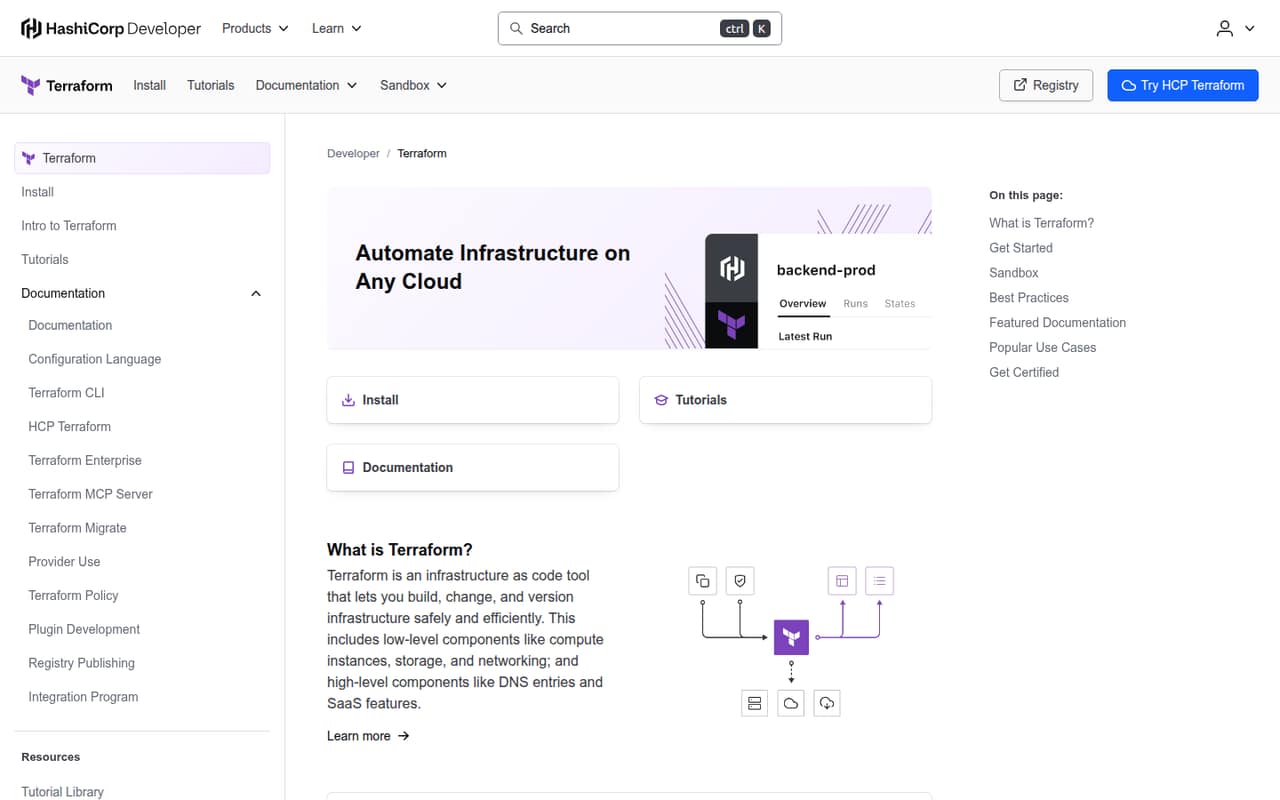
Terraform is our first stop for a small team because its free plan covers up to 500 managed resources, and its listing says teams can avoid per-seat charges. That gives a team room to begin without a seat-based bill. The listing shows a $0.1 starting figure, but does not explain its billing basis; confirm what it measures before budgeting.
What works
- Free plan includes unlimited users
- Free covers up to 500 managed resources
- Manages compute, storage and networking
What doesn't
- Paid costs depend on hourly resource usage
- Free allows one concurrent run
- Annual prices are not published
- Best for developersPulumiPulumi
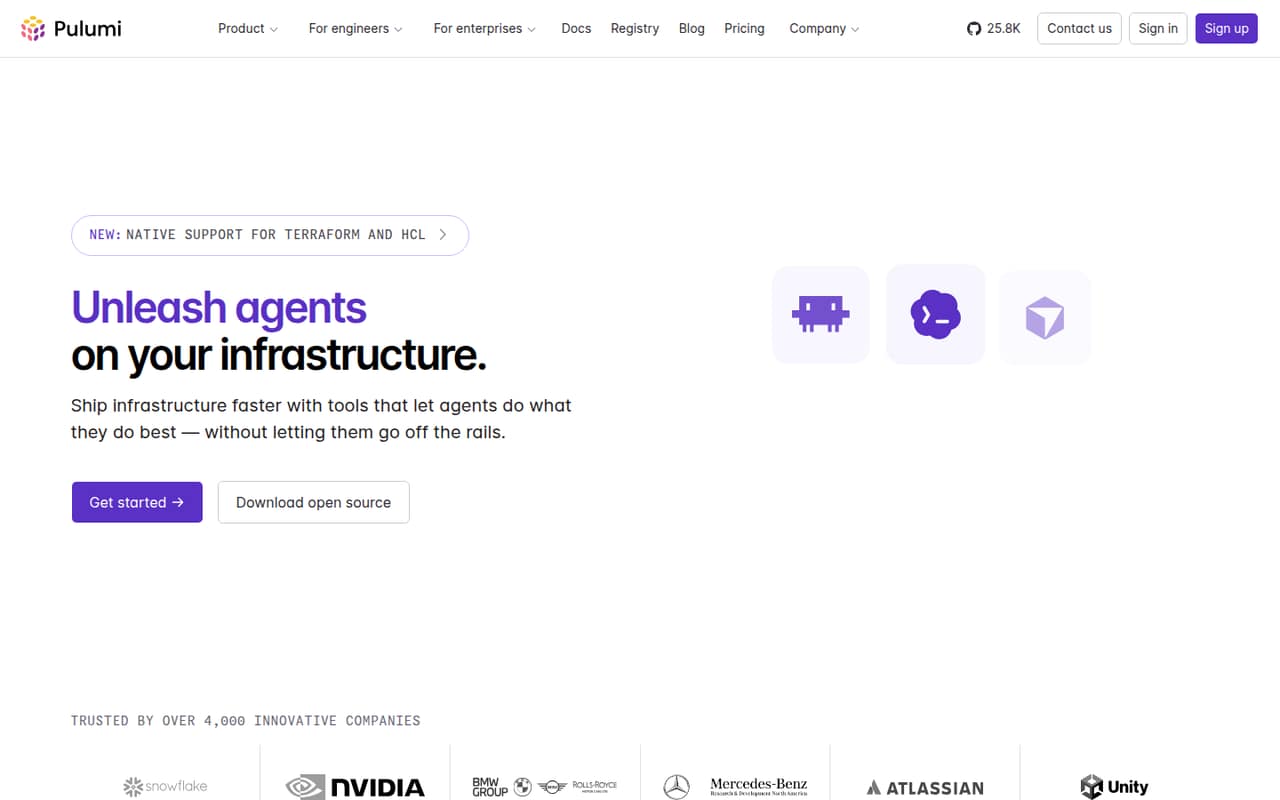
Pulumi suits a small team that is comfortable treating infrastructure like software and wants to share reusable components. It has a free start, then a $40 monthly team plan, which is a relatively clear figure to budget for a few people. Check the plan details against your intended use before committing; the listing does not spell out free-plan limits.
What works
- Supports several familiar programming languages
- Free plan includes unlimited projects and stacks
- Essentials allows unlimited users for $40 monthly
What doesn't
- Free plan is limited to one user
- Essentials includes only one primary cloud account
- Usage beyond included credits can add charges
- Best for Terraform runsScalrScalr
Scalr is a strong fit for a small Terraform team that can stay under 50 monthly runs or budget for runs as activity grows. Its listing shows a free plan and a $0.99 starting figure, but the billing basis is not clear, so ask what the price covers. Private execution agents are also listed as a fit for teams that need them.
What works
- Free plan includes up to 50 monthly runs
- No charges for users or resources
- Self-hosted agents included at no extra cost
What doesn't
- Business costs $0.99 per run
- Annual plan prices are not published
- Enterprise starts at 20,000 runs yearly
- Best free automationSaltSalt
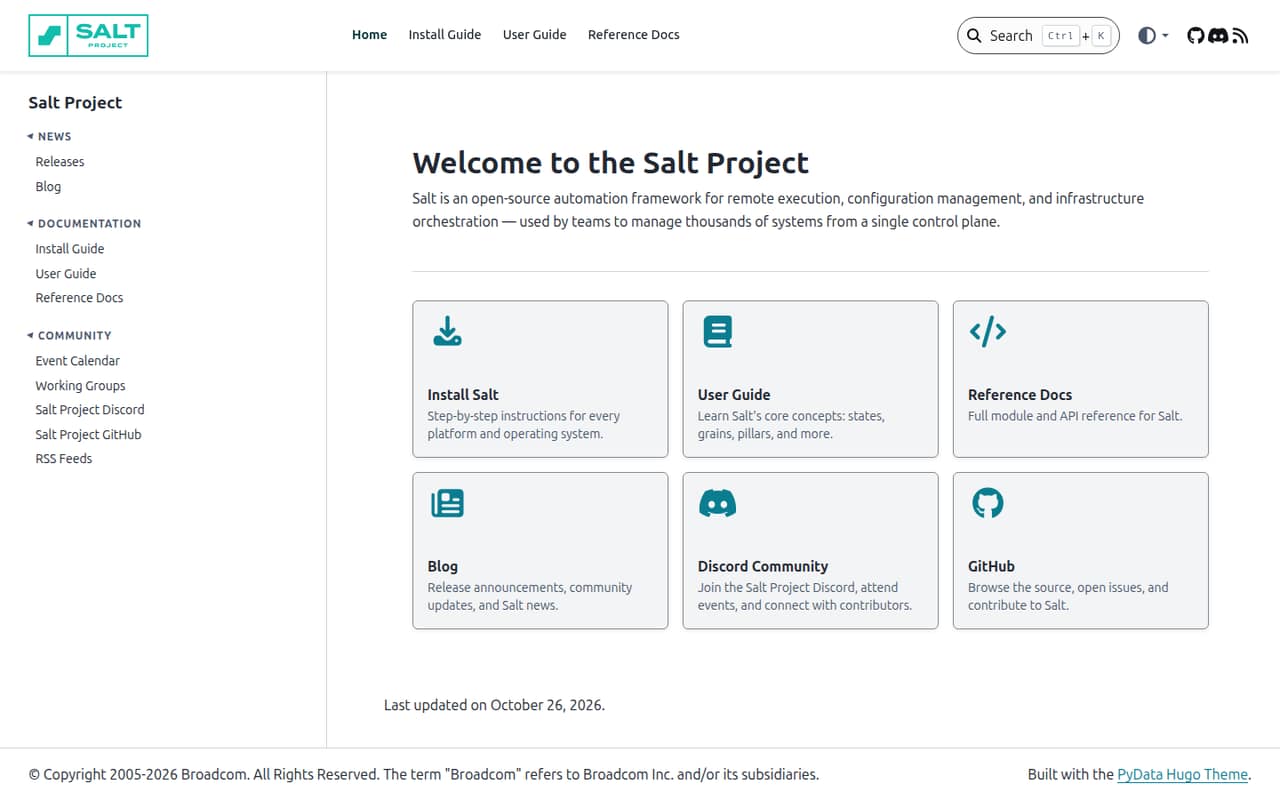
Salt costs nothing to license, making it appealing when budget is the main constraint and the team has the technical skills to take on setup. Its fit is broader than defining infrastructure: the listing highlights managing multiple systems and automating configuration changes. Expect to trade money saved on licensing for staff time and technical effort.
What works
- Open-source software with no listed license price
- Remote execution across managed systems
- Configuration management and orchestration in one framework
What doesn't
- Commercial plans and billing options aren't published
- Setup time isn't published
- No published seat pricing for small teams
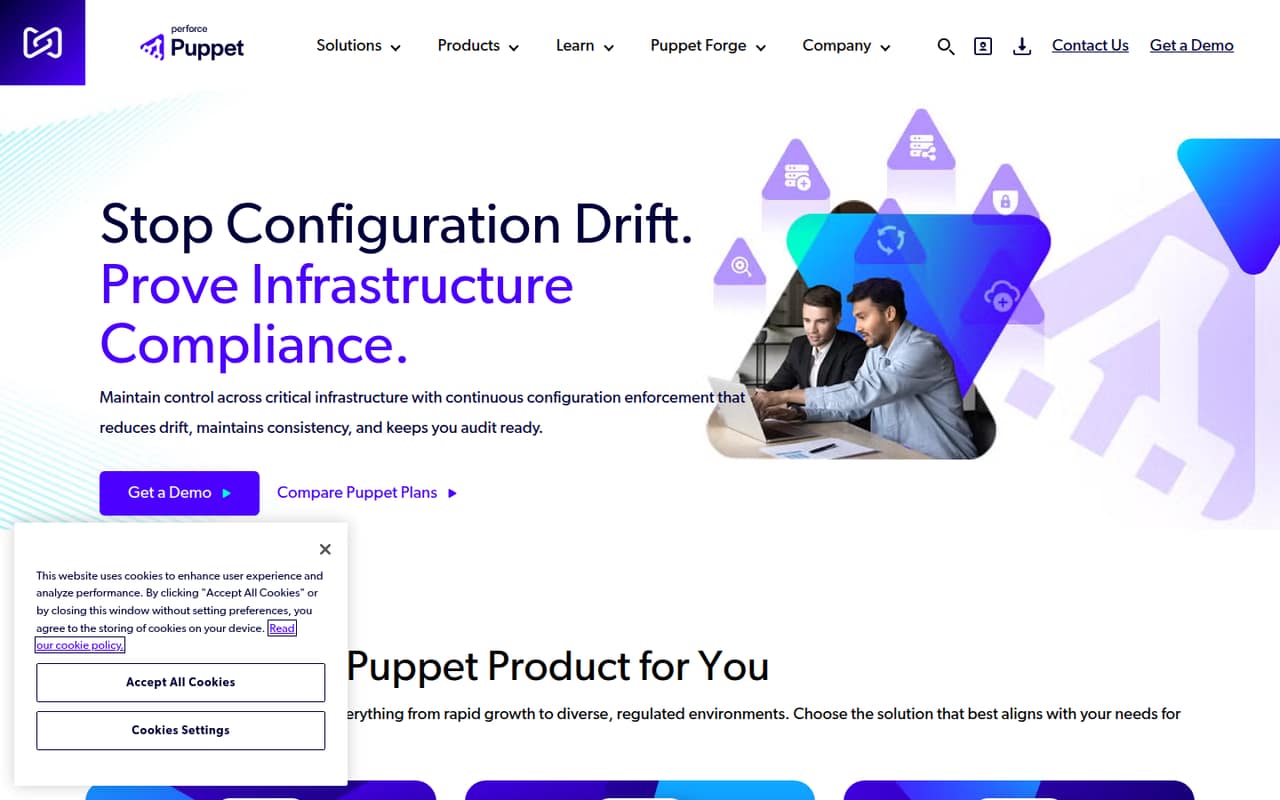
- Best for configuration driftPuppetPuppet
Puppet is worth a look if your main job is enforcing configuration and correcting drift across a modest fleet. Its free plan is listed for fewer than 25 nodes, a useful boundary to check against your inventory. Learning and budgeting can become less straightforward as you grow, so ask how paid costs change before you standardize on it.
What works
- Free plan covers fewer than 25 nodes
- Automatically corrects configuration drift
- Run reports show changes and actions
What doesn't
- Paid plans use custom pricing
- Monthly prices are not published
- Free plan is limited by node count
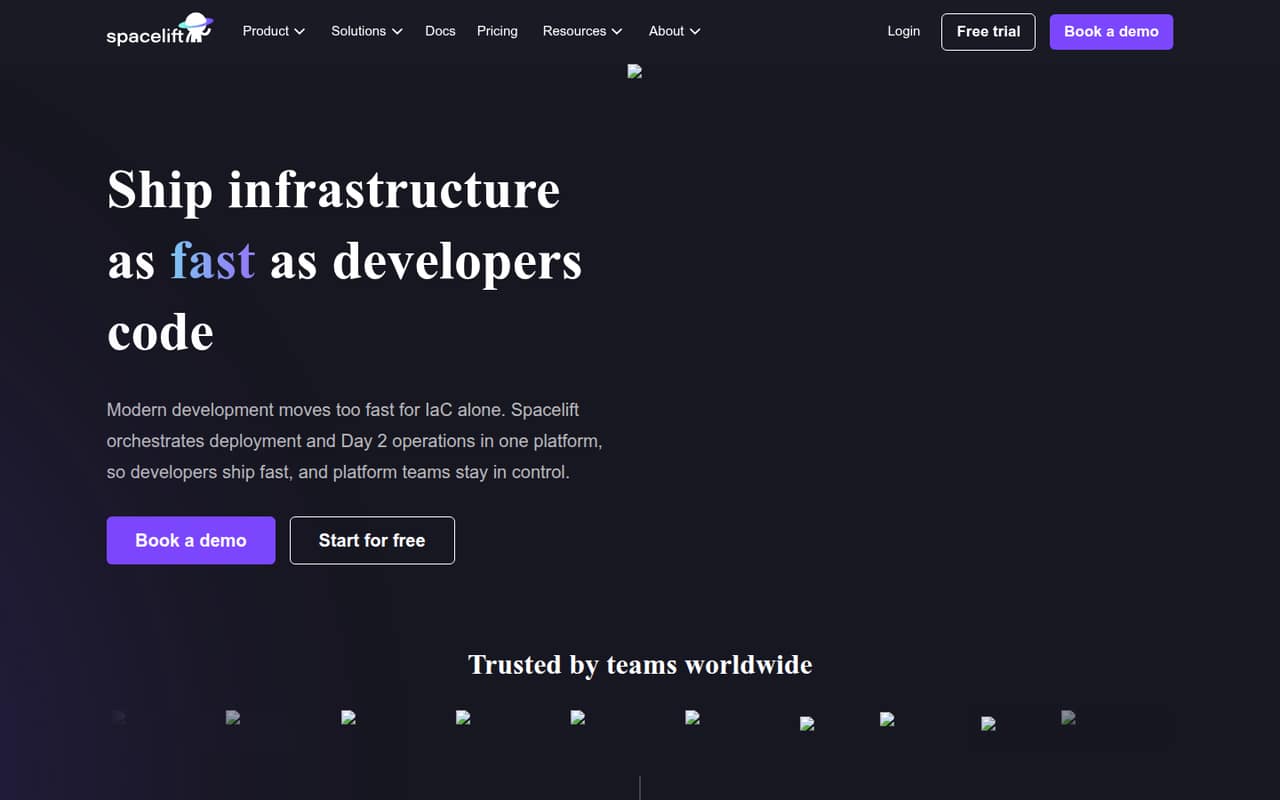
- Best for IaC governanceSpaceliftSpacelift
Spacelift fits teams that want to standardize several IaC tools or add policy guardrails and drift management. A free plan is listed, while the paid starting point is $399 per month with annual billing—a meaningful commitment for a team of a few. Confirm what the free plan includes and whether the governance features justify that paid step.
What works
- Orchestrates Terraform, OpenTofu, CloudFormation, Pulumi, Kubernetes, and Ansible
- Free plan includes two users and OIDC SSO integration
- Policy as Code engine is included in Starter
What doesn't
- Starter costs $399 per month on an annual subscription
- Starter's 10-user allowance makes a few seats costly
- Free is limited to two users
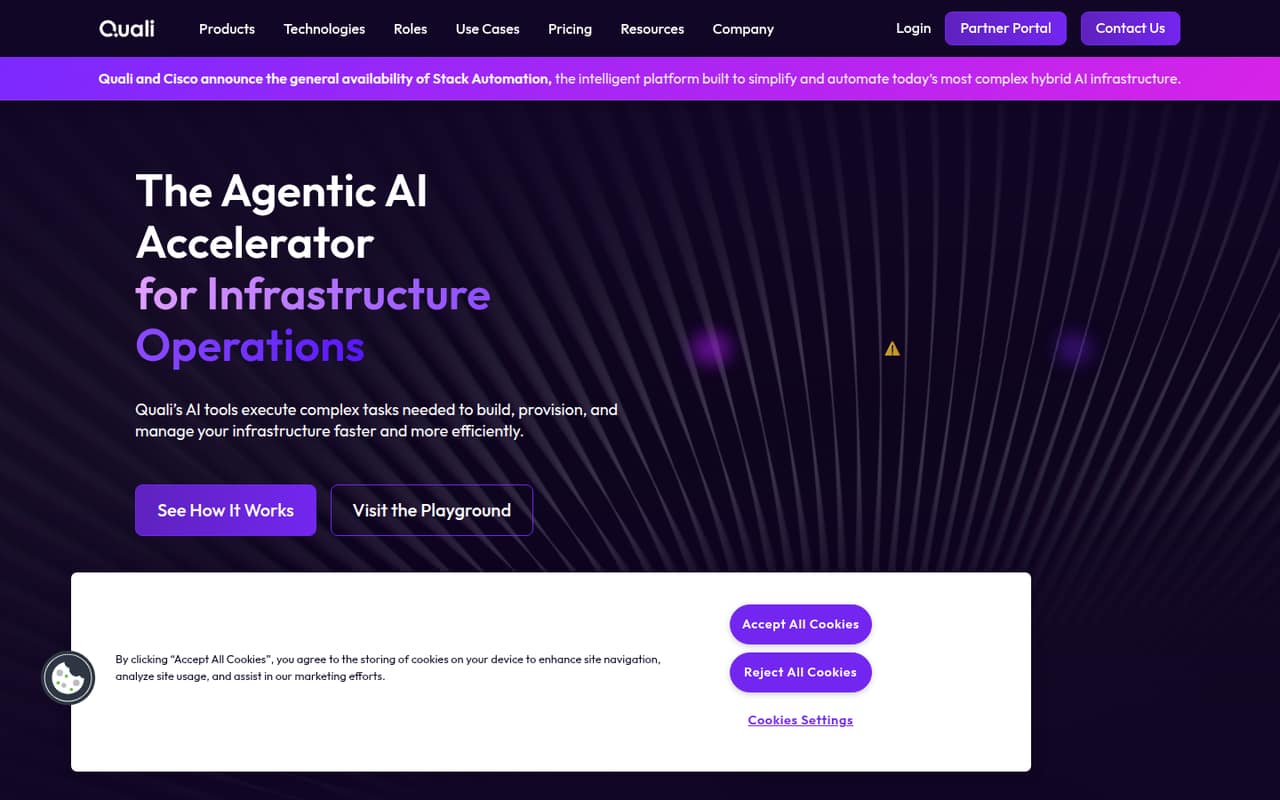
- Best for hybrid infrastructureQualiQuali
Quali is aimed at teams managing hybrid infrastructure and standardizing self-service provisioning and environment governance. Its listing shows a free plan and a $19 starting figure, but says costs depend on environments rather than team size. Ask the vendor to price your expected environments; a low entry figure alone is not enough to forecast the bill.
What works
- Pro includes up to 50 users
- AI tools can generate infrastructure blueprints
- Supports cloud and on-premises asset discovery
What doesn't
- Pro charges per provisioned environment, not per seat
- Free-plan features and limits aren’t published
- Annual Pro pricing isn’t published
- Best for managed automationRed Hat Ansible Automation PlatformRed Hat Ansible Automation Platform
Red Hat Ansible Automation Platform is a candidate when a team needs managed automation across an enterprise, rather than a lightweight IaC starting point. Its price is custom quote, so a small team cannot assess the real cost from a published starting price. Request a quote and confirm the plan, support, and setup requirements that apply to your organization.
What works
- Designed to create, manage, and scale automation
- Includes credential storage, surveys, and scheduling, per users
- Templates have an API, per a Reddit commenter
What doesn't
- Red Hat does not publish plan prices
- No free plan is listed
- Users report a steep learning curve
- Best for platform governanceFacetsFacets
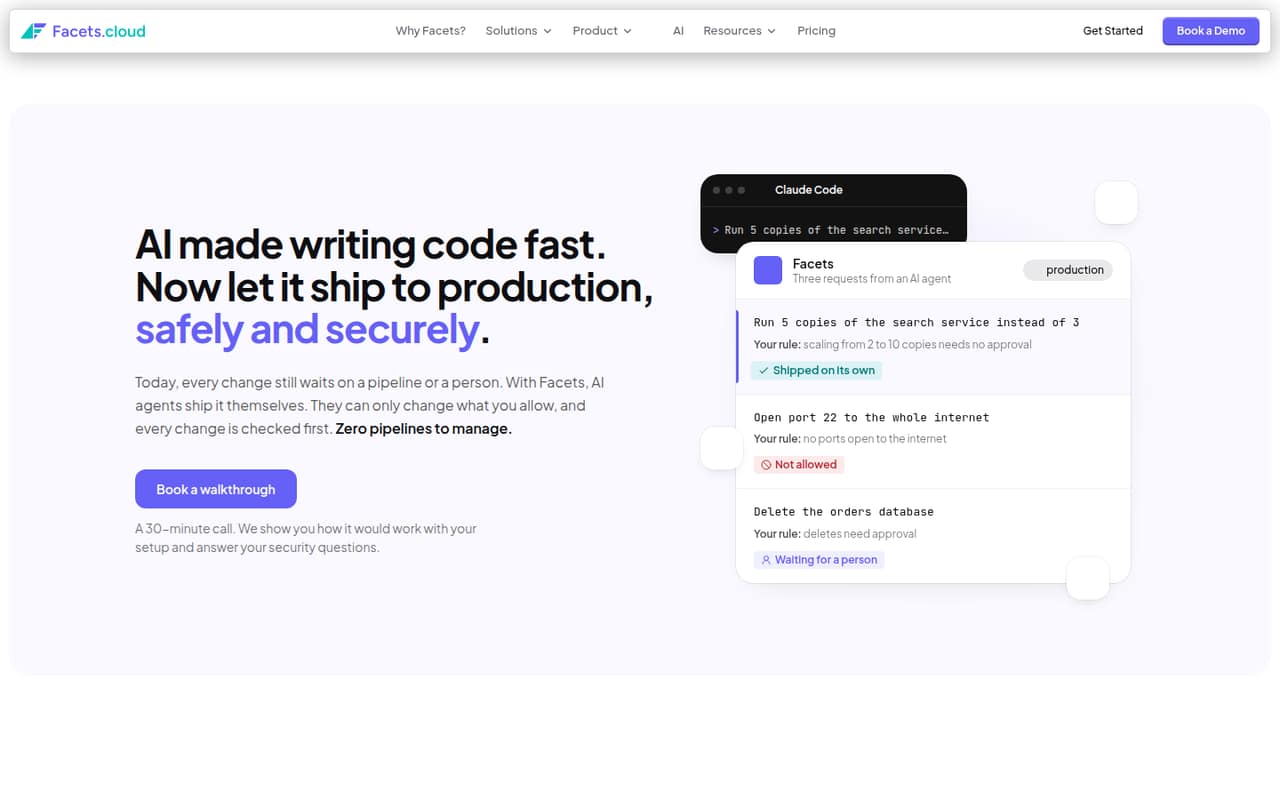
Facets is aimed at platform teams that want reusable deployment rules, governance for AI-driven changes, or self-hosted control. Its $799 monthly entry price makes it a difficult fit for most budget-conscious teams of a few people. Consider it when those platform needs are real, and ask what is included in the entry plan before comparing total cost.
What works
- Checks agent requests against reusable contracts
- Supports human approval for some actions
- Combines infrastructure and release steps
What doesn't
- No free plan
- SaaS starts at $799 per month
- SaaS annual price is not published
03How we chose
We ranked these tools for a team of 1–10, putting practical entry costs and useful free plans ahead of enterprise breadth. We weighed published resource, node, and run limits; the stated cost for a few people; and the technical effort implied by each tool’s intended use. Vendor documentation is important for confirming plan boundaries and setup needs, and Reddit sentiment can flag recurring user concerns. Treat unclear pricing units and unpublished limits as questions for the vendor, not assumptions in a budget.
04Check the free plan against your actual workload
A free plan is only useful if its limit matches the work your team expects to do. Terraform lists up to 500 managed resources; Puppet lists fewer than 25 nodes; and Scalr’s small-team fit is tied to staying under 50 monthly runs. Those are different measures, so count the resources, nodes, or runs that apply to your setup before comparing tools.
For Salt, the listing says licensing costs nothing, but that does not remove the time needed to set it up and run it. For Pulumi, Spacelift, and Quali, confirm the free-plan limits and included features with the vendor before relying on them. Ask what happens when you hit a limit, too: the cheapest start can become a poor fit if growth triggers a costly plan change.
05Budget beyond the headline starting price
A price listed as a starting figure is not necessarily the price your team will pay. Pulumi lists a $40 monthly team plan, while Spacelift lists a $399 monthly starting point for paid teams with annual billing. Facets lists a $799 monthly entry price. Those figures are easier to compare than custom pricing, but check what each plan includes before deciding.
For Terraform and Scalr, the listings show $0.1 and $0.99 starting figures without making the billing basis clear. Quali says costs depend on environments, not team size; Red Hat Ansible Automation Platform requires a custom quote. Ask vendors to price your expected usage and explain overages. Also factor in setup effort: a no-license-cost tool can still take valuable engineering time to configure and maintain.
Questions people ask
What is the best infrastructure as code tool for a small team?
Terraform is our default starting point for a small team: its free plan covers up to 500 managed resources, and the listing says teams can avoid per-seat charges. Pulumi is a good alternative for teams comfortable with software development and able to budget for its $40 monthly team plan.
Can a small team use infrastructure as code for free?
Yes. Terraform lists a free plan for up to 500 managed resources, while Salt costs nothing to license. Puppet lists a free plan for fewer than 25 nodes. Check each tool’s limits and setup needs; free licensing does not necessarily mean zero operating effort.
How much does infrastructure as code software cost?
Published figures vary: Pulumi lists a $40 monthly team plan, Spacelift starts at $399 per month with annual billing, and Facets lists a $799 monthly entry price. Quali’s price depends on environments, and Red Hat Ansible Automation Platform uses custom quotes. Confirm what a starting price covers.
When should a small team move beyond a free plan?
Revisit the plan when your resource, node, or run count approaches its limit, or when the team needs features the free plan does not include. Ask the vendor to price your expected usage before you hit the boundary, so a sudden plan change does not surprise your budget.