
We may earn a commission if you buy through links on this page. It never changes a score or a ranking. How we make money
The bottom line
Strong supplier-risk coverage, but unclear pricing and disputed scores make it hard to recommend on a small budget.
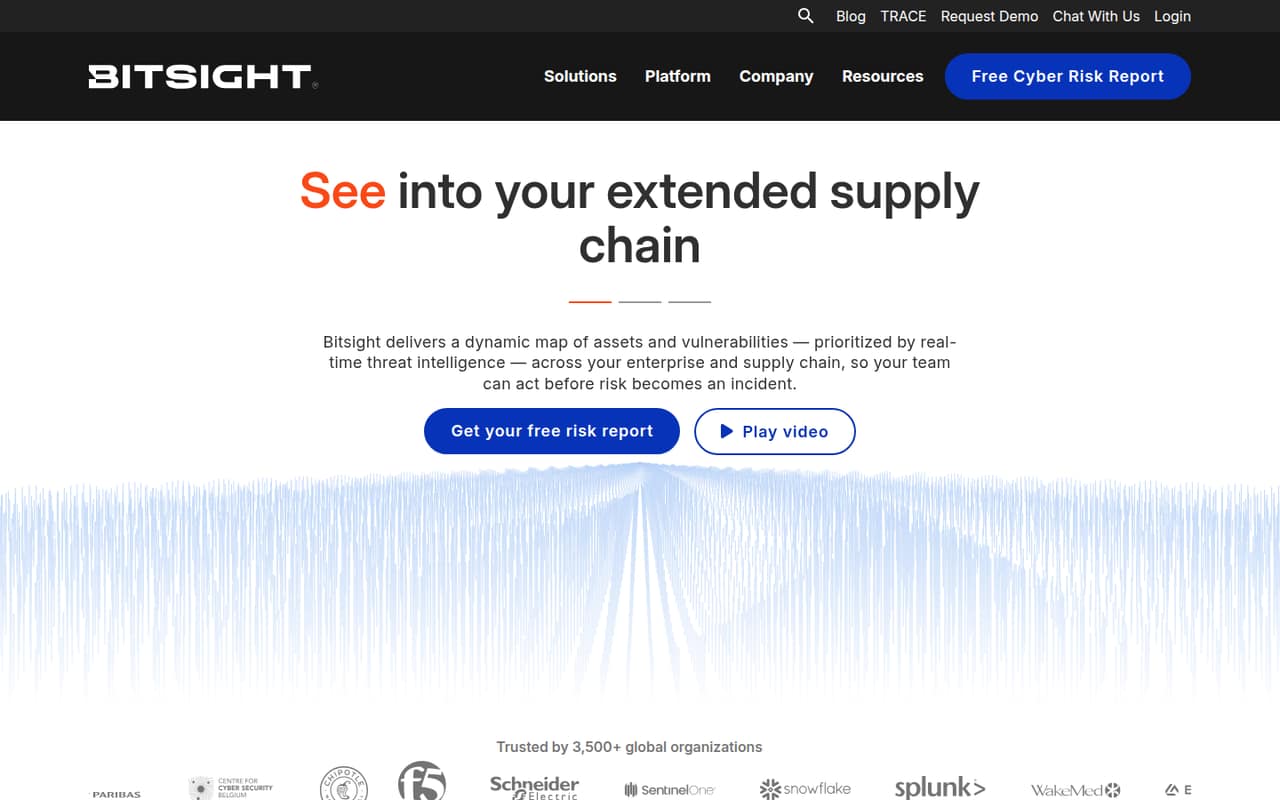
Bitsight helps teams monitor third-party exposure, map assets and prioritize cyber risks with threat and business context. It is most relevant when customers, insurers or regulators expect formal supplier oversight—not when a small team simply needs a basic vulnerability scanner.
The pricing page lists no free plan or public starting price, and says pricing requires a request. Reddit users report disputed findings and pressure to improve scores, so ask for a clear explanation of coverage, evidence and dispute options before signing.
Good fit if
- Teams monitoring many suppliers
- Companies facing customer score demands
- Security leaders reporting cyber risk
Skip it if
- Teams needing a free security tool
- Buyers requiring transparent seat pricing
- Small teams seeking internal vulnerability scans
ScoresHow it rates
What works
- Monitors third-, fourth- and nth-party exposure
- Maps assets, subsidiaries and cloud environments
- Adds threat context to vulnerability findings
- Prioritizes findings with exploit-likelihood scoring
- Produces reports for executives and regulators
What doesn't
- No public starting price or seat costs
- No free plan is listed
- Trial availability is not listed
- Users report disputed or misattributed findings
- A commenter says scanning can be slow
01Who Bitsight is for
Bitsight is aimed at organizations that need to understand cyber exposure across suppliers, subsidiaries and other connected businesses. Its tools cover third-party risk, exposure management, threat intelligence and security posture reporting. In plain terms, it maps internet-facing assets and vulnerabilities, then adds threat and business context to help teams decide what deserves attention.
For a 1–10-person team, it makes sense when supplier oversight is a real job: for example, when customers, insurers or regulators ask for documented risk monitoring. A small security team could use the vendor monitoring and executive reporting features without building every assessment from scratch. But this is an enterprise-oriented purchase, not an obvious fit for a small team watching every subscription. Prices are by request, and the listed plans offer vendor-count or license bands rather than a clear small-team price. If you mainly need to scan your own systems, confirm that Bitsight covers that specific job before requesting a quote.
02Bitsight free plan and trial
The pricing page lists no free plan, and it does not list a free-trial offer. That leaves a small team without a no-cost way to assess the platform through the published pricing information. Ask Bitsight whether it offers a guided evaluation, what data it will use, and whether an evaluation includes the products your team actually needs.
The lowest-tier named posture-management option is Basic, but the pricing page says pricing requires a request and does not publish seat or usage limits. Continuous Monitoring is another listed product, with tiers based on vendor counts, but its price is also not published. Neither is a confirmed low-cost entry point until Bitsight provides a quote. Before agreeing to a sales process, ask for the minimum contract, included users or licenses, and whether a small supplier portfolio can be covered on the same terms.
03What a small team pays for Bitsight
The pricing page does not publish monthly or annual prices, so we cannot give a defensible cost for one person, three people or five. The billing unit is listed as per month, but that is not a rate. There is no public per-seat figure to multiply, and no annual discount or total contract price is listed. Ask for separate one-, three- and five-user quotes, with both monthly and annual terms, before comparing it with other GRC tools.
The listed Continuous Monitoring tiers cover 1–50, 51–100, 101–500 or unlimited vendors. Expanded Risk Coverage / Continuous Monitoring + Vendor Risk Management uses the same vendor bands, but prices are not published for either option. Security posture management has Basic, Standard and Advanced plans; seat and usage limits are not generally published, while Advanced lists five MySubsidiary licenses. Threat Intelligence lists one, two-to-five or six-plus licenses, with other limits unpublished. Professional Services is listed for Third-Party Risk Management, but its add-on price is not published. Treat the quote—not a guessed seat calculation—as the budget number.
04Getting started with Bitsight
A precise setup timeline is not published in the pricing information, so a small team should ask Bitsight to scope onboarding before budgeting staff time. The product covers several distinct jobs—supplier monitoring, exposure management, threat intelligence and posture reporting—so decide which one is the day-one priority. Ask what information the team must provide, how assets and suppliers are attributed, and what work is needed to validate findings.
The public plan details do not specify required integrations or setup steps. That makes a short vendor walkthrough worthwhile: confirm whether your existing security, procurement or ticketing tools connect, and whether those connections are included in your quote. Learning effort may depend on how much context your team needs to add to automated findings. One Reddit commenter says scanning is very slow, but that is an individual report, not a published service benchmark. Build time for reviewing findings and checking ownership rather than assuming every alert is ready to act on.
05When small teams outgrow Bitsight
Bitsight is more likely to become a budget and workflow question than a seat-limit question: the vendor does not publish general seat or usage limits for its posture plans, and prices require a request. If your supplier list grows, Continuous Monitoring has listed bands up to unlimited vendors. If the team needs threat intelligence, the listed license bands move from one to two-to-five and six-plus, but the associated costs are not public. Ask how pricing changes at each boundary before expanding coverage.
A different warning sign is relying on a score as if it were a complete supplier-risk program. One Reddit commenter says these services have useful monitoring cases, especially for identifying mass exploitation, but warns against treating them as complete third-party risk management. Other Reddit users describe disputed findings, mismatched assets and pressure from customers to improve scores. If your team needs a clear challenge process or broader supplier workflows, ask how Bitsight handles those needs before expanding the contract—or consider whether the score is driving more work than useful decisions.
From the threadsWhat users say
Reddit sentiment is strongly negative about score accuracy, attribution and the pressure organizations feel to improve ratings. A minority view sees value in supplier monitoring and identifying widely exploited issues, but commenters caution against treating a score as a complete risk program.
they do have strong use cases, particularly in any scenario where you need to identify an issue that has had mass exploitation
Yup, absolutely HATE their scummy business model
I got it from our cyber insurance company
It’s okay scanning is very slow
Questions people ask
How much does Bitsight cost?
Bitsight does not publish monthly or annual prices in the listed pricing details; pricing requires a request. Costs for one, three or five users are therefore not calculable from public rates. Ask for a written quote showing the products, vendor bands or licenses included, contract term, and any Professional Services fees.
Does Bitsight have a free plan or trial?
The pricing page lists no free plan, and no free-trial offer is listed. Ask Bitsight whether it can provide an evaluation and what that includes. Confirm whether you can assess the specific product, supplier count and reporting features your team expects to buy.
Is Bitsight a vulnerability scanner?
Bitsight maps assets and vulnerabilities across organizations and supply chains, and its features include threat context and remediation prioritization. Its stated scope also includes third-party risk, threat intelligence and security posture reporting. If you need an internal vulnerability scanner, ask Bitsight to confirm that it covers your systems and workflows.
What does Bitsight monitor?
Bitsight's listed capabilities include assets, subsidiaries, cloud environments and supply-chain exposure. Vendor monitoring can cover third-, fourth- and nth-party exposure. Its threat intelligence tracks compromised credentials, ransomware and active exploits, while posture reporting turns technical risk into reports for executives and regulators.
Can a company dispute its Bitsight findings?
Reddit users report concerns about disputed findings and asset attribution, including cases where they say unrelated infrastructure affected a rating. These are user accounts, not a description of Bitsight's formal process. Ask the vendor how to challenge an asset or finding, what evidence is accepted, and whether support access has a separate cost.
Sources
- Bitsight homepage
- Bitsight pricing, compiled via web search from bitsight.com, upguard.com
- Reddit: Are you using BitSight \ SecurityScoreCard ? What’s your thoughts about these products?
- Reddit: BitSight is snake oil, right?
- Reddit: Bitsight - totally bogus rating of my network
- Reddit: BitSight detecting internal devices on our public IP