
We may earn a commission if you buy through links on this page. It never changes a score or a ranking. How we make money
The bottom line
Useful checkout and selling tools, but fees and storefront fit may limit its appeal.
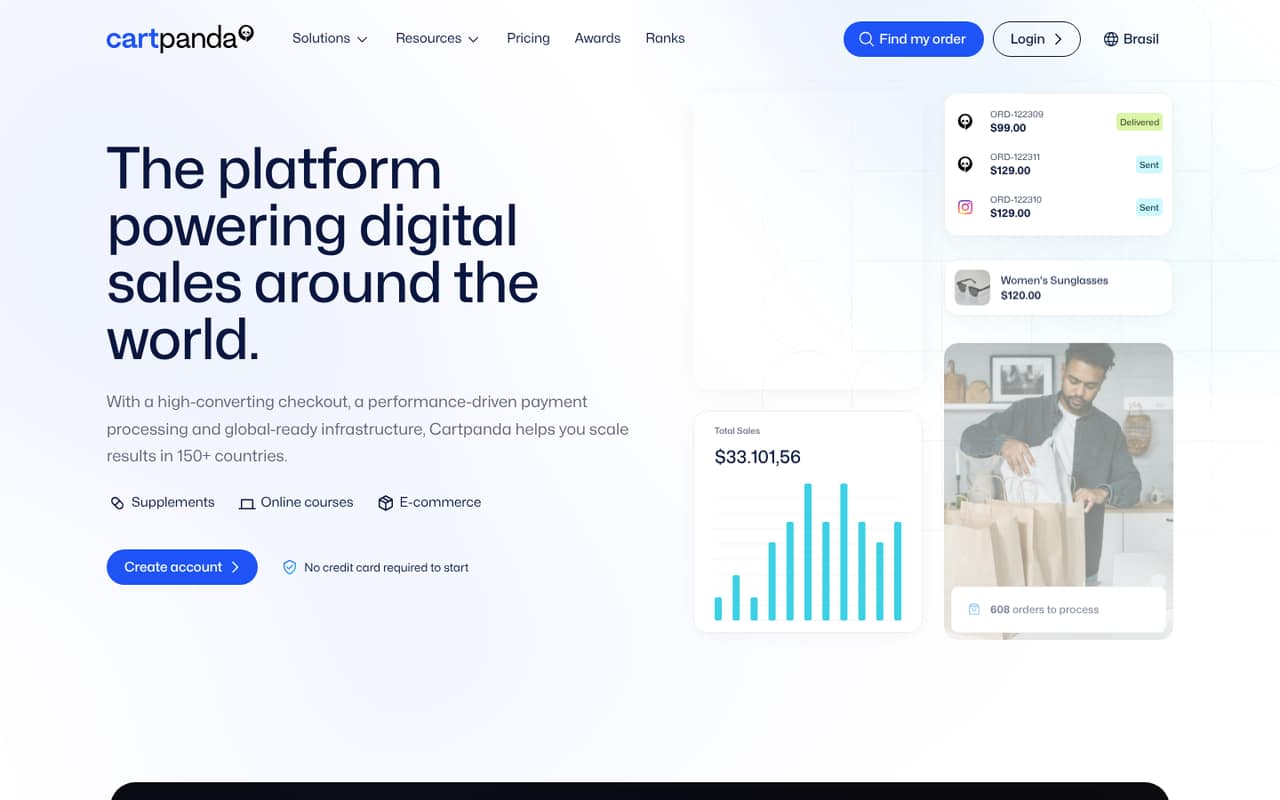
Cartpanda brings physical and digital sales, order management, analytics, and customizable checkout into one platform. Its free Basics plan is for building a store before selling; the cheapest listed selling plan is $0.99 per month, plus a per-sale fee.
For a small team, seat limits and transaction fees matter more than the headline subscription price. One Reddit seller criticized storefront quality, and another ran into trouble connecting Cartpanda checkout with a Shopify theme.
Good fit if
- Pre-launch sellers building a store
- Small teams selling digital products
- Stores wanting checkout upsells
Skip it if
- Teams needing published setup guidance
- Stores prioritizing polished storefront design
- High-volume sellers avoiding per-sale fees
ScoresHow it rates
What works
- Sell physical and digital products
- Free plan for pre-launch store building
- Checkout supports one-page or three-step templates
- Homepage says checkout accepts over 135 currencies
- Order bumps and upsells are included tools
What doesn't
- Selling plans charge transaction fees per sale
- Light allows only two member accounts
- Annual-billing prices are not published
- Setup effort and usage limits are not published
- A Reddit seller criticized storefront quality
01Who Cartpanda is for
Cartpanda is for small businesses that want to sell physical and digital products from one platform. It combines order, payment, and analytics tools with a customizable checkout, including one-page and three-step templates. The homepage says sellers can accept more than 135 currencies, and the platform also offers order bumps and upsells.
A solo seller can build a store on the free Basics plan before selling, but the listed free-plan limits are not published. Once you start taking sales, Light costs $0.99 per month and allows two member accounts. A team of three or five needs Starter at $29 per month, before transaction fees. That makes Cartpanda worth considering if checkout and selling tools are the main job. If storefront design is a priority, weigh a Reddit seller’s criticism of the finished site before committing.
02Cartpanda free plan and trial
Cartpanda’s free Basics plan is aimed at affiliates and sellers who have not launched yet. The pricing page lists tools to start for free and build and customize a store before selling. Seat and usage limits are not published, so ask Cartpanda what applies to your team before setting up a pre-launch workflow.
Basics is not listed as a plan for processing sales. The cheapest listed plan for a small store that is starting to sell is Light, at $0.99 per month. It includes two member accounts and charges 9.9% of each sale plus $1 per transaction. No free trial is listed. Annual-billing prices are not published, so compare using the monthly prices.
03What a small team pays for Cartpanda
For one seller who is ready to take orders, Light is the lowest-priced option at $0.99 per month. It includes two member accounts and charges 9.9% per sale plus $1 per transaction. The subscription is the same whether you use one or two accounts; the per-sale charges depend on sales. The free Basics plan is for building before selling.
A three-person team needs Starter, listed at $29 per month for up to five member accounts. A five-person team can use that same plan and subscription price. Starter charges 9.5% per sale plus $1 per transaction. Premium is $99 per month for up to ten accounts, with a 9% per-sale fee and $1 fixed fee. Annual prices are not published, and the pricing lists no add-ons. Budget for transaction fees on top of the monthly subscription; ask Cartpanda how its fees apply to your payment mix and expected sales.
04Getting started with Cartpanda
The Basics plan is listed for building and customizing a store before selling, so a pre-launch seller can begin there. Cartpanda describes customizable checkout templates, order tools, payments, and analytics, but setup time and the learning curve are not published. We would budget time to configure the store and checkout, add products, and confirm how orders and payments will be handled before launch.
Required integrations are not specified in the available plan details, so a small team should check which connections it needs on day one. One Reddit thread describes a seller struggling to connect Cartpanda’s buy button and checkout to a Shopify Refresh theme; a commenter pointed to a Cartpanda guide. That is a specific integration issue, not proof that every setup is difficult. Ask support to confirm compatibility with your current storefront before switching.
05When small teams outgrow Cartpanda
The first clear upgrade point is team size: Light has two member accounts, Starter has five, Premium has ten, and Advanced has 50. A third teammate requires Starter at $29 per month; a sixth requires Premium at $99. Those plans lower the listed transaction percentage from 9.9% on Light to 9.5% on Starter and 9% on Premium, but all retain the $1 fixed fee per sale. Compare the fee difference with your sales volume before upgrading.
A team may also outgrow Cartpanda if it needs more certainty about setup, integrations, or storefront presentation. One Reddit seller called the finished site weak and complained about image quality and loading; another described difficulty connecting checkout to a Shopify theme. Those are individual reports, not universal findings, but they make storefront checks and integration questions important before launch. Reddit comments also raised concerns about ecommerce platforms becoming limiting as a business scales.
From the threadsWhat users say
The available Reddit comments lean critical, particularly about storefront presentation and scaling. One seller also reported a checkout integration snag, while the discussion offers little direct evidence about Cartpanda support.
acho a versão final do site bem fraca, parecendo aqueles sites bem amadores mesmo
Shopify é melhor por ser mais rápido e mais profissional, mas todas essas plataformas são muito limitadas se tu quiser escalar no futuro
Estou quebrando cabeça a dias como faço para adicionar o botão "buy now" da Cartpanda no tema Refresh
começar a vender sem um Checkout transparente não dá!
Questions people ask
What is Cartpanda used for?
Cartpanda is an online selling platform for physical and digital products. It includes tools for managing orders, payments, and analytics, along with a customizable checkout. Its listed tools also include order bumps and upsells. The homepage says sellers can accept over 135 currencies.
Is Cartpanda legitimate?
Cartpanda presents itself as a platform for selling online, but that alone does not verify a seller’s contract, payment arrangements, or business relationship with the company. Before relying on it, review the terms, fees, and payout details with Cartpanda and confirm they fit your business.
Is Cartpanda secure?
Cartpanda describes an anti-fraud system focused on approval rates and payment security. That description does not establish a particular security certification or guarantee for every transaction. Ask the vendor about its security practices, payment handling, and the protections that apply to your account and customers.
Where is Cartpanda located in the USA?
Cartpanda’s US location is not published in the pricing and product details available here. If the company’s location matters for your tax, contract, or data-handling requirements, ask Cartpanda for its legal entity and business address before signing up.
What does Cartpanda cost once I start selling?
The listed Light plan costs $0.99 per month and includes two member accounts. It also charges 9.9% per sale plus a $1 fixed transaction fee. A three- or five-person team needs Starter at $29 per month, with a 9.5% per-sale fee and the same $1 fixed fee.