
We may earn a commission if you buy through links on this page. It never changes a score or a ranking. How we make money
The bottom line
A broad research toolkit for teams that can get a quote before committing.
A small team that regularly interviews users or runs usability and diary studies could use dscout to recruit participants, run research and organize findings. Its AI features can help draft studies, moderate interviews and surface themes, but the vendor doesn’t publish a starting price or seat cap.
There’s no free plan or published trial, so we wouldn’t shortlist it on a tight budget without first asking for a quote. Reddit discussion is mostly from people earning money as participants, not teams buying research software; those reports are mixed, with some success alongside frequent screening rejections.
Good fit if
- Teams running regular user research
- Researchers who need participant recruitment
- Teams organizing feedback across studies
Skip it if
- Teams that need a free research tool
- Buyers who need public per-seat pricing
- Teams seeking a UI design editor
ScoresHow it rates
What works
- Supports interviews, usability tests and diary studies
- Can recruit Dscout participants or your own users
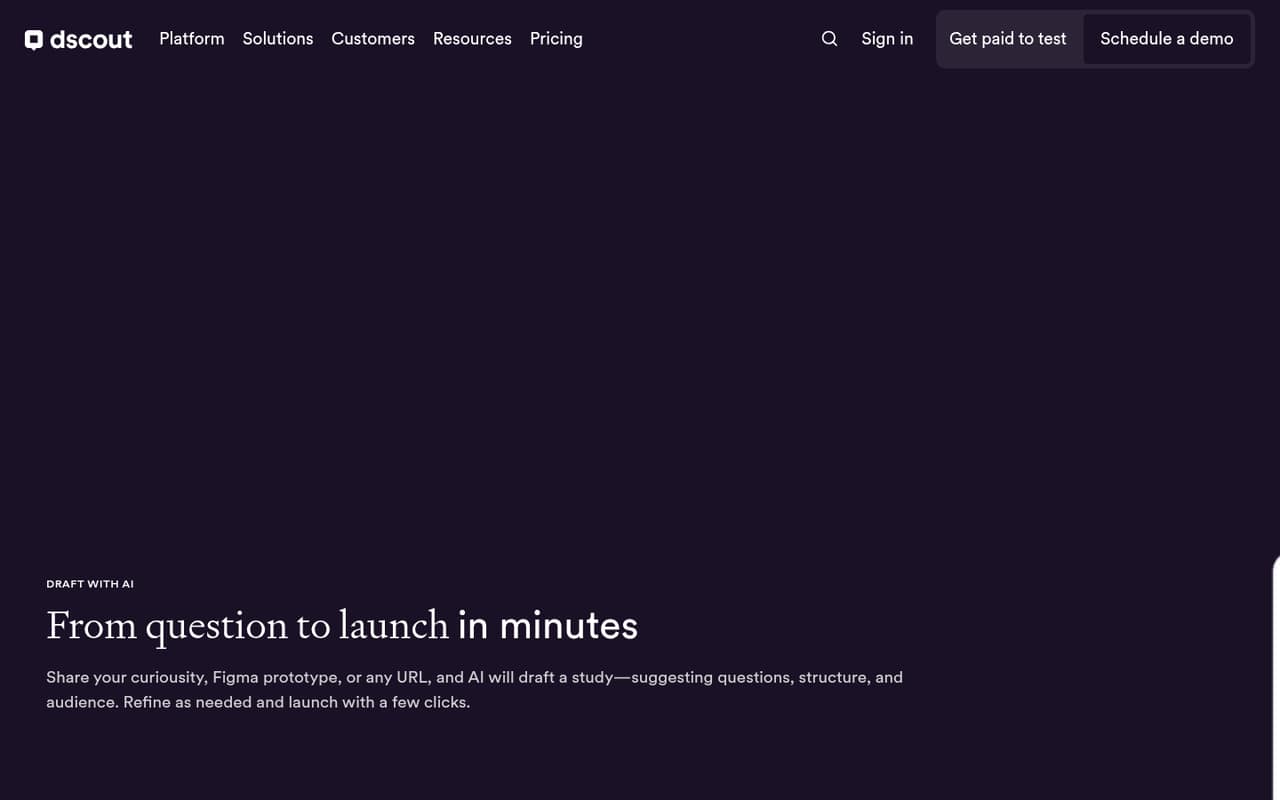
- AI can draft studies from a prompt, Figma prototype or URL
- AI moderation can ask follow-up questions
- Analysis tools surface themes and notable moments
What doesn't
- No free plan is listed
- No free trial is listed
- Monthly and annual prices aren't published
- Seat caps aren't published
- Setup details and integrations aren't published
01Who dscout is for
A small team needs dscout if it regularly talks to customers and needs a home for recruiting, running and analyzing research. It is designed for product and research teams, including teams of one to ten, rather than for people looking for a survey side gig or a UI design editor.
The platform supports interviews, usability tests, diary and field studies, surveys, and website intercepts. Teams can recruit from Dscout’s participant pool or invite their own users. AI tools can draft a study from a prompt, Figma prototype or URL, moderate interviews, and help surface themes and notable moments. That range could suit a lean product team doing several kinds of research, but a team that only needs occasional feedback may not need a full research platform. The vendor doesn’t publish a seat cap or starting price, so a small team should confirm both before budgeting.
02dscout free plan and trial
The available pricing listing says dscout has no free plan, and it lists no free trial. That means a small team shouldn’t count on being able to run a live study or test the full workflow at no cost before buying.
The cheapest named plan is Core, which lists flex seats and unlimited concurrent studies. Its price and minimum purchase are not published, and the numeric seat cap is not published either. Ask dscout whether a small team can buy Core with just one or a few seats, what the minimum contract is, and whether it offers a guided evaluation. Without those answers, there’s no confirmed free way in and no published entry price to compare with a small-team budget.
03What a small team pays for dscout
The available pricing listing names Core, Select and Enterprise, but monthly and annual prices aren’t published. It also doesn’t publish a per-seat unit or numeric seat caps. As a result, we can’t calculate a supported cost for one person, three people or five people—or compare monthly billing with annual billing. Ask dscout for a quote showing the total for your team size, billing term, and any minimum seat or contract commitment.
Core is listed for teams needing flexible seats and studies, with unlimited concurrent studies. Select includes project design and delivery services and up to three concurrent projects. Enterprise includes those services and up to five concurrent projects. The listing shows no add-ons, but that doesn’t confirm whether extra services or fees are available. Before signing, ask what the project limits mean for your workflow, whether recruiting is included, and what the total price covers. Until dscout publishes prices, the cheapest workable plan for a small team is unknown.
04Getting started with dscout
A research team’s workflow would involve setting up a study, choosing a method and audience, recruiting participants or inviting its own users, then reviewing and organizing findings. Dscout’s feature description says AI can draft a study from a prompt, Figma prototype or URL, and can moderate interviews and surface themes. Those features may reduce some manual work, but they don’t establish how long setup takes or how much training a team needs.
The vendor doesn’t publish setup time, onboarding requirements or a list of integrations in the available pricing information. Figma is named as an input for AI study drafting, but that alone doesn’t establish a broader integration. Before buying, ask for a walkthrough of your specific study workflow, onboarding details, and confirmation of any integrations you need on day one. We can’t give a reliable setup-effort estimate without those answers.
05When small teams outgrow dscout
The available plan listing doesn’t publish seat caps or prices, so it’s hard to predict when team growth will raise the bill or force a plan change. Core lists unlimited concurrent studies; Select and Enterprise list project design and delivery services, with limits of three and five concurrent projects respectively. Ask dscout how those project limits relate to your studies and what happens if your workload exceeds them.
A team may also need to reassess fit if it wants a free entry point, clear per-seat budgeting or published integration and onboarding details. The Reddit discussions we found are from research participants, not teams buying dscout. Some participants describe earning money, while others report repeated application rejections or inconsistent opportunities. That feedback can’t tell us whether the business product works well for a research team, but it does show why participant recruitment and availability are worth asking about before relying on the platform.
From the threadsWhat users say
Participant-side Reddit sentiment is mixed: some commenters report earning money through missions, while others describe many rejected applications and variable results. These discussions concern taking part in research, not buying dscout as a team platform.
It's highly variable for me
Hundreds applied to and not accepted for any of them
Express missions basically got my foot in the door
For me most surveys on Dscout require video submissions
Questions people ask
What do you do on dscout?
Teams use dscout to recruit research participants, run studies and analyze feedback. Its listed research methods include usability tests, interviews, diary and field studies, surveys, and website intercepts. The platform also lists AI tools for drafting studies, moderating interviews, and surfacing themes and notable moments.
Does dscout have a free plan or trial?
The available pricing listing says there is no free plan and lists no free trial. Core is the cheapest named plan, but its price, minimum purchase and numeric seat cap aren’t published. Ask dscout whether it offers a guided evaluation and what a one-person or small-team quote would include.
How much does dscout cost for a small team?
Monthly and annual prices aren’t published, and the pricing listing doesn’t give a per-seat unit or numeric seat cap. That means we can’t calculate a reliable total for one, three or five people. Ask dscout for a quote that spells out the seat count, billing term, project limits and any minimum commitment.
Can dscout recruit participants for my study?
Yes. Dscout lists recruitment from its participant pool as well as the option to invite your own users. Before relying on its participant pool, ask the vendor about availability for your audience, recruitment timelines and whether recruitment is included in the price you’re quoted.
Is dscout legitimate?
Dscout is described as an experience research platform for teams. Reddit discussions also include people who use it as research participants and report receiving payments, but others describe frequent screening rejections and variable opportunities. Those participant reports aren’t a substitute for checking the business product’s terms, support and fit for your research workflow.