
We may earn a commission if you buy through links on this page. It never changes a score or a ranking. How we make money
The bottom line
Interplay offers flexible AI workflows, but custom pricing makes it a tough small-team budget call.
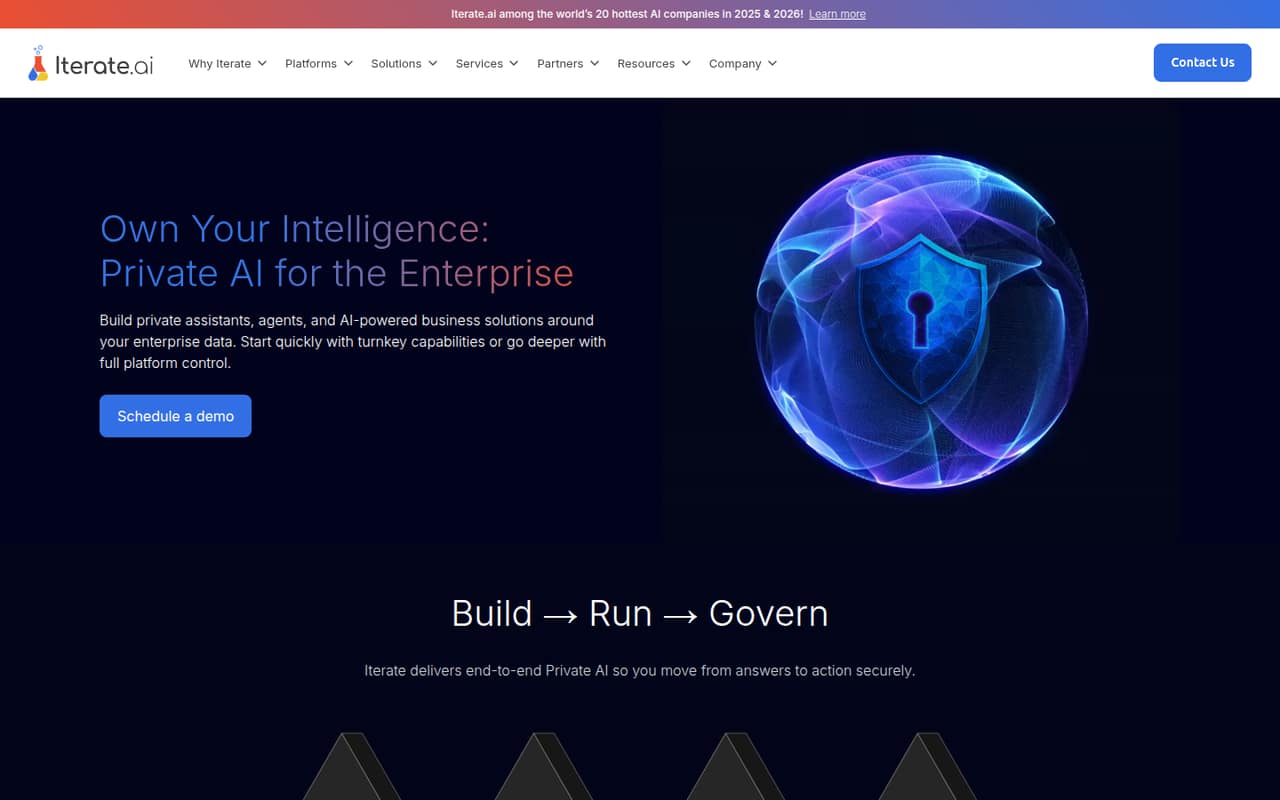
Interplay is Iterate.ai’s platform for building enterprise AI applications, agents, and workflows. Teams can develop visually or in code, connect enterprise systems, and deploy on infrastructure suited to their organization.
For a small team, the main catch is cost clarity: the pricing page lists a custom enterprise quote, with no published starting price, seat limits, or usage limits. We’d ask for a scoped quote before committing.
Good fit if
- Enterprise teams building AI workflows
- Small teams inside larger organizations
- Teams needing flexible deployment
Skip it if
- Teams needing a free plan
- Buyers requiring public seat pricing
- Teams seeking a simple self-serve tool
ScoresHow it rates
What works
- Build applications visually or in code
- Supports agentic workflows across enterprise systems
- Offers custom AI application design
- Includes a secure runtime
- Deployment can fit organizational infrastructure
What doesn't
- No free plan is listed
- No free trial is listed
- Pricing requires a custom quote
- Seat and usage limits aren't published
- Monthly and annual terms aren't published
01Who Interplay is for
Interplay is for organizations building AI applications, agents, and workflows around business needs. The platform supports visual or code-based development, connections to enterprise systems, and deployment across infrastructure that fits an organization’s architecture.
For a 1-10-person team, we see the clearest fit when that team is part of a larger company with enterprise systems to connect and a defined AI project to deliver. A small standalone business looking for a low-cost agent builder may find the buying process and custom quote hard to justify. Interplay’s description focuses on enterprise use, not a lightweight starter plan. Before making a shortlist, decide which workflow you want to automate, which systems it must connect to, and whether your team wants to build visually, in code, or both. Those needs will help you judge whether a vendor quote fits your budget.
02Interplay free plan and trial
The pricing information lists no free plan, and a free trial is not published. That means a small team should not plan on building a proof of concept at no cost through a public Interplay tier.
The cheapest way in is a custom enterprise quote from Iterate.ai. The pricing page does not publish a starting price, so ask sales whether a limited-scope project or a small number of users can qualify for a lower-cost engagement. Also ask whether you can evaluate the visual builder, integrations, and secure runtime before signing. Interplay’s product description covers those capabilities, but it does not establish what an evaluation includes or how long it takes. Get the trial or proof-of-concept terms in writing before budgeting staff time.
03What a small team pays for Interplay
The pricing page lists one option: Custom enterprise, priced by quote. It publishes no starting price, per-seat rate, or monthly or annual billing terms. As a result, we can’t give a reliable cost for one person or calculate a defensible total for a team of three or five. Per-seat math only works once Iterate.ai provides the quote structure.
The page also does not publish seat or usage limits. No add-ons are listed, but that is not a promise that every integration, deployment choice, or usage level is included in a quote. Ask for itemized pricing for your expected users, usage, integrations, and deployment setup. Request both monthly and annual options if available, plus any minimum commitment. Until the vendor shares those details, a small team can’t compare Interplay’s real cost with tools that publish per-seat plans.
04Getting started with Interplay
Interplay supports visual or code-based development, enterprise system integrations, custom AI applications, and deployment across infrastructure suited to an organization. That gives teams flexibility, but it also means setup depends on what they want to build and connect. The vendor does not publish a setup-time estimate in the available pricing information, so we would not budget this as a known, quick self-serve install.
For a small team, start by listing the workflow, enterprise systems, and deployment requirements that matter on day one. Ask Iterate.ai which integrations are ready to use, what configuration your team must handle, and whether the visual development route fits your needs without coding. Also confirm what help is included during setup and who manages the secure runtime. Those answers will show whether your team can lead the work or needs more support from the vendor.
05When small teams outgrow Interplay
Interplay’s main constraint for a growing small team may be the buying model rather than a published product cap. The pricing page does not list seat or usage limits, a public plan ladder, or monthly and annual terms. If your team needs to forecast costs as it adds people or activity, ask Iterate.ai for those thresholds and how the quote changes as usage grows.
There is no published limit here that tells us when a team must upgrade or move. Instead, watch for budget uncertainty: if the vendor cannot give you predictable costs for your expected users and workflows, compare tools with public seat pricing. Also revisit the fit if your needs shift away from enterprise system integrations, custom AI applications, or flexible deployment. Get the limits, renewal terms, and expansion pricing in writing before the project becomes important to daily work.
Questions people ask
Does Interplay have a free plan?
The pricing information lists no free plan. It also does not publish a free trial. If you want to evaluate Interplay before buying, ask Iterate.ai whether it offers a proof of concept, what features that includes, and whether there is a fee. The listed route to purchase is a custom enterprise quote.
How much does Interplay cost for a small team?
Interplay’s pricing is quote-based, and the pricing page lists no starting price or per-seat rate. It also does not publish monthly or annual billing terms. Ask Iterate.ai for an itemized quote for your team size, expected usage, integrations, and deployment needs before comparing it with other tools.
Can my team build with Interplay without coding?
Interplay supports both visual development and code-based development. The product description does not specify which tasks can be completed visually or what technical skills are needed for particular workflows. Ask Iterate.ai to show how your intended application would be built and what coding, if any, your team would handle.
What can we connect to Interplay?
Interplay is described as supporting enterprise system integrations and workflows across enterprise systems. The available description does not name specific connectors or list integration limits. Before purchase, give Iterate.ai the systems your workflow depends on and confirm which integrations are supported, what configuration is required, and whether any costs apply.
Can Interplay run on our preferred infrastructure?
Interplay is described as offering flexible deployment across infrastructure that fits an organization’s architecture, and it includes a secure runtime. The exact deployment options and their requirements are not published in the pricing information. Ask Iterate.ai to confirm whether your preferred infrastructure is supported and whether it changes the quote.