
We may earn a commission if you buy through links on this page. It never changes a score or a ranking. How we make money
The bottom line
Kindly covers many support channels, but its unpublished starting price is a hurdle for small teams.
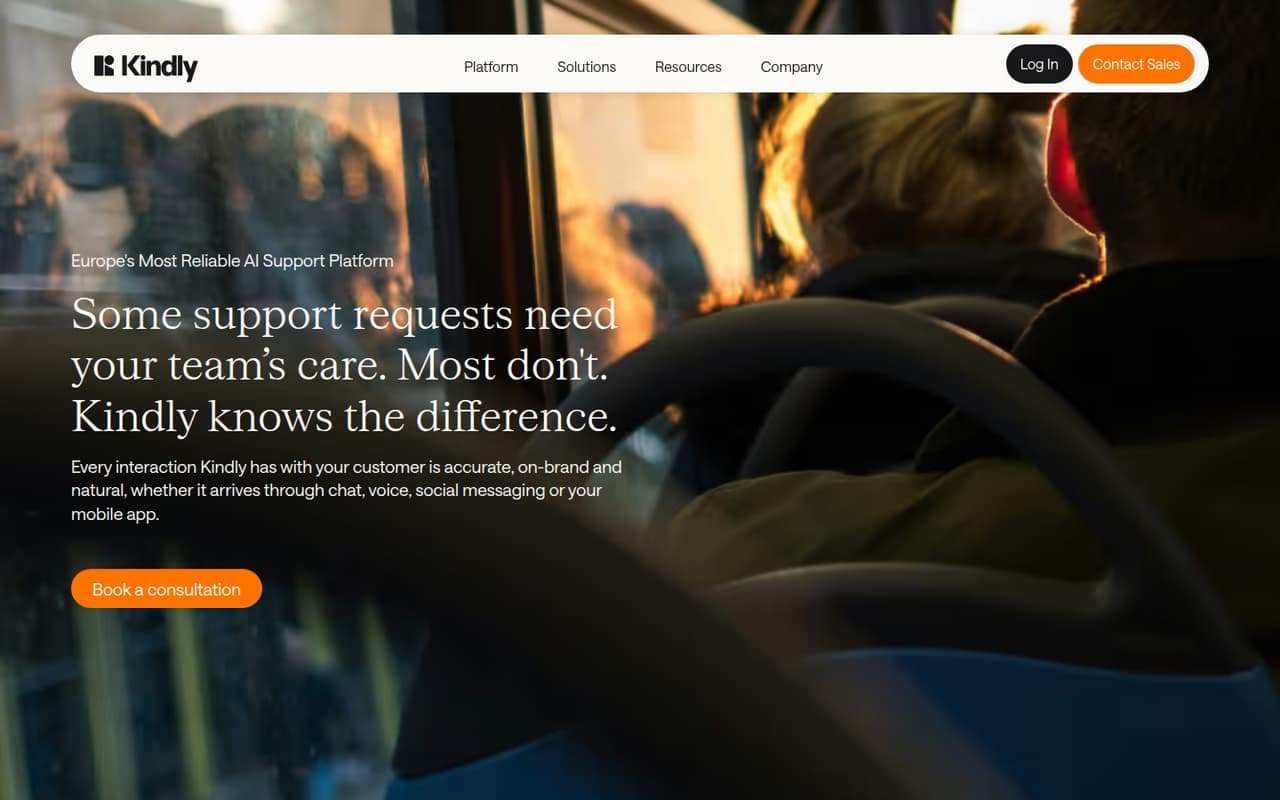
Kindly handles repetitive customer requests across chat, voice, in-app messaging, Messenger, and WhatsApp. Teams can build visual conversation flows without code, and its AI Support Agents support more than 100 languages by default.
The available pricing listing describes a custom contract for high-volume teams, based on yearly sessions agreed upfront. There’s no listed free plan, and the starting price isn’t published, so a small team should ask for a quote before weighing it against simpler tools.
Good fit if
- High-volume customer service teams
- Teams supporting customers across channels
- Businesses with repeatable support requests
Skip it if
- Teams needing a free support tool
- Buyers who need predictable seat pricing
- Teams with occasional customer requests
ScoresHow it rates
What works
- Supports chat, voice, in-app, Messenger, and WhatsApp
- Visual conversation flows need no code
- Agents speak more than 100 languages by default
- Guardrails use business and customer data
- Voice Agents can hand calls to live agents
What doesn't
- No free plan is listed
- Starting price isn't published
- Pricing is a custom contract
- Yearly session volume must be agreed upfront
- Per-seat costs for small teams can't be calculated
01Who Kindly is for
Kindly is aimed at customer service teams with enough repeat requests to justify automating conversations across several channels. For a 1–10 person company, it is worth considering when support volume is high, requests recur, and customers contact you through chat, voice, in-app messaging, Messenger, or WhatsApp. It is less obviously a fit for a tiny team with occasional tickets or a strict software budget: the available pricing listing describes a custom contract for high-volume teams, and no starting price is published.
In plain terms, teams can build visual conversation flows without code, while AI Support Agents use business and customer data to avoid guessing. Kindly says its agents speak more than 100 languages by default. It can also connect with CRM, authentication, order, and fulfilment systems, and Voice Agents can transfer calls to live agents. That breadth may help when repeat support spans channels; it may be more than a small team needs for basic chat.
02Kindly free plan and trial
Kindly has no listed free plan, and trial availability isn't published. The available pricing listing describes one way in: a custom contract for high-volume customer service teams. Usage is based on expected annual sessions, with the session volume agreed upfront and the usage commitment fixed.
That means there’s no free tier to use for a small-team pilot, and no published trial terms to help you test fit before committing. Ask Kindly whether it offers a demo, a trial, or a smaller initial contract, and what usage commitment applies. The cheapest listed way in is the custom contract; its price is not published.
03What a small team pays for Kindly
The available pricing listing gives no monthly or annual price and no starting price. It describes a custom contract, with usage based on expected annual sessions and a session volume agreed upfront. The listed usage commitment is fixed, with no peak-season surge pricing. The listing is marked low-confidence, so confirm current terms and the contract minimum with Kindly before budgeting.
Because pricing is not published per seat, we can’t calculate what one person, three people, or five people would pay per month or per year. Kindly’s listed pricing is based on annual sessions, not a published seat rate. The pricing information also gives no add-on prices, so ask whether channels, integrations, setup, or additional usage change the quote. For a small team watching every subscription, this makes it hard to compare Kindly with tools that publish monthly seat prices.
04Getting started with Kindly
Kindly describes visual conversation flows that teams can build without code, which may reduce the need for developer time when shaping standard support conversations. The product description also lists connections to CRM, authentication providers, order systems, and fulfilment systems. Those are the kinds of systems a team may want to connect early so agents can use customer and business data in answers.
The setup steps, expected implementation time, and learning curve aren’t published in the available details. A small team should ask Kindly what it needs from you to connect those systems, how it verifies data access, and who configures the flows. Start by mapping your common requests and the customer data needed to resolve them; then ask for a walkthrough using those examples. That will help you gauge setup effort before signing a custom contract.
05When small teams outgrow Kindly
Kindly’s listed offer is already aimed at high-volume customer service teams, so some small teams may find the contract model hard to justify before they reach substantial support volume. There’s no listed free plan or published per-seat price to make gradual expansion easy to budget. The annual session volume is agreed upfront, and the usage commitment is fixed; a growing team should understand how changes to that commitment are handled before signing.
Consider another option if your team needs a low-cost start, a clear monthly price per agent, or a small pilot with published limits. If your workload grows, ask Kindly how the contract changes when session volume rises and whether the agreed commitment can be adjusted. The listing says there’s no peak-season surge pricing, but it doesn’t publish contract prices or thresholds. Treat those details as questions for the vendor, not assumptions.
Questions people ask
How much does Kindly cost?
Kindly’s starting price and monthly and annual prices aren’t published in the available pricing listing. It describes a custom contract based on expected annual sessions, with session volume agreed upfront. Ask Kindly for a quote and the minimum usage commitment before comparing it with per-seat tools.
Does Kindly have a free plan or trial?
Kindly has no listed free plan, and trial availability isn’t published. The listed option is a custom contract for high-volume customer service teams. Ask the vendor whether it offers a demo or trial and what terms apply before entering a contract.
Which customer channels does Kindly support?
Kindly handles customer requests through chat, voice, in-app messaging, Messenger, and WhatsApp. Its Voice Agents can hand calls over to live agents. Ask Kindly which channels and handover options are included in the contract you’re quoted.
How many languages do Kindly’s AI Support Agents speak?
Kindly says its AI Support Agents speak more than 100 languages by default. Its product description also says guardrails use business and customer data to prevent agents from guessing. Ask the vendor how those safeguards work with your data and support flows.
Can a small team build Kindly conversation flows without coding?
Yes. Kindly describes visual conversation flows that teams can build without writing code. The available details don’t publish setup time or required onboarding, so ask for a walkthrough of a typical flow and the steps needed to connect your customer systems.