
We may earn a commission if you buy through links on this page. It never changes a score or a ranking. How we make money
The bottom line
Legion covers key frontline workforce needs, but small teams must request a quote to learn the cost.
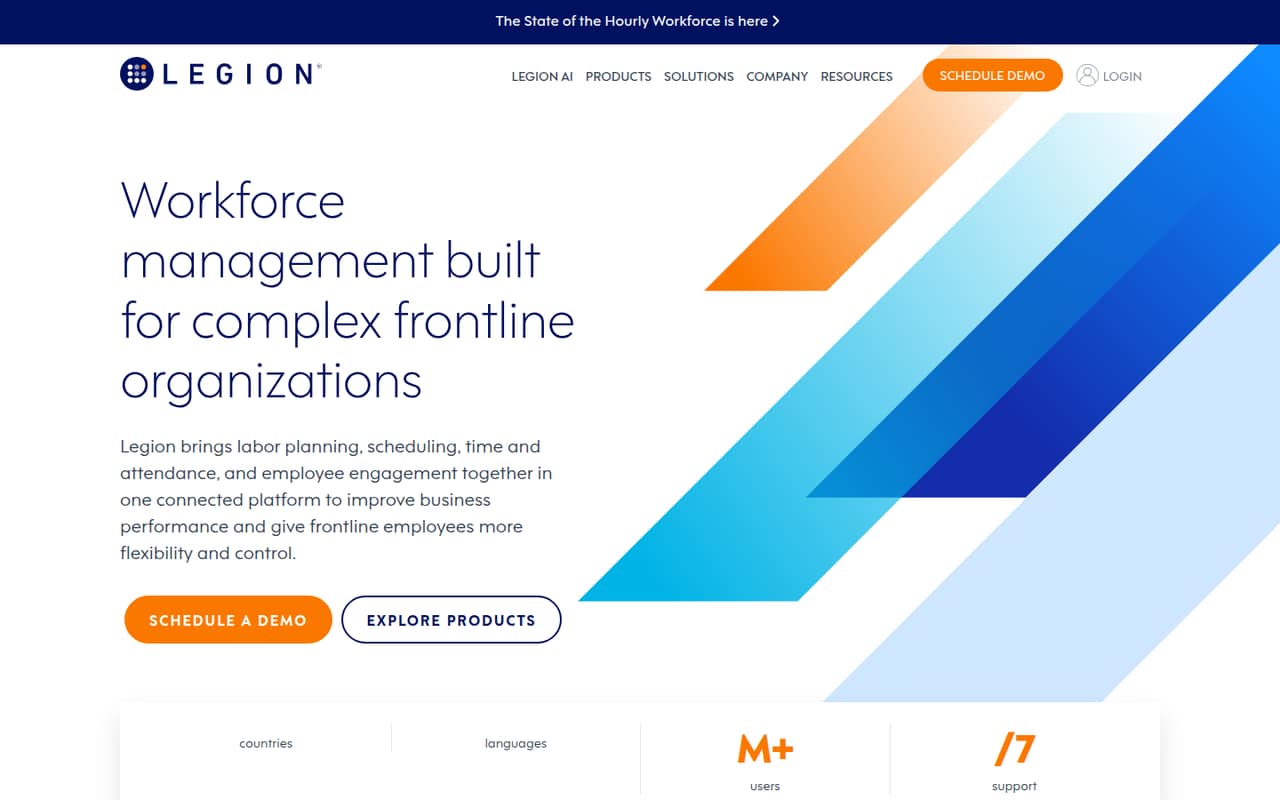
Legion combines labor planning, scheduling, time and attendance, employee engagement, demand forecasting, and AI features for frontline operations. Its feature set is aimed at organizations managing complex frontline work, rather than teams looking for a simple staff scheduler.
The pricing page lists custom, quote-based Enterprise pricing, with no published seat limits, usage limits, free plan, or free trial. For a small team, the main hurdle is knowing the cost and setup requirements before speaking with the vendor.
Good fit if
- Complex frontline operations
- Teams coordinating labor and schedules
- Organizations seeking AI automation
Skip it if
- Teams needing a free plan
- Buyers requiring published seat prices
- Simple, low-cost staff scheduling
ScoresHow it rates
What works
- Brings planning and scheduling together
- Includes time and attendance capabilities
- Offers employee engagement features
- Demand forecasting supports labor planning
- AI features target routine operational work
What doesn't
- Pricing requires a custom quote
- No free plan is listed
- No free trial is listed
- Seat and usage limits aren't published
- Setup requirements and integrations aren't published
01Who Legion is for
Legion is designed for complex frontline organizations that need to coordinate labor across operations. Its listed capabilities include labor planning, schedule optimization, time and attendance, employee engagement, demand forecasting, and AI features for routine operational work. That makes it a better fit for organizations with substantial scheduling and labor-planning needs than for a small office team seeking a basic calendar.
The vendor describes its audience as large frontline organizations; it does not publish a minimum team size. For a team of one to ten, fit depends less on headcount alone and more on whether the work is complex enough to justify a workforce management platform. Budget-conscious buyers should get a quote before investing time in evaluation: the pricing page lists custom Enterprise pricing and does not publish a starting rate. If the need is simply to assign shifts, Legion may be more tool than a small team needs.
02Legion free plan and trial
Legion does not list a free plan or a free trial on its pricing page. The page names Enterprise as the plan for large frontline organizations and says pricing is custom and quote-based. It does not publish seat or usage limits, either.
That leaves no self-serve free tier for a small team to try before committing. The cheapest way in is to request an Enterprise quote; the vendor does not publish a minimum price or a lower-priced plan. Before booking a sales conversation, ask whether the quoted package supports your team size, which features are included, and whether there is a paid pilot or trial option. Those details are not listed in the pricing information, so get them in writing rather than assuming the full feature set comes with every quote.
03What a small team pays for Legion
The pricing page lists one option: Enterprise, with custom quote-based pricing for large frontline organizations. It does not publish a monthly rate, annual rate, starting price, or per-seat charge. That means we cannot calculate a reliable cost for one person or compare monthly and annual billing.
The same applies to teams of three or five: the cost for either group is not published, and per-seat math would be guesswork. Ask the vendor for quotes for your actual headcount and confirm whether the price changes with employee count, usage, or contract length. The pricing page also does not publish add-on costs, so ask whether labor planning, scheduling, time and attendance, engagement, forecasting, and AI features are included in the quoted package or priced separately. For a small team watching every subscription, this lack of upfront pricing makes budgeting harder.
04Getting started with Legion
Legion's listed scope spans labor planning, scheduling, time and attendance, employee engagement, demand forecasting, and AI-based operational automation. That breadth suggests a buyer should clarify which workflows they want to set up first, rather than treating the product as a simple shift calendar. The vendor does not publish setup time, implementation steps, or a learning-curve estimate in the available product and pricing information.
Integrations are not listed either, so a small team should ask about connections to its existing payroll, HR, and scheduling tools before signing. Also ask what data needs to be imported, who handles configuration, and whether training or implementation support is included in the quote. Without published setup requirements, we can't give a dependable estimate of the work involved. A team with limited admin time should make those answers part of its initial buying conversation.
05When small teams outgrow Legion
For a small team, the bigger question may be whether Legion is more than it needs, rather than whether it will outgrow the product. The listed feature set is broad, covering planning, optimized schedules, attendance, engagement, forecasting, and AI automation for frontline operations. Those capabilities become more relevant as labor coordination grows more complex, but the vendor does not publish a minimum team size or usage thresholds that mark the point to upgrade.
There is also no published seat pricing or set of plan tiers to show how costs change as headcount grows. Ask the vendor how the quote changes as you add employees, locations, or usage, and whether any limits apply. If your needs remain basic, the absence of a listed lower-cost plan may make Legion difficult to justify. If workforce complexity increases, compare the value of the full platform against its custom quote before committing to a longer-term arrangement.
Questions people ask
Does Legion have a free plan?
The pricing page does not list a free plan. It lists Enterprise for large frontline organizations, with custom quote-based pricing. If you need to test Legion before paying, ask the vendor whether it offers a trial or pilot; a free trial is not listed on the pricing page.
How much does Legion cost for a small team?
Legion's pricing page does not publish a starting price or per-seat rate. It lists custom Enterprise pricing, so the cost for a small team depends on a vendor quote. Ask for pricing based on your headcount and confirm whether features or usage affect the total.
What does Legion include?
Legion lists labor planning, schedule optimization, time and attendance, employee engagement, demand forecasting, and AI features for automating routine operational work. The pricing information does not specify which of these capabilities are included in every quote, so confirm package details with the vendor.
Does Legion offer a free trial?
A free trial is not listed in Legion's pricing information. Before evaluating the platform, ask the vendor whether a trial or paid pilot is available, what it includes, and whether it has limits on seats, usage, or features.
What should a small team ask Legion before buying?
Ask for the total price at your headcount, any usage or seat limits, and whether features such as forecasting and AI are included. Also confirm setup steps, implementation costs, integrations with your current tools, and whether training or a trial is available.