
We may earn a commission if you buy through links on this page. It never changes a score or a ranking. How we make money
The bottom line
Good map-building tools for developers; check the free limits and seat costs before committing.
A small team only needs MapTiler Cloud if it is adding maps or location features to an application. It brings map styles, SDKs, location APIs, and geodata tools together, with a free plan for prototypes and personal use.
The free tier is a sensible place to start, but commercial teams will likely need Flex: $30/month for up to three team members. Five-seat pricing and annual billing aren't listed, so confirm those costs before planning a larger rollout.
Good fit if
- Developers adding maps to apps
- Prototypes and personal projects
- Teams processing geodata
Skip it if
- Teams needing a no-code map tool
- Five-seat teams needing fixed pricing
- Projects with heavy map traffic
ScoresHow it rates
What works
- Free plan supports prototypes and personal use
- Includes ready-made map styles
- SDKs cover interactive, static, and 3D maps
- Supports TIFF, GeoJSON, KML, and GPX
- On-premises and offline deployment options
What doesn't
- Flex costs $30/month, even for one person
- Flex includes only three team members
- Annual billing price isn't listed
- Free plan is limited to 5k sessions monthly
- Pricing for seats beyond three isn't listed
01Who MapTiler Cloud is for
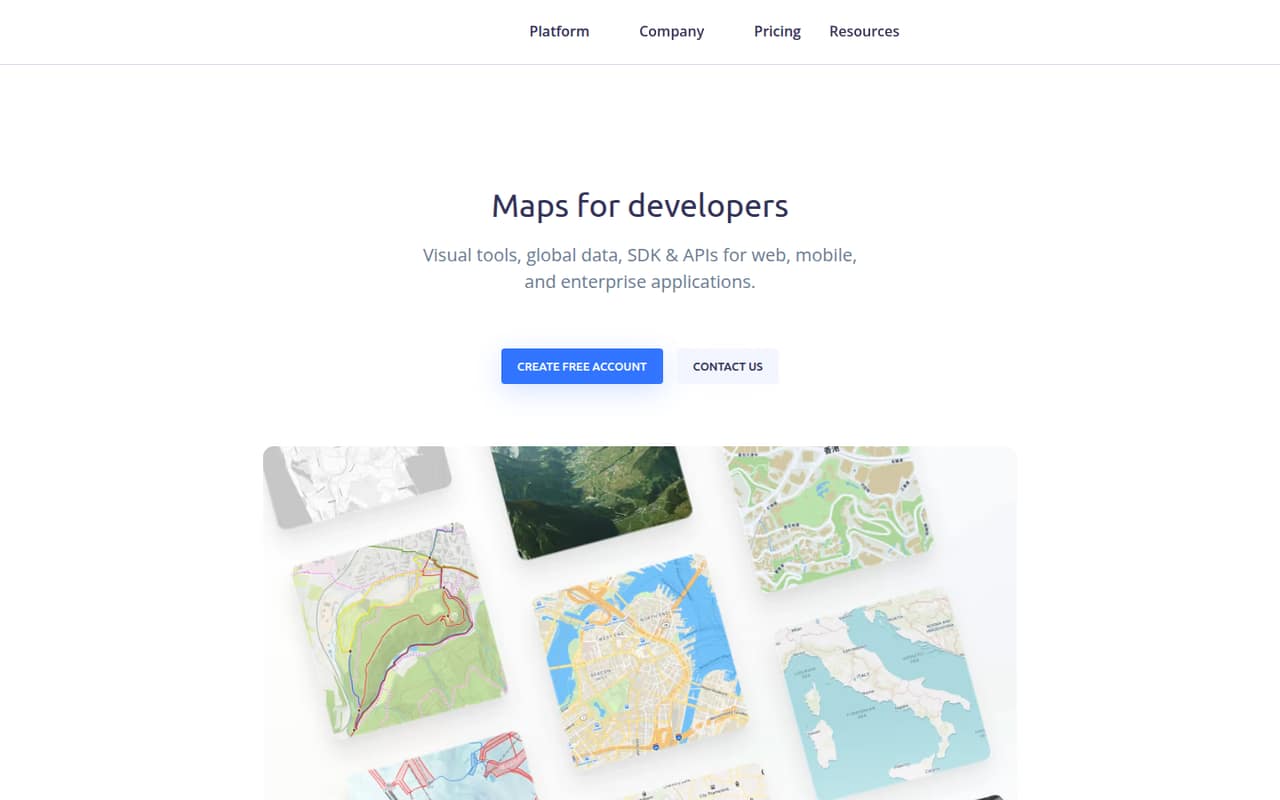
MapTiler Cloud is for developers building maps or location features into web, mobile, or enterprise applications. It supplies ready-to-use map styles, tools to customize those maps, application SDKs, location APIs, and ways to upload and process geodata. Teams can also host maps or process data on premises or offline.
For a solo developer or a team of two or three, the free plan can cover testing, prototypes, or personal projects. A commercial team should budget at least $30/month for Flex, which lists three team members. That's a reasonable starting point for a small, developer-led product team that needs maps in its app, rather than a general-purpose map viewer. If you need five seats, ask about the extra-member price: the pricing page doesn't list it. Teams with high traffic or data needs can ask about Custom.
02MapTiler Cloud free plan and trial
The Free plan costs $0/month and is listed for testing, prototypes, and personal use. It includes 5 GB of storage for one file, 5k sessions/month, 1k search sessions/month, 100k API requests/month, and 100 uploads/month. That's enough room to explore the map styles and build an early version before paying.
The plan's limits matter once a project is commercial or attracts more usage: the vendor positions Free for testing, prototypes, and personal use, and Flex for standard commercial use. The listed allowance is also small enough that a live app should monitor its usage. A free trial isn't listed. The cheapest paid option is Flex at $30/month, with 10 GB storage, 25k sessions/month, 3k search sessions/month, 500k API requests/month, and three team members.
03What a small team pays for MapTiler Cloud
The pricing page lists Flex at $30/month, with three team members included. For one person, that means a $30 monthly bill; for three, the same $30 covers all three, or $10 per included member. A five-person team still starts with that Flex plan, but it needs two more members. The price for additional members isn't listed, so the full five-seat total is unknown until MapTiler quotes it.
Annual billing prices aren't shown, and listed prices exclude VAT. Flex add-ons can also raise the bill: extra sessions and search sessions are each $2.50 per 1k, extra API requests are $0.15 per 1k, and extra 3D sessions are $6 per 1k. Extra storage is listed at $20/month for 100 GB, $140/month for 1 TB, or $520/month for 5 TB. Data processing add-ons cost $5 per 500 datasets or $9 per 100M points for 3D processing. Custom pricing is not published.
04Getting started with MapTiler Cloud
Plan for developer setup rather than a no-code rollout. MapTiler offers SDKs and APIs for adding maps, search, geocoding, and other location features to an application. A small team will need someone to choose a map style, connect the relevant SDK or API, and fit the map into its app. The exact effort will depend on the app and the features being built; a setup time isn't published.
The product also includes design tools and geodata processing for formats such as TIFF, GeoJSON, KML, and GPX. Those options give teams room to customize a map or work with their own data, but they add choices to make during setup. The listed materials don't name specific third-party integrations or describe a step-by-step onboarding path, so check the vendor's docs for the framework and workflow you plan to use. Reddit discussion focuses on tile-hosting costs, not setup experience.
05When small teams outgrow MapTiler Cloud
The first pinch point is usage. Flex lists 25k sessions/month, 3k search sessions/month, and 500k API requests/month; teams that exceed those allowances may need paid add-ons or a Custom plan. Extra sessions, search sessions, and API requests have listed rates, but a team with high traffic should model its usage before launch. The price for more than three Flex team members isn't listed, which makes a five-to-ten-person budget harder to forecast.
Custom is aimed at high-traffic, data-intensive use and offers custom quotas with soft limits, a 99.9% SLA, volume discounts, and no automatic overuse bills. Reddit users discussing MapTiler CloudPush raise a different concern: the cost of PUT requests when hosting large tile sets, and whether tiles need frequent updates. Those comments are about tile-hosting economics, not a direct review of MapTiler Cloud. If your map data is large or changes often, compare the full storage and processing costs before scaling.
From the threadsWhat users say
The Reddit discussion available is about the cost of hosting and uploading map tiles, not a broad verdict on MapTiler Cloud's features or support. The tone is practical and mixed: one commenter sees a potential use for the approach, while others weigh storage transaction costs and alternatives.
The main issue I found with hosting map data on S3 is that you incur a ton of PUT requests
If you know that you'll never have to update the tileset, this could be a good idea
looks like an interesting and, depending on use case, potentially cheaper alternative
that would be incurred every time you upload the data
Questions people ask
Is MapTiler Cloud free?
Yes. The Free plan costs $0/month and is listed for testing, prototypes, and personal use. It includes 5 GB of storage for one file, 5k sessions/month, 1k search sessions/month, 100k API requests/month, and 100 uploads/month. A free trial is not listed.
How much does MapTiler Cloud cost for a small team?
Flex is listed at $30/month and includes three team members. That is $30 total for one, two, or three members on the plan. The price for additional members isn't listed, so a five-person team's final monthly cost needs to be confirmed with MapTiler.
Can I use MapTiler Cloud for commercial projects?
The pricing page lists Flex for standard commercial use, at $30/month. The Free plan is described for testing, prototypes, and personal use. If you expect commercial traffic, check your sessions, search sessions, and API requests against Flex's allowances.
What can I build with MapTiler Cloud?
MapTiler Cloud offers map styles and design tools, application SDKs, location APIs, and geodata processing. Its SDKs can be used for interactive, static, or 3D maps and data visualization. The platform also supports weather displays, address search and geocoding, and on-premises or offline deployment.
Does MapTiler Cloud offer a self-hosted option?
MapTiler offers on-premises deployment options to host and serve maps or process geodata on premises or in offline environments. Check with the vendor about the setup and pricing that apply to your deployment, since the listed public plans don't give a separate price for this option.