
We may earn a commission if you buy through links on this page. It never changes a score or a ranking. How we make money
The bottom line
A capable compliance-focused ALM, but small teams must get a quote before they can judge the cost.
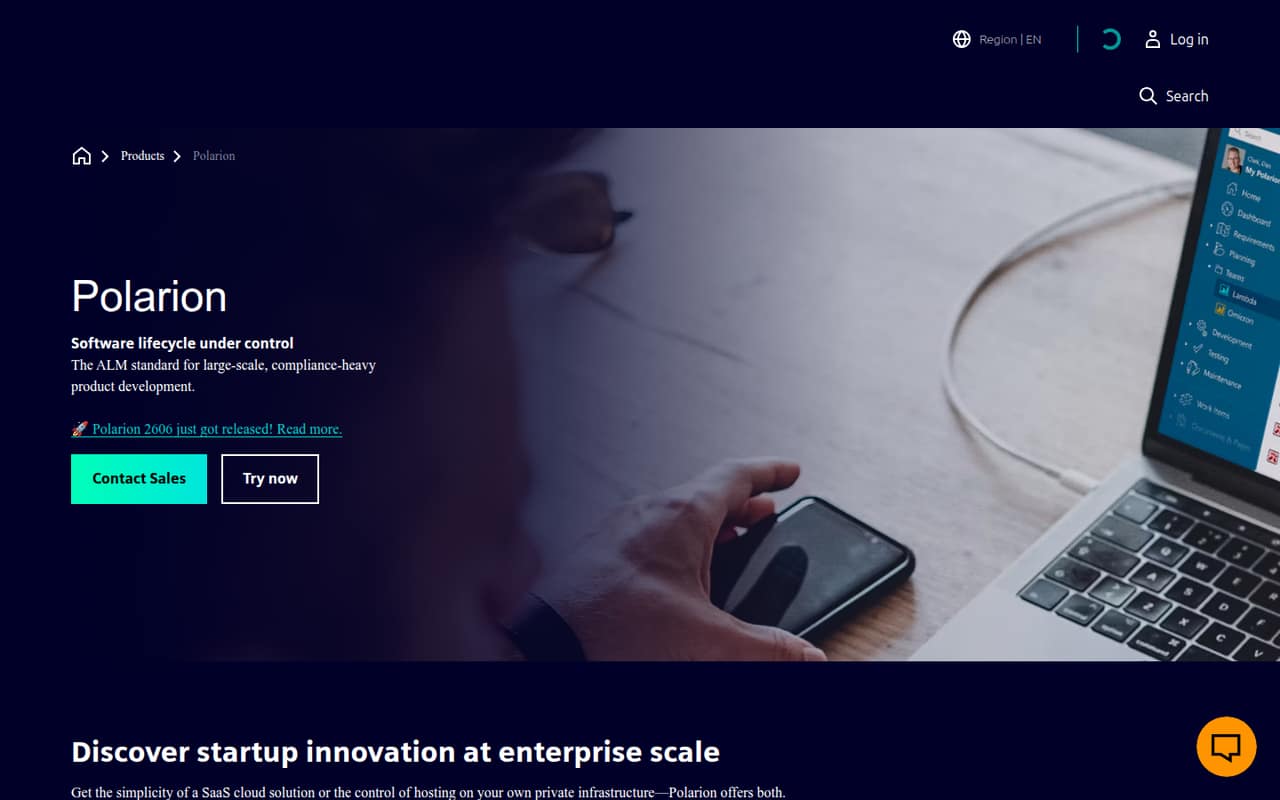
Polarion ALM brings requirements, software and test management together, with cloud and on-premise options. Its traceability, configurable workflows and reuse features suit compliance-heavy product work, not every small team’s needs.
There’s no free plan, and the vendor doesn’t publish seat limits or prices. A free trial is listed, but its duration and terms aren’t published. For a team watching every subscription, the quote-first buying process is the main drawback.
Good fit if
- Compliance-heavy product development
- Teams needing requirements traceability
- Organizations choosing cloud or on-premise
Skip it if
- Teams needing a free starting tier
- Buyers who require public seat pricing
- Small projects without compliance needs
ScoresHow it rates
What works
- Combines requirements, software and test management
- Tracks requirements and development progress
- Configurable permissions and workflows control changes
- Supports reuse across projects
- Cloud and on-premise options are available
What doesn't
- No free plan
- Plan prices require a quote
- Seat and usage limits aren’t published
- Trial duration isn’t published
- Add-on and overage prices aren’t published
01Who Polarion ALM is for
Polarion ALM is for product teams managing requirements, software and testing in compliance-heavy development. The vendor describes it as a platform for large-scale work, so a small team of 1–10 should consider it when traceability, controlled approvals and shared project assets matter more than a low, predictable subscription.
In plain terms, Polarion links requirements to development progress and testing, tracks changes, and lets teams reuse or branch requirements, code and tests across projects. Configurable workflows and permissions help control who can change what. It offers cloud and on-premise options, which gives teams a deployment choice but also makes it important to clarify setup and support needs before signing.
There’s no public per-seat price to weigh against a small-team budget. If you mainly need a lightweight task list or a basic test tracker, ask for a quote before investing time in evaluation. Polarion’s breadth is most persuasive when compliance and traceability are must-haves.
02Polarion ALM free plan and trial
Polarion ALM has no free plan. The pricing information lists a free trial, but the vendor doesn’t publish its duration, seat allowance or feature limits. Ask the sales team what the trial includes and whether it covers the deployment option your team wants.
Polarion X Essentials is the most basic named cloud plan in the pricing information, but its price, seat limits and usage limits aren’t published. Pricing requires a quote, so Essentials isn’t a known low-cost entry point. The on-premise Polarion ALM option also requires a custom quote.
For a small team, request a trial and a written quote together. Confirm how many people can participate, which requirements and test-management features are included, and whether the trial can use your intended workflows. Those details determine whether the evaluation is useful.
03What a small team pays for Polarion ALM
The pricing page lists Polarion X Essentials, Standard and Advanced, plus Polarion X for Automotive and self-hosted Polarion ALM. Prices for all five options require a quote. Seat limits and usage limits aren’t published, so we can’t calculate a reliable price for one person or a team of three or five, or compare monthly and annual per-seat costs.
Contracts are billed annually by default, while monthly and annual prices both require a quote. The starting price is not published. Essentials is a named option for teams considering Polarion X, but the pricing information doesn’t establish that it’s the cheapest plan or specify what a small team gets at that tier.
Add-on costs aren’t published either. The listed extras include upgraded Siemens Product Support tier packages, extensions and Polarion Copilot for on-premise; overage costs are also not published. Ask for an itemized quote covering seats, deployment, support, extensions, overages and any minimum contract. Without that, a budget comparison for a few seats would be guesswork.
04Getting started with Polarion ALM
Polarion’s feature set spans requirements authoring and approval, software management, testing, traceability, change control and reuse. A small team should expect to make decisions about workflows, permissions and how its requirements and tests relate before inviting everyone in. The vendor’s product description lists these capabilities, but the setup effort and learning curve aren’t quantified.
Polarion offers cloud and on-premise options. The right choice affects what your team needs to arrange, so ask the vendor to explain deployment, administration and support responsibilities for each. The vendor's site doesn’t specify integrations, so confirm whether your current development and testing tools connect and what configuration is required.
For a useful evaluation, bring a representative project and ask the vendor to show how a requirement moves through approval, development and testing. Also ask who configures workflows and permissions, and what training is included. That gives a small team a clearer picture of the work involved before it commits.
05When small teams outgrow Polarion ALM
Polarion is aimed at large-scale, compliance-heavy work, so some small teams may outgrow its cost and setup demands before they outgrow its features. The vendor doesn’t publish seat caps, usage limits or prices, making it hard to forecast when adding people or projects will change the bill. Ask for the limits and the upgrade terms in writing.
A growing team may need a higher tier, more support or extensions, but the pricing information doesn’t show which limits trigger an upgrade or what those additions cost. On-premise users should also ask about the separately priced Copilot option and any support packages they may need.
Reddit offers little evidence about team adoption or customer satisfaction. One poster asks whether starting a career in Polarion could limit career mobility, which is a career concern, not a report about buying or using the product. Treat that as an isolated anecdote, not a reason by itself to stay or switch. For a growing team, decide based on quote terms, workflow needs and confirmed integrations.
From the threadsWhat users say
The available Reddit material is too limited to show a clear pattern of customer satisfaction. One poster raises a career-mobility concern about working with Polarion, but doesn’t describe team buying or product use.
Started my career in Polarion ALM but am unsure if I should switch to a more popular technology to not limit my career mobility
I started applying for jobs two months after graduation
my coding skills need work
some basic projects but nothing fancy
Questions people ask
Does Polarion ALM have a free plan?
No. The pricing information lists no free plan for Polarion ALM or the Polarion X tiers. It does list a free trial, but the vendor doesn’t publish its duration, seat allowance or feature limits. Ask for those details before planning an evaluation or budgeting around a trial.
How much does Polarion ALM cost for a small team?
The vendor doesn’t publish a starting price or per-seat rates. Prices require a quote, and seat and usage limits aren’t published. Contracts are billed annually by default, though monthly and annual prices both require a quote. Request prices for your exact seat count and deployment before comparing plans.
Which Polarion ALM plan should a small team consider?
Polarion X Essentials is a named option for teams considering Polarion X, but its features, price and seat limits aren’t published in the pricing information. Ask the vendor to confirm whether it covers your required traceability, workflows, testing and deployment needs, and to compare it with Standard.
Can we run Polarion ALM on-premise?
Yes. The vendor's site lists cloud and on-premise options, including Polarion ALM for self-hosted teams. On-premise pricing requires a custom quote. Ask the vendor about the setup and administration responsibilities, support options, and any add-on costs for the configuration you’re considering.
What does Polarion ALM’s free trial include?
A free trial is listed, but the vendor doesn’t publish its duration, seat allowance or usage limits. The available pricing information also doesn’t specify which features are included. Ask the vendor to confirm the trial terms and whether it supports your intended deployment and a representative project workflow.
Sources
- Polarion ALM homepage
- Polarion ALM pricing, compiled via web search from reqlio.eu, siemens.com, softwareadvice.com.au, trustradius.com, omr.com, checkthat.ai
- Reddit: Started my career in Polarion ALM but am unsure if I should switch to a more popular technology to not limit my career mobility.
- Reddit: Polarion ALM 17
- Reddit: Polarion ALM 17.1