
We may earn a commission if you buy through links on this page. It never changes a score or a ranking. How we make money
The bottom line
Capable zero-trust controls, but get a quote before deciding if it fits your budget.
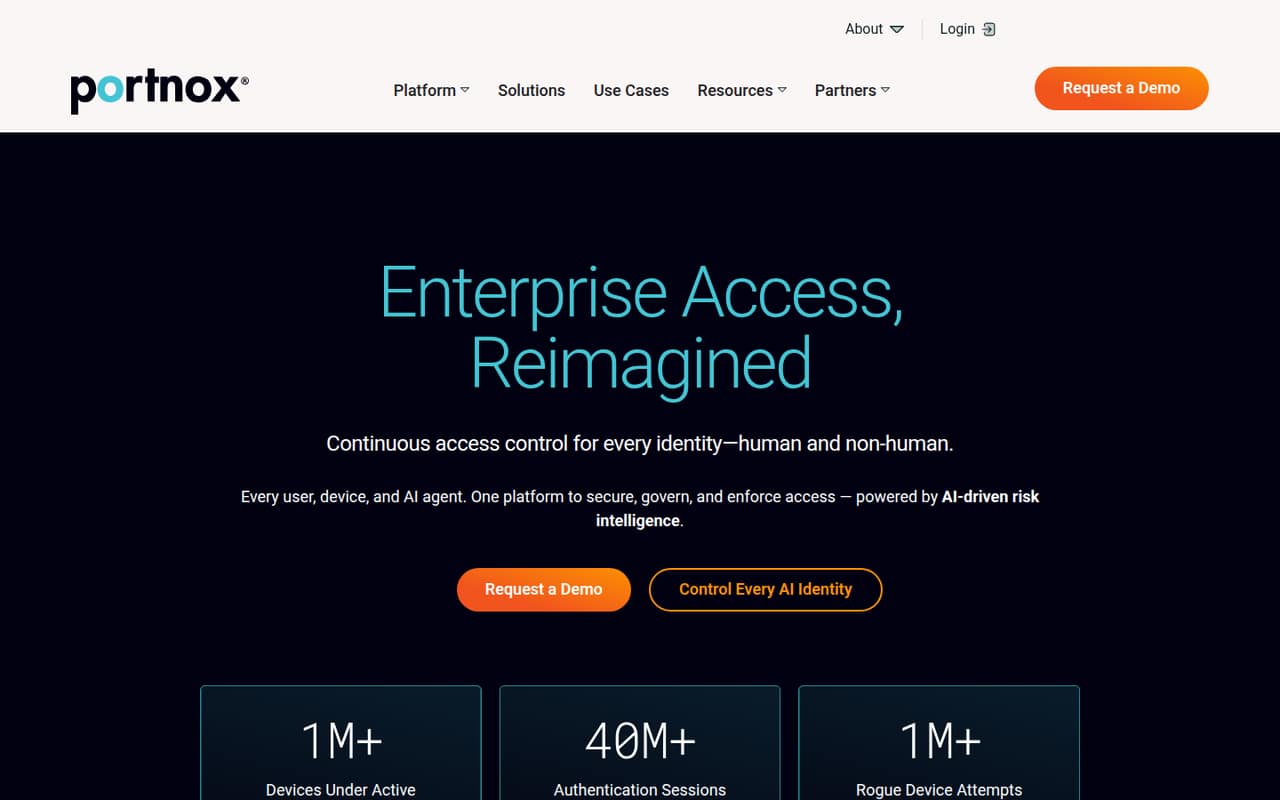
Portnox Cloud controls access to networks, applications, and infrastructure using identity, device posture, and risk signals. Its offerings include RADIUS, NAC, ZTNA, TACACS+, and a full-platform option, plus passwordless authentication and automated responses to risk.
There’s no free plan, and the vendor doesn’t publish starting prices or per-seat rates. The 30-day trial gives a way to evaluate it, but a small team will need a quote to know what three or five users—or devices—will cost.
Good fit if
- Teams standardizing network access controls
- Organizations managing many device types
- IT teams needing centralized access policies
Skip it if
- Teams needing predictable public pricing
- Buyers looking for a free ongoing plan
- Teams without network security ownership
ScoresHow it rates
What works
- Covers network, application, and infrastructure access
- Includes device posture and risk-based controls
- Offers agentless access to authorized applications
- Supports certificate-based passwordless authentication
- 30-day trial is listed
What doesn't
- Starting prices are not published
- Per-seat or per-device pricing unit is not published
- No free plan is listed
- Setup time and effort are not specified
- Several add-on prices are not published
01Who Portnox Cloud is for
Portnox Cloud is for teams that need to control who and what can reach their networks, apps, or infrastructure. It uses identity, device posture, and risk signals to apply access rules. The offering list spans network authentication with RADIUS, network access control, private and SaaS app access, and network-device administration with TACACS+.
For a team of one to ten, it makes sense when access control is a real security or IT responsibility—not just a way to add another login screen. The platform can discover and monitor devices, assess posture, provide agentless app access, and respond to risk by limiting or revoking access or isolating devices. Those capabilities may be useful for a small team managing varied devices or network equipment, but the fit depends on the environment and the quote. Portnox doesn’t publish a starting price, so budget-conscious buyers should request pricing for the specific capabilities they need before planning a rollout.
02Portnox Cloud free plan and trial
Portnox Cloud has no free plan listed. The pricing information lists a 30-day free trial, but doesn’t specify which products, features, device limits, or support are included during that period. Ask Portnox to confirm the trial scope and whether it covers the RADIUS, NAC, ZTNA, or TACACS+ capabilities you want to assess.
The trial is the only listed way to evaluate the platform without committing to a paid subscription; ongoing access requires a quote. There isn’t a published cheapest plan or a stated trial-to-paid price. If you’re a small team, get a written price for the narrowest offering that meets your needs, and confirm what happens when the 30 days end. Also ask whether the trial requires a particular subscription term or paid setup, since those details aren’t listed.
03What a small team pays for Portnox Cloud
Portnox doesn’t publish a starting price, monthly or annual prices, or a billing unit for its five offerings. That means we can’t calculate a reliable cost for one person, three people, or five people—or compare monthly and annual seat costs. The pricing page lists 12-, 24-, and 36-month subscription terms, with additional discounts for terms longer than 12 months, but no figures. Ask for a quote covering your user and device counts, required products, and contract term.
The listed offerings are RADIUS, NAC, ZTNA, TACACS+, and Universal Zero Trust, which combines the four. The pricing information also lists certificate authority services at $1 per device, though it doesn’t state the billing period. Extended device retention costs $0.99 per device per year for each additional 30 days. Extended guest and additional SMS packs are listed, but their prices aren’t published. For a small team, get those add-ons priced alongside the base subscription so the quote reflects your expected use.
04Getting started with Portnox Cloud
Portnox describes controls that span network access, applications, and infrastructure, so setup will depend on which parts you plan to use and what you need to connect. The feature list includes 802.1X with dynamic VLAN or ACL assignment, agent and agentless posture assessment, clientless app access, and TACACS+ administration. The full-platform option lists an API for SIEM, ITSM, and IAM tools.
Portnox doesn’t publish a setup-time estimate or a step-by-step implementation scope in the pricing information. We’d ask the vendor what’s needed to connect your network equipment, identity systems, and security tools, and whether configuration or migration help is included. Clarify which integrations are available for your specific products; an API listing doesn’t establish that every integration is ready to use. A small team should also confirm who will own policy changes and device exceptions after launch, since ongoing administration can matter as much as initial setup.
05When small teams outgrow Portnox Cloud
Portnox Cloud doesn’t list seat caps, device limits, or feature thresholds that trigger an upgrade, so there’s no published point at which a team must move to another tier. The listed offers are separate capabilities plus a full-platform option, rather than a public tier ladder with stated limits. Ask Portnox how adding RADIUS, NAC, ZTNA, or TACACS+ changes your subscription and whether you can add products without changing contract terms.
The more immediate pressure for a small team may be budgeting and administration. Prices and billing units aren’t public, while subscriptions are listed in 12-, 24-, or 36-month terms. If the team needs only one capability, compare the quote for that offering with the full platform rather than assuming the bundle is cheaper. As your access policies expand across users, devices, apps, and network equipment, confirm the ongoing work and any add-on charges. If pricing or operating requirements no longer fit, compare alternatives using the same scope and term.
Questions people ask
How much does Portnox Cloud cost?
Portnox doesn’t publish starting, monthly, or annual prices, and its listed pricing unit is not published. It lists 12-, 24-, and 36-month subscription terms, with additional discounts for terms longer than 12 months. Ask for a quote based on your chosen products, users, devices, and contract length.
What is Portnox Cloud used for?
Portnox Cloud controls access to networks, applications, and infrastructure using identity, device posture, and risk signals. Its listed capabilities include network authentication, network access control, agentless app access, TACACS+ administration, passwordless authentication, and automated responses such as limiting or revoking access.
Does Portnox Cloud have a free plan?
No free plan is listed. Portnox lists a 30-day trial, but the trial’s feature scope and limits aren’t specified. Ask the vendor which products and capabilities the trial includes, and what subscription and add-on charges apply after the trial ends.
What products are included in Portnox Cloud?
The listed offerings are Network Authentication (RADIUS), Network Access Control (NAC), Zero Trust Network Access (ZTNA), Network Device Administration (TACACS+), and Universal Zero Trust, which lists all four capabilities. Confirm with Portnox which offering includes the features your team needs.
Does Portnox Cloud support passwordless authentication?
Yes. Portnox lists certificate-based passwordless authentication in its Universal Zero Trust full-platform offering. The platform description also says it supports identity-based and certificate-backed authentication instead of shared passwords. Ask whether the specific option you’re considering includes the method and integrations you need.