
We may earn a commission if you buy through links on this page. It never changes a score or a ranking. How we make money
The bottom line
Thatch gives employees health-budget choices, but even one enrolled employee costs $95 monthly.
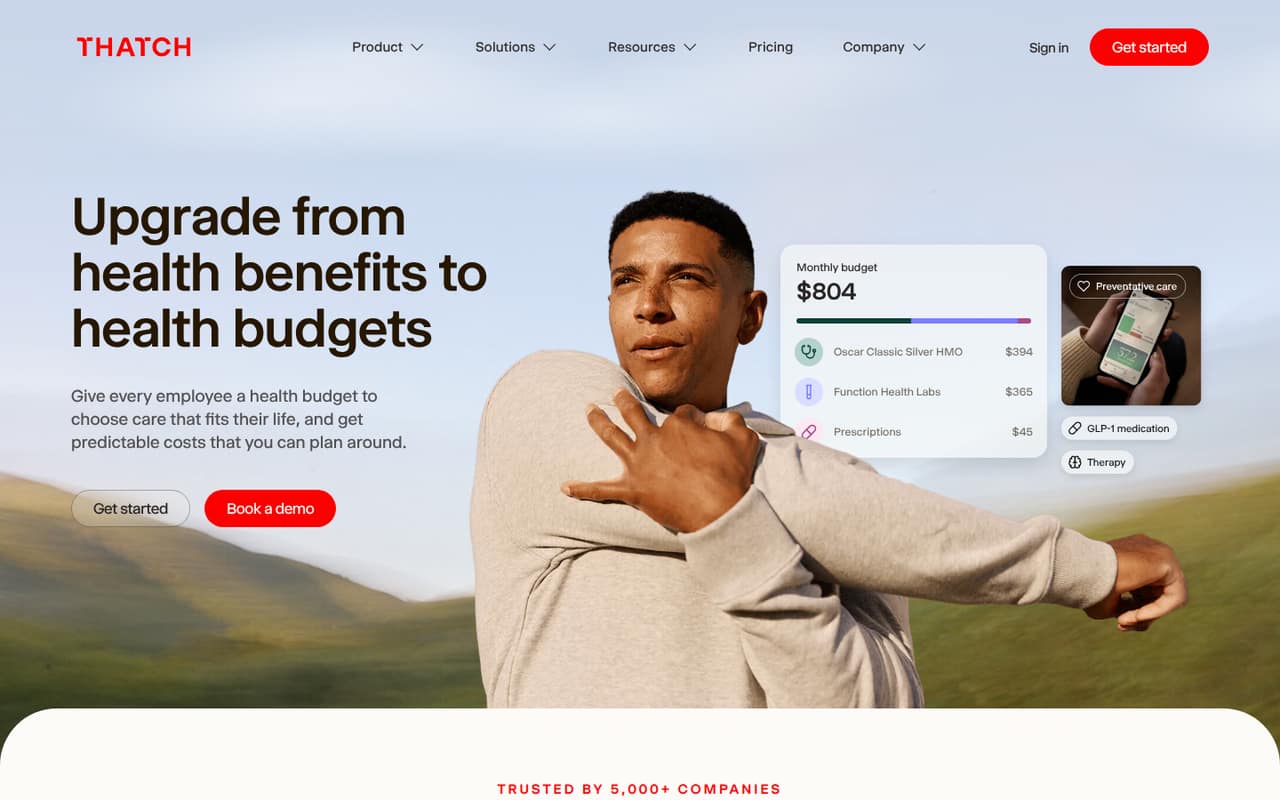
Thatch helps employers set health budgets and lets employees choose insurance, then spend remaining funds on eligible care. Benefits experts and licensed advisors can help with plan selection, and the Thatch Card is used for remaining funds after an insurance plan is purchased.
There’s no free plan. Standard costs $45 per enrolled employee plus a $50 compliance fee each month, so one enrolled employee costs $95 monthly. It’s worth considering if you want employees to choose coverage; teams looking for a free or low-cost benefits tool should compare alternatives.
Good fit if
- Small employers offering health benefits
- Teams wanting employee plan choice
- Employers budgeting for benefits
Skip it if
- Teams needing a free benefits tool
- Employers avoiding per-employee fees
- Companies wanting published setup timelines
ScoresHow it rates
What works
- Employees can filter plans by doctors, hospitals, or prescriptions
- Remaining budgets can cover eligible care
- Thatch Market lists 50+ partners
- Benefits experts and licensed advisors help with plan selection
- Payroll integration and plan documents are included in Standard
What doesn't
- No free plan or published free trial
- A $50 compliance fee applies alongside per-enrolled-employee charges
- Healthcare premiums are separate from platform fees
- Custom pricing applies at 50 or more eligible employees
- Setup timeline and effort are not published
01Who Thatch is for
Thatch is for employers that want to offer health benefits without choosing a single insurance plan for everyone. The employer sets a health budget based on each employee’s age, location, and dependents. Employees can then compare insurance options using their doctors, hospitals, or prescriptions as filters.
After an employee buys an insurance plan, remaining budget funds go onto a Thatch Card and can be used for eligible care. The listed examples include copays, prescriptions, therapy, and GLP-1s. Thatch Market also offers pricing from 50+ partners in areas such as mental health, weight loss, and fertility.
Standard is listed for employers with 1–49 eligible employees, so it covers the small-team range. The fit depends on your benefits budget: the platform fee starts at $50 per month plus $45 for each enrolled employee, before healthcare premiums. It makes the most sense when employee choice and benefits support justify that recurring cost.
02Thatch free plan and trial
Thatch does not list a free plan, and a free trial is not published. The cheapest listed way in is Standard, for employers with 1–49 eligible employees. It costs $45 per enrolled employee plus a $50 compliance fee per month. That means one enrolled employee costs $95 monthly, before healthcare premiums.
Standard includes benefits administration, payroll integration, plan documents, ACA tools, advising, premium autopayment, and the Thatch Card. There’s no free tier to use for basic administration or to try the employee plan-selection experience first. If you’re considering it, ask Thatch what information and decisions are needed before enrollment, and whether there are any implementation charges beyond the listed Standard fee.
03What a small team pays for Thatch
The pricing page lists Standard at $45 per enrolled employee plus a $50 compliance fee per month. Assuming everyone is enrolled, one person costs $95 monthly, three cost $185, and five cost $275. These are platform charges; healthcare premiums are separate. Thatch’s example confirms the formula: four employees cost $230 per month.
The listed pricing is monthly, with no annual billing option stated. The page says healthcare premiums are billed on the 15th and platform fees on the 1st. That split matters when planning cash flow, even though the premium amount depends on the coverage selected.
There are no listed add-ons. Standard includes benefits administration, payroll integration, plan documents, ACA tools, advising, premium autopayment, and the Thatch Card. The price is based on enrolled employees, while eligibility determines whether the employer fits Standard’s 1–49 range. Ask Thatch how it handles employees who are eligible but do not enroll.
04Getting started with Thatch
Thatch’s published pricing details include benefits administration, payroll integration, plan documents, ACA tools, and advising in Standard. Employers set health budgets based on employee age, location, and dependents; employees use the available options to choose insurance and eligible care. That gives you a clear sense of the decisions involved, but the setup steps and time required are not published.
Payroll integration is the only named integration in the pricing details, so confirm that it supports your payroll provider before signing up. Also ask what information Thatch needs to set budgets, how plan selection works for employees, and whether your team needs to prepare anything for enrollment. Benefits experts and licensed advisors are listed as available for plan-selection help. We’d get the implementation timeline and any extra setup charges in writing, especially if you have a short enrollment window.
05When small teams outgrow Thatch
The main published size cutoff is 50 eligible employees. Standard covers employers with 1–49 eligible employees; at 50 or more, Thatch lists Custom pricing. Custom has a 10 enrolled employee minimum and a $2,400-per-year minimum. Its full price is not listed, so ask for a quote before planning a move to that tier.
Custom includes everything in Standard, plus reporting, large-employer ACA compliance, a dedicated account manager, and white-glove implementation. Those additions may suit a larger benefits operation, but the higher minimum and custom quote can make budgeting harder. For a smaller team, there’s no listed seat cap below 50 eligible employees; the price instead rises by $45 monthly for each additional enrolled employee, on top of the $50 compliance fee. Review the eligible-employee count and enrollment minimum with Thatch as your team grows.
Questions people ask
Does Thatch have a free plan?
No free plan is listed, and a free trial is not published. The cheapest listed option is Standard at $45 per enrolled employee plus a $50 monthly compliance fee. For one enrolled employee, that comes to $95 per month before healthcare premiums.
How much does Thatch cost for a small team?
Standard costs $45 per enrolled employee plus a $50 monthly compliance fee. Assuming everyone is enrolled, three people cost $185 per month and five cost $275. Healthcare premiums are separate, and Thatch says premiums are billed on the 15th while platform fees are billed on the 1st.
What can employees spend their remaining health budget on?
Thatch lists copays, prescriptions, therapy, and GLP-1s among eligible care examples. The Thatch Card receives remaining health-budget funds after an employee purchases an insurance plan. Ask Thatch which expenses qualify for your plan before setting employee expectations.
Can employees choose an insurance plan?
Yes. Thatch says employees can filter plans by their doctors, hospitals, or prescriptions. Benefits experts offer plan-selection help, including access to licensed advisors, according to the listed features.
What happens when a company has 50 employees?
Thatch lists Standard for employers with 1–49 eligible employees and Custom for employers with 50 or more. Custom requires at least 10 enrolled employees and has a $2,400 annual minimum; the full price is custom.