
We may earn a commission if you buy through links on this page. It never changes a score or a ranking. How we make money
The bottom line
FaceMe offers workplace roleplay and coaching, but small teams can’t price it from public terms.
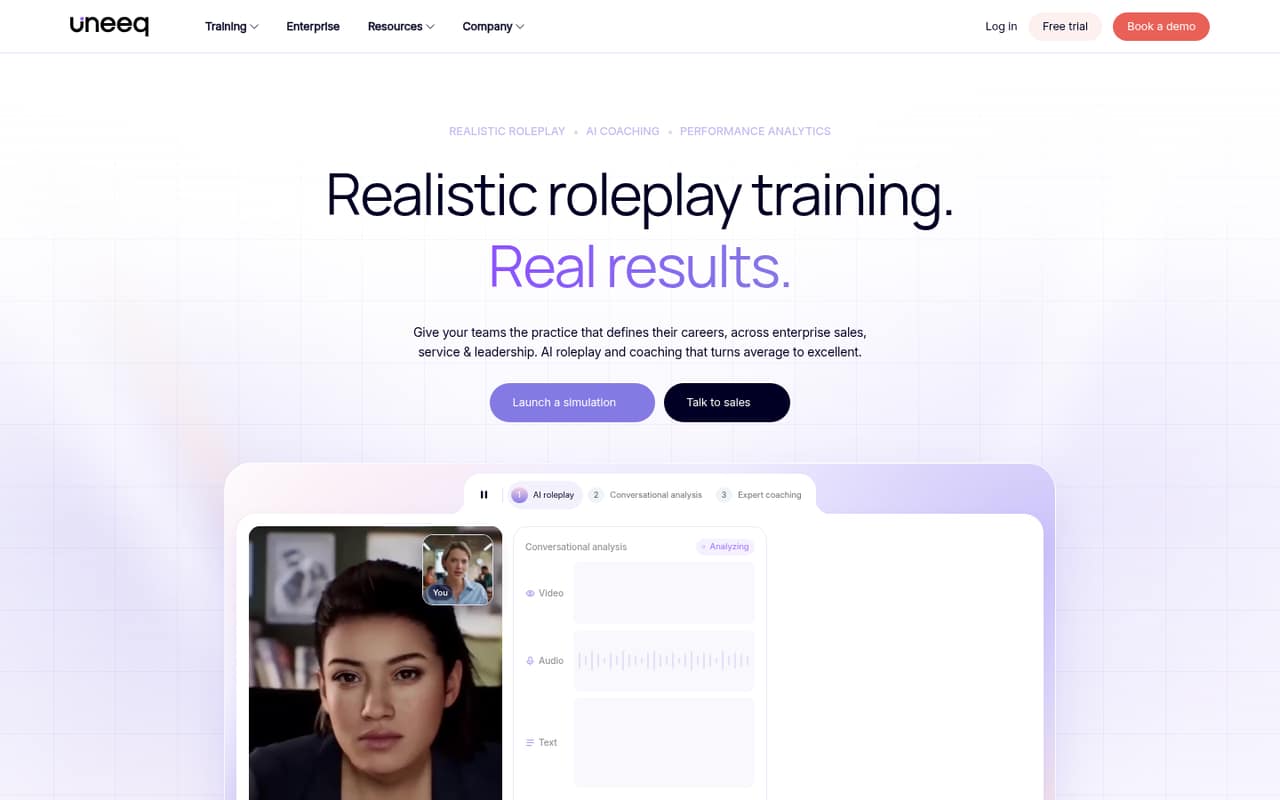
FaceMe helps teams practice sales, customer service, and leadership conversations with AI-powered digital humans. It can create scenarios from internal documents and gives learners coaching while leaders get performance analytics.
The catch for a budget-conscious team is the buying information: the pricing page lists no plans or starting price, and there’s no free plan listed. Ask for a quote and confirm seat costs, trial availability, and setup needs before committing.
Good fit if
- Teams training workplace conversations
- Sales and customer service coaches
- Leaders tracking learner readiness
Skip it if
- Teams needing a published price
- Buyers requiring a free plan
- Teams seeking documented setup steps
ScoresHow it rates
What works
- AI-powered practice for workplace conversations
- Supports sales, service, and leadership training
- Builds scenarios from internal documents
- Analyzes video, audio, and text
- Includes learner coaching and leader analytics
What doesn't
- No public starting price or plan list
- No free plan is listed
- Trial availability is not published
- Billing terms and add-ons are not listed
- Setup effort and integrations are not specified
01Who FaceMe is for
FaceMe is for teams that need people to practice workplace conversations, not just read a script or watch training. Its stated use cases are sales, customer service, and leadership, with AI-powered digital humans acting as conversation partners. Learners receive coaching after sessions, while leaders can use performance analytics to review readiness.
For a small team of 1–10 people, the fit depends less on headcount than on how often you train these skills. A team that runs repeatable roleplays may find value in building scenarios from its own playbooks, scripts, manuals, and other internal documents. A team with occasional training needs may struggle to justify a separate subscription, especially because the vendor doesn’t publish a starting price. Before budgeting, ask for the cost at your actual seat count and whether the quoted package includes scenario creation, analytics, and role-based access.
02FaceMe free plan and trial
FaceMe has no free plan listed, and the vendor doesn’t publish whether a free trial is available or what one would include. That leaves small teams without a public, no-cost way to check how the AI roleplays, coaching, and analytics fit their training routine.
The cheapest way in isn’t published either: there are no public plan prices or billing terms to compare. Ask FaceMe whether it offers a guided trial, a limited evaluation, or a paid pilot, and whether that option supports your team’s own documents and scenarios. Also confirm how many learners and leaders can take part. Until the vendor supplies those terms, don’t treat a trial or an entry-level package as part of the offer.
03What a small team pays for FaceMe
The pricing page lists no plan prices, per-seat rate, billing schedule, or add-ons. So we can’t calculate a reliable cost for one person, three seats, or five seats, whether you pay monthly or annually. The starting price is not published, and there’s no public per-seat maths to use for a small-team budget.
The vendor also doesn’t publish which capabilities are included in a package or sold separately. Before asking for a quote, make a short list of what you need: learner seats, leader access to analytics, role-based access, and scenario creation from internal documents. Ask whether prices change by seat count, whether there’s a minimum commitment, and whether onboarding or support carries a separate fee. Get both monthly and annual totals in writing. Without those details, a team can’t compare FaceMe’s cost with its current training budget or estimate the cost of adding learners.
04Getting started with FaceMe
FaceMe’s stated workflow centers on creating or using scenarios, having learners practice with AI digital humans, and reviewing coaching or analytics afterward. Scenario creation can draw on playbooks, scripts, manuals, and other internal documents. A practical first step is to choose one training goal and gather the material you want reflected in that scenario.
The vendor doesn’t publish a setup timeline, a step-by-step onboarding process, or a list of named integrations. We can’t say how much configuration a small team should expect or whether FaceMe connects to its existing learning tools. Before rollout, ask who builds the first scenarios, how documents are handled, what learners need to join a session, and how leaders get access to results. Confirm whether your preferred video, audio, or text workflow is supported for your use case. Treat setup effort as an open question until FaceMe explains it.
05When small teams outgrow FaceMe
There’s no published seat limit, plan ladder, or usage cap to identify a specific point when a team must upgrade. FaceMe lists role-based access for teams’ scenarios, learners, and results, but the public pricing details don’t say how that access changes as a team grows. Ask the vendor to explain any limits before you build a training program around it.
A team may also outgrow the buying information before it outgrows the product. If you need predictable per-seat costs, a published annual budget, or known integration and onboarding requirements, request those details in writing before expanding. For a growing group, check the price at the next likely seat count and whether added leaders, scenarios, or analytics affect the quote. FaceMe could remain a fit if the vendor’s terms match your needs; without those terms, we can’t say when growth will trigger an upgrade or make a move necessary.
Questions people ask
Does FaceMe have a free plan?
FaceMe has no free plan listed. The vendor also doesn’t publish whether a free trial is available or what it would include. If you want to evaluate it without a full commitment, ask whether FaceMe offers a guided trial or paid pilot, and confirm the number of learners and scenarios it covers.
How much does FaceMe cost?
FaceMe’s starting price, plan prices, and billing terms aren’t published. That means we can’t give a reliable cost for one seat or a small team. Ask the vendor for monthly and annual totals at your seat count, plus any minimum commitment, onboarding fee, or separately priced features.
What can teams use FaceMe for?
FaceMe is presented for sales, customer service, and leadership training. Learners practice workplace conversations with AI-powered digital humans and receive coaching after sessions. Leaders can review performance analytics and learner readiness. Ask FaceMe which scenarios and coaching capabilities are included in the package it quotes.
Can FaceMe create roleplays from our training documents?
FaceMe’s scenario creation can use playbooks, scripts, manuals, and other internal documents. The public details don’t specify the document formats, preparation steps, or how much setup is required. Ask the vendor what materials it accepts and who is responsible for turning them into scenarios.
Does FaceMe include analytics and role-based access?
FaceMe lists performance analytics for leaders, including scores and learner-readiness information, along with role-based access to teams’ scenarios, learners, and results. The vendor doesn’t publish the detailed permission options or package limits, so confirm which people can see and manage each item before rollout.