
We may earn a commission if you buy through links on this page. It never changes a score or a ranking. How we make money
The bottom line
Keyfactor covers machine identity and cryptography, but custom pricing makes small-team budgeting difficult.
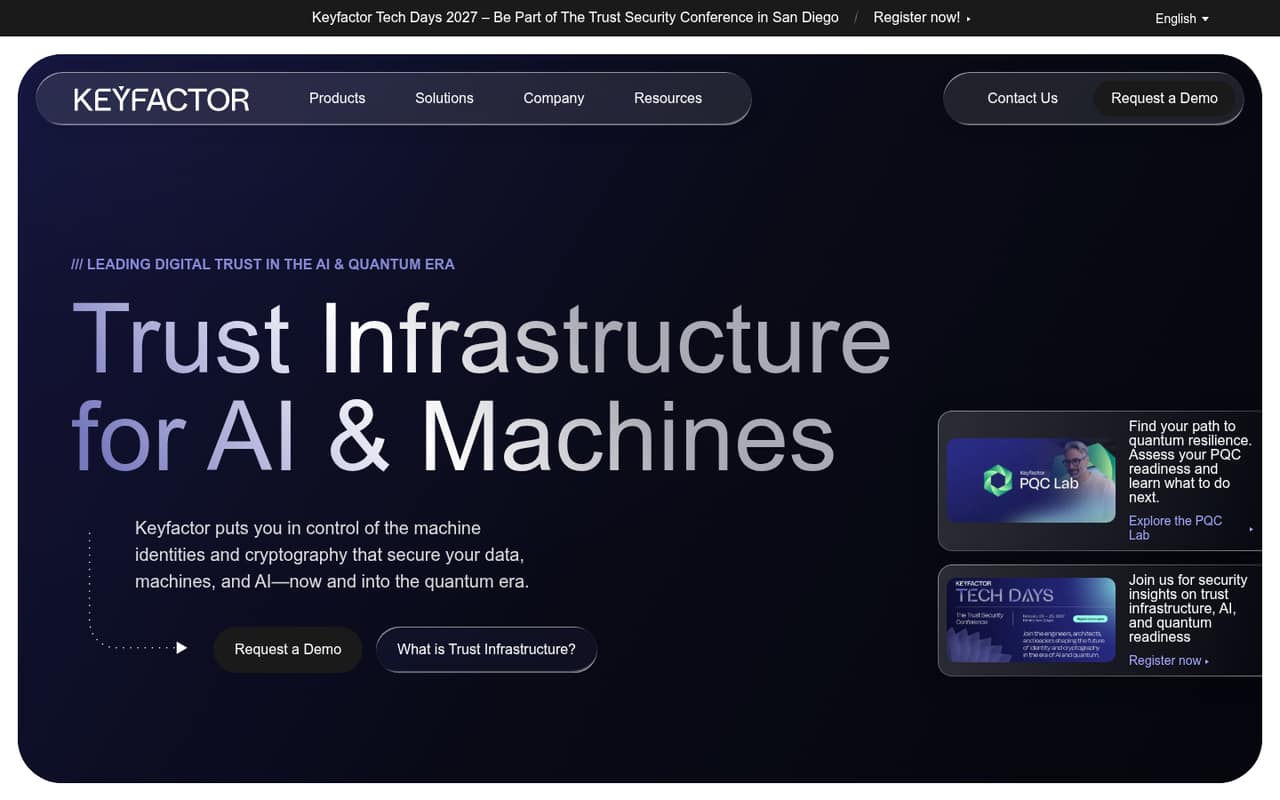
Keyfactor helps organizations discover cryptographic assets, issue machine identities, automate certificate lifecycles, and prepare for post-quantum cryptography. It addresses a specialized security job rather than everyday employee sign-in or basic access management.
There’s no listed free plan, and pricing is customized around certificate volume, deployment architecture, and environment scale. For a small team, the main drawback is that neither a starting price nor per-seat costs are published.
Good fit if
- Teams managing machine identities
- Organizations with enterprise PKI needs
- Security teams planning post-quantum readiness
Skip it if
- Teams seeking a free identity tool
- Buyers needing published seat pricing
- Small teams with basic sign-in needs
ScoresHow it rates
What works
- Discovers cryptographic assets and flags vulnerable or out-of-policy items
- Issues identities for machines, workloads, and AI agents
- Automates certificate lifecycles to reduce manual work
- Includes code-signing and cryptographic risk capabilities
- Addresses post-quantum cryptography readiness
What doesn't
- No free plan is listed
- Trial availability is not published
- Pricing requires a custom quote
- Seat and usage limits are not published
- Setup requirements and integrations need vendor confirmation
01Who Keyfactor is for
Keyfactor is aimed at organizations with a real machine-identity and cryptography workload: security or infrastructure teams responsible for certificates, PKI, code signing, and cryptographic risk. Its platform is described as covering machines, workloads, and AI agents, so the fit depends more on the complexity of your environment than on headcount alone.
For a small team of one to ten, this makes sense when managing machine identities and certificates is a core security job and you can justify an enterprise-oriented tool. It is probably too much if you only need employee sign-in or a basic password manager. The budget fit is also hard to assess before contacting sales: available pricing information says quotes depend on certificate volume, deployment architecture, and environment scale, while seat and usage limits aren't published. We’d ask for a quote based on your actual certificate inventory and growth plans before treating it as a shortlist pick.
02Keyfactor free plan and trial
Keyfactor does not list a free plan. Trial availability is not published, so ask the vendor whether it offers an evaluation and what that includes before planning a rollout. There is no published free tier to use as a low-risk starting point for a one-person team or a small proof of concept.
The cheapest way in is a custom quote for the Enterprise offering, described for organizations needing enterprise PKI. The available pricing information says the quote depends on certificate volume, deployment architecture, and environment scale; it does not give a minimum contract, price, or seat limit. Ask sales to price a narrow initial scope as well as your likely growth needs, and confirm whether evaluation access, onboarding, or support changes the quote.
03What a small team pays for Keyfactor
Available pricing information lists Enterprise as a custom quote, with pricing based on certificate volume, deployment architecture, and environment scale. It does not publish monthly or annual rates, a starting price, or seat and usage limits. That means we can’t calculate a reliable cost for one person, three people, or five people—or compare monthly billing with an annual commitment. This is not published per-seat pricing, so don’t assume adding seats is the main driver of your quote.
No add-ons are listed in the available pricing information. That doesn’t confirm that every capability or service is included in a quote. For a small team, ask for the total cost for your planned certificate volume and deployment, whether the quote changes with more users or environments, and what support and onboarding include. Request separate pricing for a one-person evaluation and a three- or five-person rollout. Until the vendor provides those figures, a few-seat budget comparison is not possible.
04Getting started with Keyfactor
Keyfactor's overview describes a platform for discovering cryptographic assets, issuing machine identities, automating certificate lifecycles, and managing cryptographic risk. That scope suggests setup may involve more than creating user accounts: a team will need to understand its certificate environment and decide what systems and workloads to bring under management. The vendor does not publish a setup timeline or a small-team implementation checklist in the available details, so treat effort as something to confirm rather than assume.
Integration names and day-one requirements are not published on the vendor's site. Before signing, ask which systems your team can connect, what access or infrastructure setup is needed, and whether onboarding help is included in the quote. Also ask who needs training to manage certificates and policy changes. For a lean team without a dedicated PKI owner, those answers could matter as much as the license price.
05When small teams outgrow Keyfactor
Keyfactor is already positioned for organizations with enterprise PKI needs, so the bigger risk for a small team may be buying more platform than it can staff—not hitting a published seat cap. The vendor does not publish seat or usage limits, and the quote depends on certificate volume, deployment architecture, and environment scale. Ask how those factors change as your certificate inventory and environment grow.
A team may also need to reconsider fit if its needs are limited to basic employee access rather than machine identities and cryptography. Conversely, if its environment grows more complex, confirm that the quoted scope covers additional machines, workloads, code-signing needs, and post-quantum readiness. The available details don’t identify a specific upgrade threshold or migration path, so get those terms in writing before committing. Without a public price ladder, budget planning gets harder as the team expands.
Questions people ask
Does Keyfactor have a free plan?
Keyfactor does not list a free plan. If your team needs a low-cost evaluation, ask the vendor whether trial access is available and what it covers. The listed Enterprise offering is custom-priced, so a small team should confirm evaluation costs and any minimum commitment before planning a pilot.
How much does Keyfactor cost?
Keyfactor’s Enterprise offering is listed as a custom quote, not a published monthly or annual price. Available pricing information says the quote depends on certificate volume, deployment architecture, and environment scale. The vendor does not publish a starting price or seat and usage limits, so ask for a quote based on your deployment.
What does Keyfactor do?
Keyfactor provides tools for managing machine identities and cryptography. Its described capabilities include discovering cryptographic assets, issuing identities for machines, workloads, and AI agents, automating certificate lifecycles, code signing, cryptographic risk management, and preparation for post-quantum cryptography.
Is Keyfactor suitable for a small team?
It can fit a small team if managing machine identities, certificates, or PKI is a core security need and the team can justify a custom quote. It may be more than a team needs for basic employee sign-in. Since prices and seat limits aren't published, ask for a scoped quote before deciding.
Does Keyfactor offer a free trial?
Trial availability is not published in the available pricing details. Contact Keyfactor to ask whether evaluation access is available, what features and usage it includes, and whether onboarding or support carries a separate cost. Don’t plan a free proof of concept until the vendor confirms the terms.