
We may earn a commission if you buy through links on this page. It never changes a score or a ranking. How we make money
The bottom line
Free to self-host, but the real cost is the technical time needed to run it.
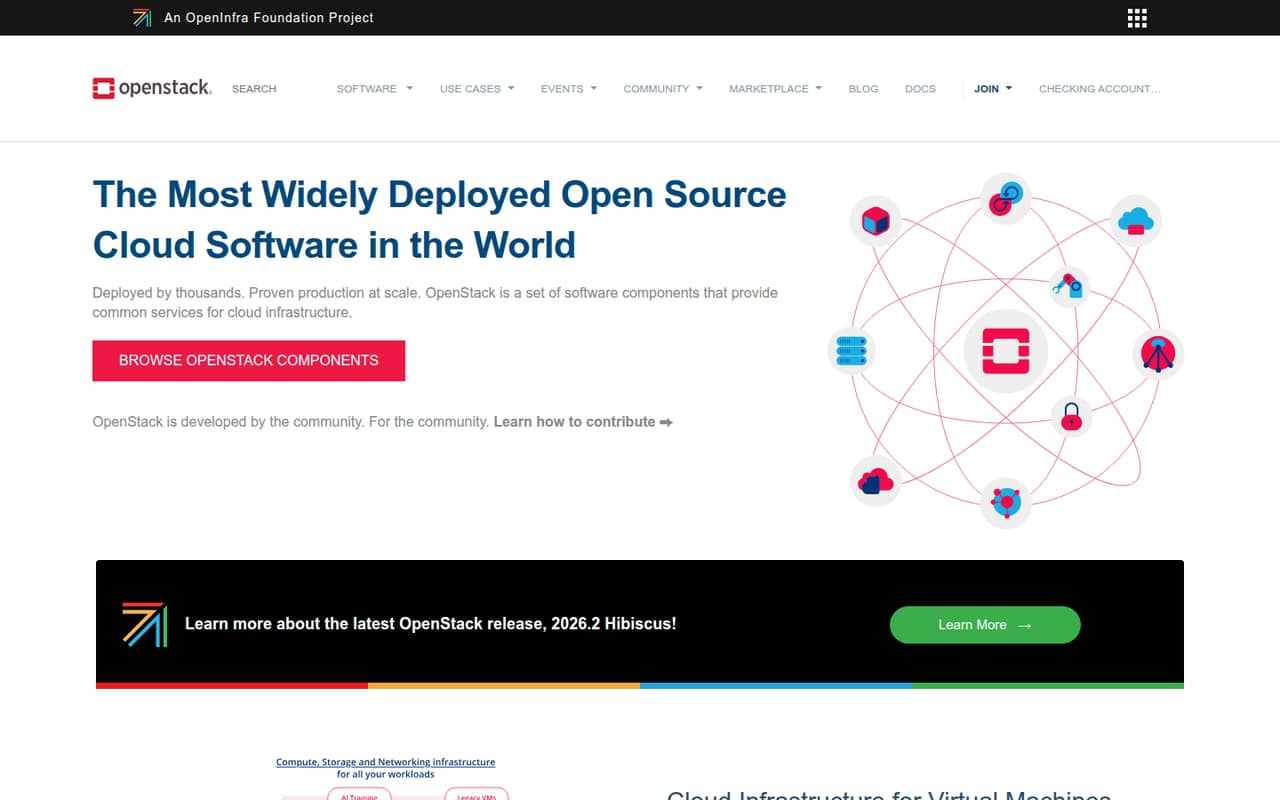
OpenStack manages compute, storage and networking through APIs or a dashboard, and can run on-premises, in public clouds or at the edge. Its core software is free to download and self-host, but paid plans and per-seat prices are not published.
For a small team, the price is only part of the decision: Reddit users describe a steep learning curve and ongoing debugging. Choose it when you need to operate cloud infrastructure and have people to maintain it, not just because the software is free.
Good fit if
- Teams building a private cloud
- Infrastructure specialists with maintenance time
- Organizations needing flexible deployment settings
Skip it if
- Small teams wanting managed infrastructure
- Teams without cloud operations skills
- A single database or server task
ScoresHow it rates
What works
- Core software is free to download and self-host
- Manages compute, storage and networking resources
- Offers APIs and a dashboard
- Supports on-premises, public cloud and edge deployments
- Additional components provide orchestration
What doesn't
- Setup and maintenance can demand substantial technical time
- Paid support and plan pricing are not published
- No per-seat pricing is published
- May be more infrastructure than a small operation needs
- Reddit users report a challenging learning curve
01Who OpenStack is for
OpenStack is for teams that need to manage cloud infrastructure, rather than simply rent a server or deploy an app. It brings compute, storage and networking resources together, with management through APIs or a dashboard. Additional components can provide orchestration beyond standard infrastructure-as-a-service functions.
For a team of 1–10, the best fit is usually a group that already has infrastructure expertise and a clear reason to operate its own cloud. OpenStack can run on-premises, in public clouds or at the edge, so it suits organizations with specific deployment needs. The core software is free to download and self-host, but that does not make it a low-effort option: your team still needs to set up and maintain the infrastructure. If you need only a database or a few servers, Reddit commenters warn that OpenStack may be more overhead than the job requires.
02OpenStack free plan and trial
OpenStack has no conventional free plan or time-limited trial in the available pricing information. Instead, its core software is free to download and self-host. That gives a technical team a way to use the software without a subscription price, but the information does not list a hosted tier, free usage allowance, trial duration or included support.
The cheapest way in is to download and run the core software yourself. You will need to provide and manage the infrastructure it runs on; the vendor does not publish a monthly or annual subscription price for that work. Treat “free” as the software cost, not the full cost of operating a cloud. Before committing, decide who will handle setup, configuration and ongoing maintenance, and ask the vendor or a provider about support and services if you need them.
03What a small team pays for OpenStack
OpenStack does not have published per-seat prices or monthly and annual plans. The core software is free to download and self-host, so the listed software cost is $0 for one person, three people or five people. Those totals do not include the cost of running infrastructure or staff time, and there is no published paid-plan price to use for a fuller total-cost calculation.
The available pricing information does not list paid add-ons, support fees or other charges. That means we can’t give a reliable all-in figure for a small team, or calculate a monthly-versus-annual discount. OpenStack is not priced like a typical team app: adding seats does not come with a published per-user bill, but more people do not remove the work of operating the cloud. If your team needs commercial support or a managed deployment, ask the vendor or provider for a quote and confirm what is included before budgeting.
04Getting started with OpenStack
Expect a technical setup, not a quick account signup. OpenStack manages pools of compute, storage and networking resources, so a team needs to plan those resources and configure how they will be managed. It offers APIs and a dashboard, but the available information does not specify a setup time or list integrations a small team must add on day one.
Reddit accounts point to a learning curve. One commenter said they were initially unable to install it, then got a working node after reading several blogs; another said debugging can take substantial time. Other commenters mention deployment approaches and tools, but those are community recommendations, not a guarantee of easy setup. Before starting, identify who will own installation, configuration and ongoing operations. A small team without cloud infrastructure experience should budget for help or training rather than assume the free software will be simple to run.
05When small teams outgrow OpenStack
OpenStack’s main pressure point for a small team is not a published seat limit or an upgrade threshold; those are not listed. The issue is whether the team can keep operating the infrastructure as its needs grow. More resources and deployment needs can mean more configuration and maintenance, while paid support and managed service prices are not published. Ask providers what support, operations and scaling help they offer before relying on OpenStack for a growing workload.
Reddit users describe both sides: some argue a small, capable team can run it, while others warn that debugging and maintenance can consume substantial time. One private-cloud discussion recommends deployment help for people who do not want to spend their time supporting the cloud. Another thread calls OpenStack excessive for a database-focused use case. Consider a simpler infrastructure approach or a managed service when the team lacks an owner for cloud operations, or when maintaining the platform distracts from the work it is meant to support.
From the threadsWhat users say
Reddit sentiment is mixed: users value OpenStack for building private cloud infrastructure, while several warn that setup and maintenance can take serious time. Some describe it as manageable with the right skills; others say it can become a full-time support burden.
Unless you're starting a cloud provider service, OpenStack is overkill
All your time will be sucked away debugging it in the long run
The idea that OpenStack is so overly complex and bloated that it takes a massive team of engineers is simply not true
It was a challenging experience but I would say I have learnt a lot from it
Questions people ask
What is OpenStack?
OpenStack is open-source software for managing cloud infrastructure. It brings together services for managing compute, storage and networking resources, which teams can control through APIs or a dashboard. It can run on-premises, in public clouds or at the edge, and additional components provide orchestration.
Is OpenStack free?
The core software is free to download and self-host. The vendor does not publish monthly or annual subscription prices in the available pricing information. Free software does not mean the infrastructure or the staff time to install and maintain it are free, so budget for those separately.
Can a small team run OpenStack?
A small team can run OpenStack if it has the infrastructure skills and time to operate it. Reddit users disagree on how much effort that takes: some describe it as manageable with the right expertise, while others report a steep learning curve and substantial debugging. Plan for a clear operational owner.
What does OpenStack manage?
OpenStack manages pools of compute, storage and networking resources for cloud infrastructure. Teams can manage resources through APIs or a dashboard. Additional components can provide orchestration beyond standard infrastructure-as-a-service functionality. The exact components a team needs depend on its deployment and requirements.
Does OpenStack have a hosted plan or paid support?
The available pricing information does not list a hosted plan, paid support tier or prices for either. The core software is free to download and self-host. If your team needs a managed deployment or commercial support, ask the vendor or a provider for current availability, scope and a quote.