We may earn a commission if you buy through links on this page. It never changes a score or a ranking. How we make money
Most teams of 1–10 need a way to spot problems in apps or infrastructure, but not every team needs a full observability suite. If your main concern is website availability, a simpler uptime monitor may be enough; if you can run and maintain software, free self-hosted tools can keep subscription costs down. Paid entry prices are not always the bill for a few people: data use, plan limits, or seat costs can change the total. Our picks favor useful free starts, clear small-team fit, and costs worth checking before you commit.
Quick picksThe shortlist
 PrometheusPrometheusBest free infrastructure · Free
 GrafanaGrafanaBest free starting point · $19/mo
 ZabbixZabbixBest free self-hosting · Free
 Scout APMScout APMBest for app monitoring · $19/mo
 New RelicNew RelicBest broad observability · $10/mo
 CheckmkCheckmkBest for host monitoring · Free
 UptimeRobotUptimeRobotBest for website uptime · €9/mo
 HoneycombHoneycombBest for production tracing · $150/mo
 PagerDutyPagerDutyBest for on-call response · $21/mo
01Compared at a glance
| Tool | Score | From | Free plan | Trial |
|---|---|---|---|---|
| PrometheusPrometheus | 8.0 | Free | Yes | — |
| GrafanaGrafana | 7.4 | $19/mo | Yes | — |
| ZabbixZabbix | 7.8 | Free | Yes | — |
| Scout APMScout APM | 7.2 | $19/mo | Yes | 14 days |
| New RelicNew Relic | 7.2 | $10/mo | Yes | — |
| CheckmkCheckmk | 7.2 | Free | Yes | — |
| UptimeRobotUptimeRobot | 7.2 | €9/mo | Yes | — |
| HoneycombHoneycomb | 7.3 | $150/mo | Yes | — |
| PagerDutyPagerDuty | 7.0 | $21/mo | Yes | — |
02The picks, in detail
- Best free infrastructurePrometheusPrometheus
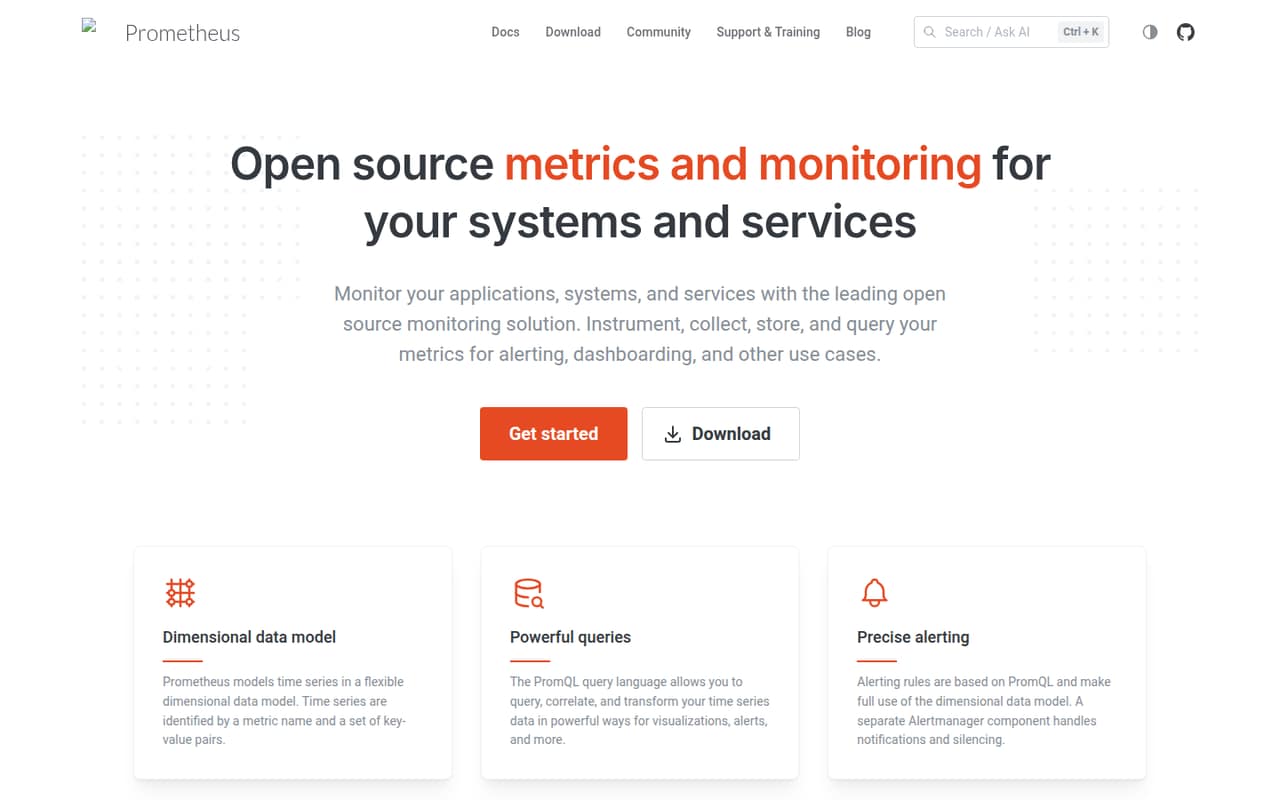
Prometheus has a $0 starting cost and avoids seat-based fees, which suits technical teams watching every subscription. The trade-off is operating and querying it yourself: it fits best when someone on the team has the skills to instrument services and maintain the setup. Choose it for control and low software cost, not for a hands-off start.
What works
- Open source and free to use
- No seat or usage limits imposed
- PromQL queries and alerting rules
What doesn't
- Setup requires technical ownership
- PromQL adds a learning curve
- Servers rely on local storage
- Best free starting pointGrafanaGrafana
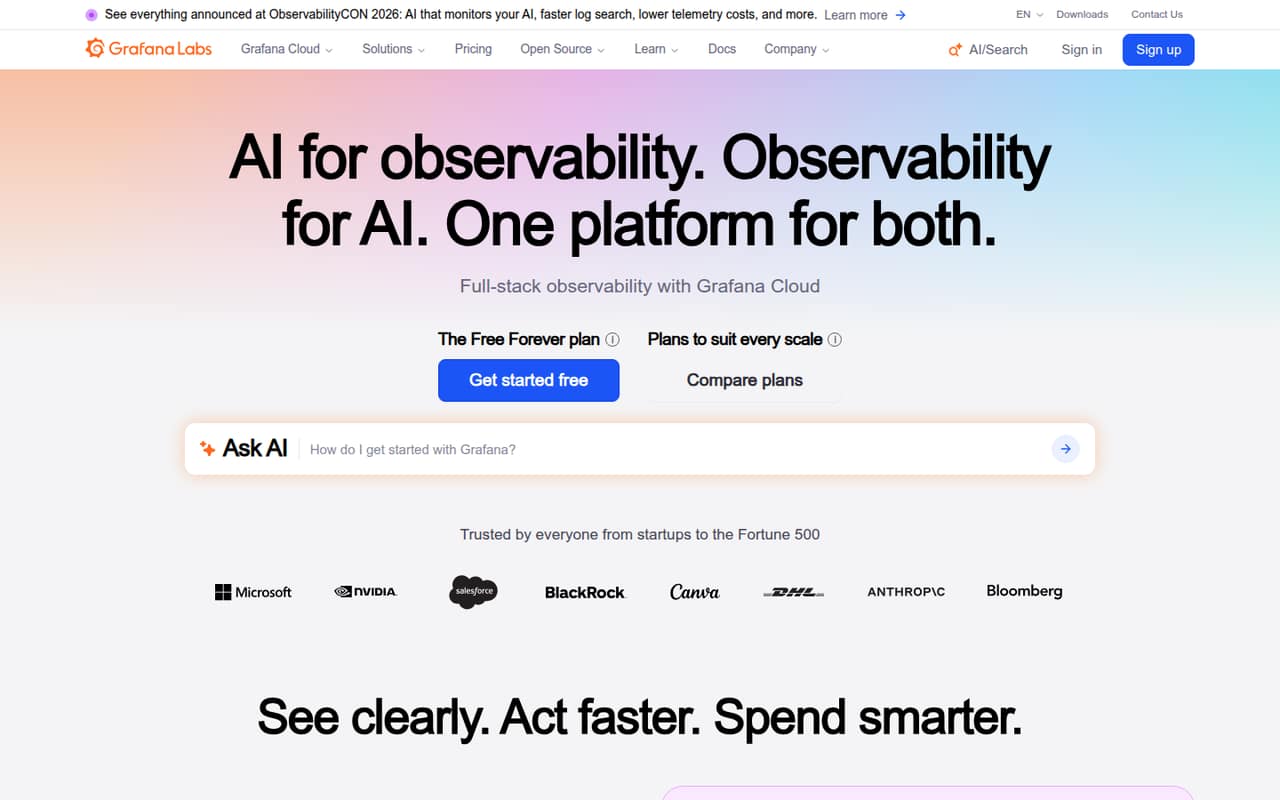
Grafana offers a free tier and brings several telemetry signals together, making it a flexible starting point for a small team. Its listed paid starting price is $19, but usage costs are worth watching, and dashboard setup has a learning curve. It suits teams willing to configure their own views rather than expecting a ready-made setup.
What works
- Free plan includes 14-day telemetry retention
- Free plan includes 10k active metric series
- Brings metrics, logs, traces, and profiles together
What doesn't
- Pro costs $19 monthly before usage charges
- No annual Pro price is published
- Enterprise requires a $25,000 annual commit
- Best free self-hostingZabbixZabbix
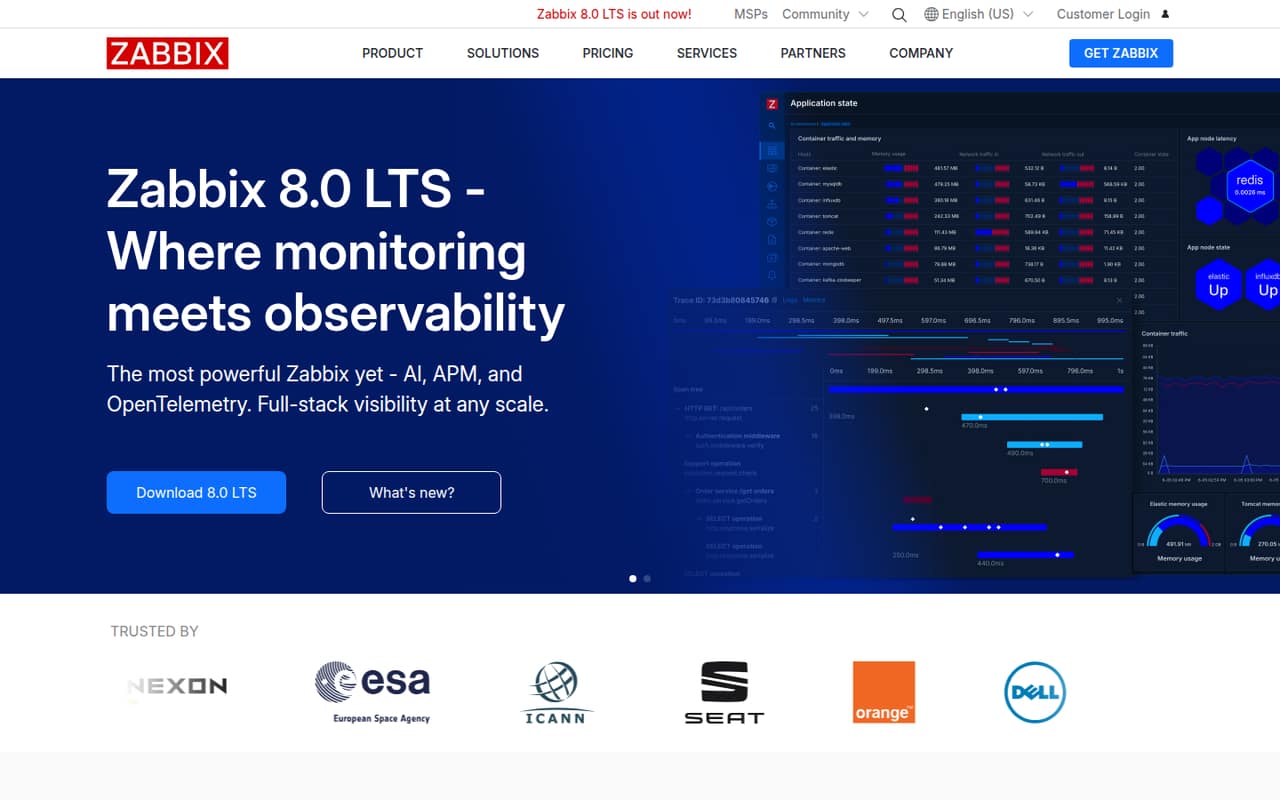
Zabbix provides broad infrastructure monitoring for $0, with self-hosting and upkeep as the price of avoiding a subscription. It’s a good fit for budget-conscious teams that are comfortable running monitoring software themselves, including teams watching multiple environments. If nobody can own configuration and maintenance, the low software cost may not mean low effort.
What works
- Self-hosted option lists a $0 price
- Unlimited hosts, users, metrics, and alerts listed
- No feature gates listed for the free option
What doesn't
- Setup and tuning can take time
- Alerts may be noisy before tuning
- Managed-cloud pricing is not published
- Best for app monitoringScout APMScout APM
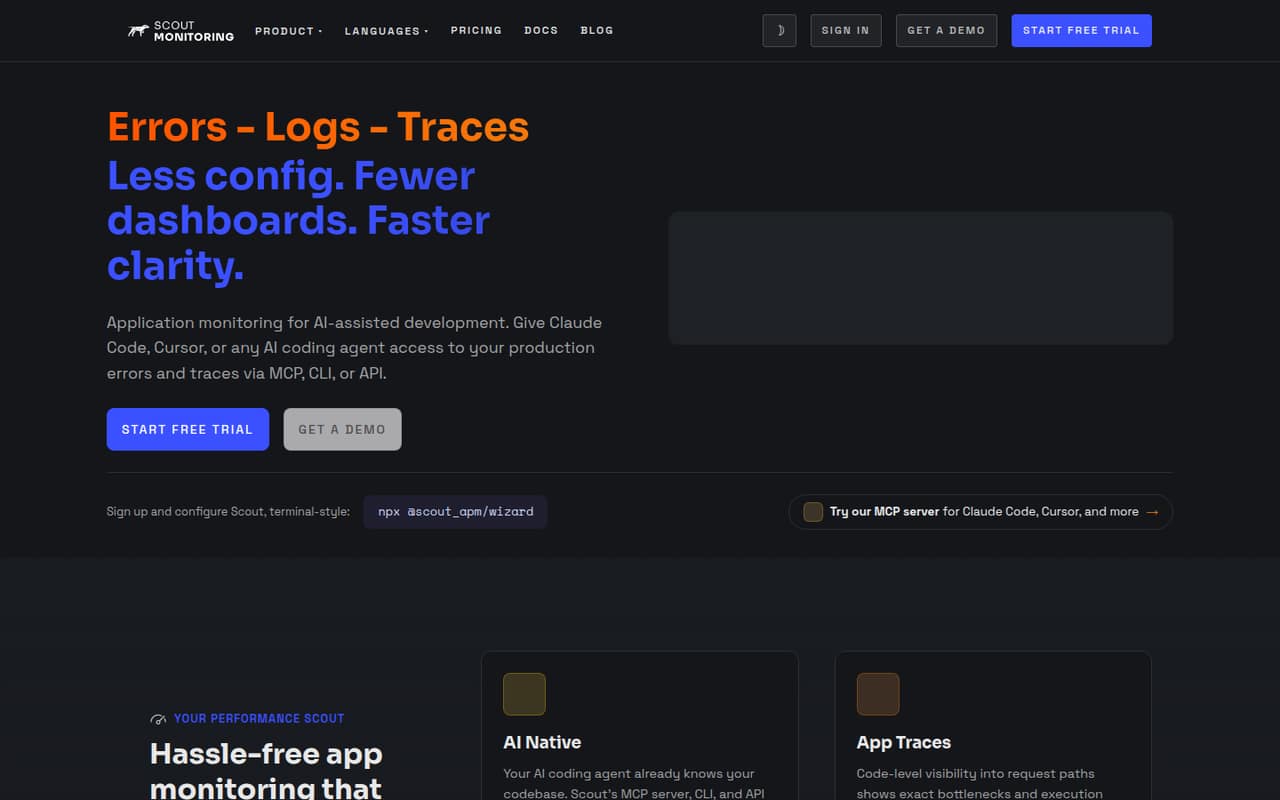
Scout APM is aimed at small teams monitoring production apps, and its free plan gives teams a way to start without paying upfront. The listed starting price is $19. Its transaction and log limits matter: check whether your workload fits before building around it, and confirm the paid cost for your team and expected usage.
What works
- Free plan includes unlimited users and apps
- Free tier includes 300,000 monthly transactions
- Combines errors, logs, traces and performance data
What doesn't
- Free plan caps logs at 1 GB
- Free plan monitors one anomaly endpoint
- Most plans include only 5,000 errors
- Best broad observabilityNew RelicNew Relic
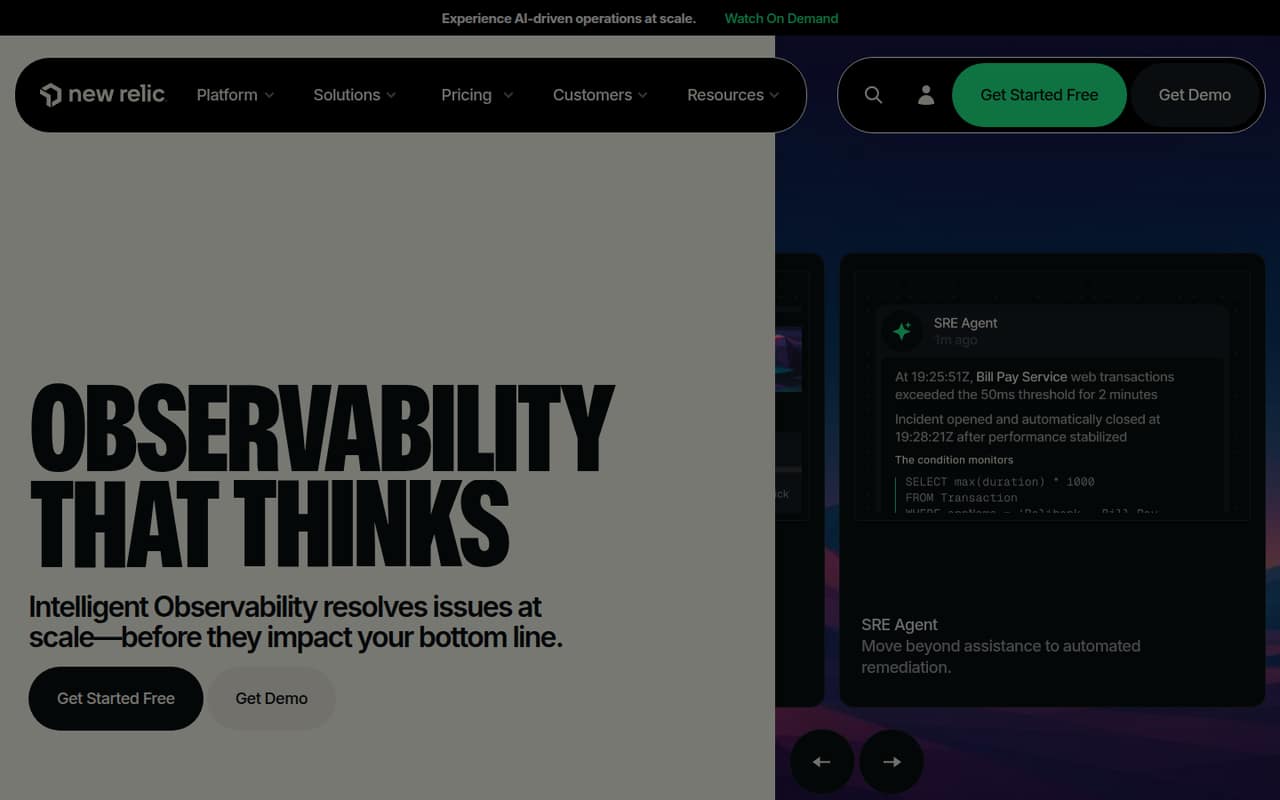
New Relic offers a free plan and broad observability features for teams investigating application incidents or centralizing monitoring. The listed starting price is $10, but the cost of seats and data should be checked before committing. It’s a useful shortlist option if you want broad coverage; ask for a realistic estimate based on your team and expected use.
What works
- Free plan includes 100 GB of monthly ingest
- Unlimited basic users on the Free plan
- Combines application and infrastructure monitoring
What doesn't
- Standard additional full-platform users cost $99 each
- Standard full-platform seats are capped at five
- Data ingest above the allowance is billable
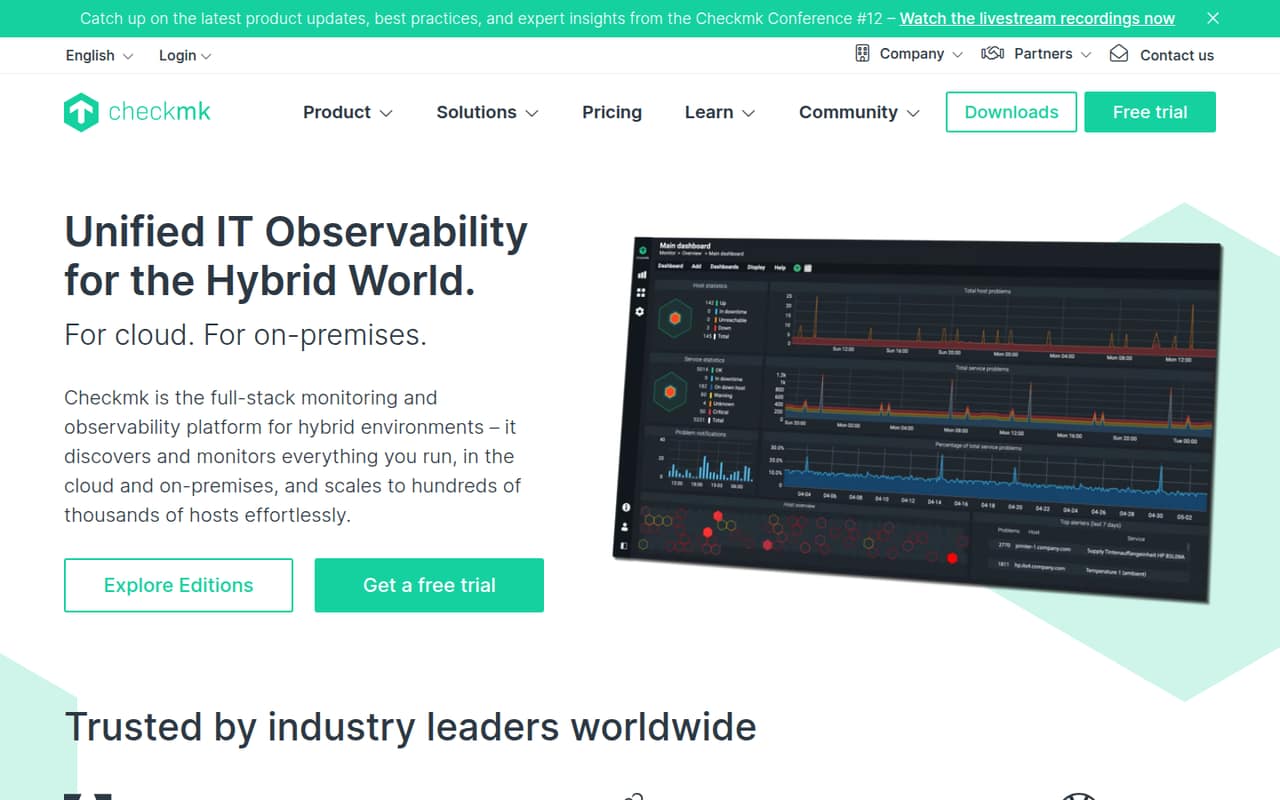
- Best for host monitoringCheckmkCheckmk
Checkmk has a free plan that covers monitoring up to 100 hosts, making it a practical infrastructure option for a small team. It can handle mixed on-premises and cloud environments, but admins need to be comfortable tuning monitoring rules. Check the setup work and paid options against your environment before treating the free limit as the whole cost.
What works
- Free Community plan covers up to about 100 hosts
- More than 2,000 integrations listed
- Monitors cloud and on-premises environments
What doesn't
- Paid plans start at €190/month, billed annually
- Users report a learning curve and configuration work
- Some users find the interface unintuitive
- Best for website uptimeUptimeRobotUptimeRobot
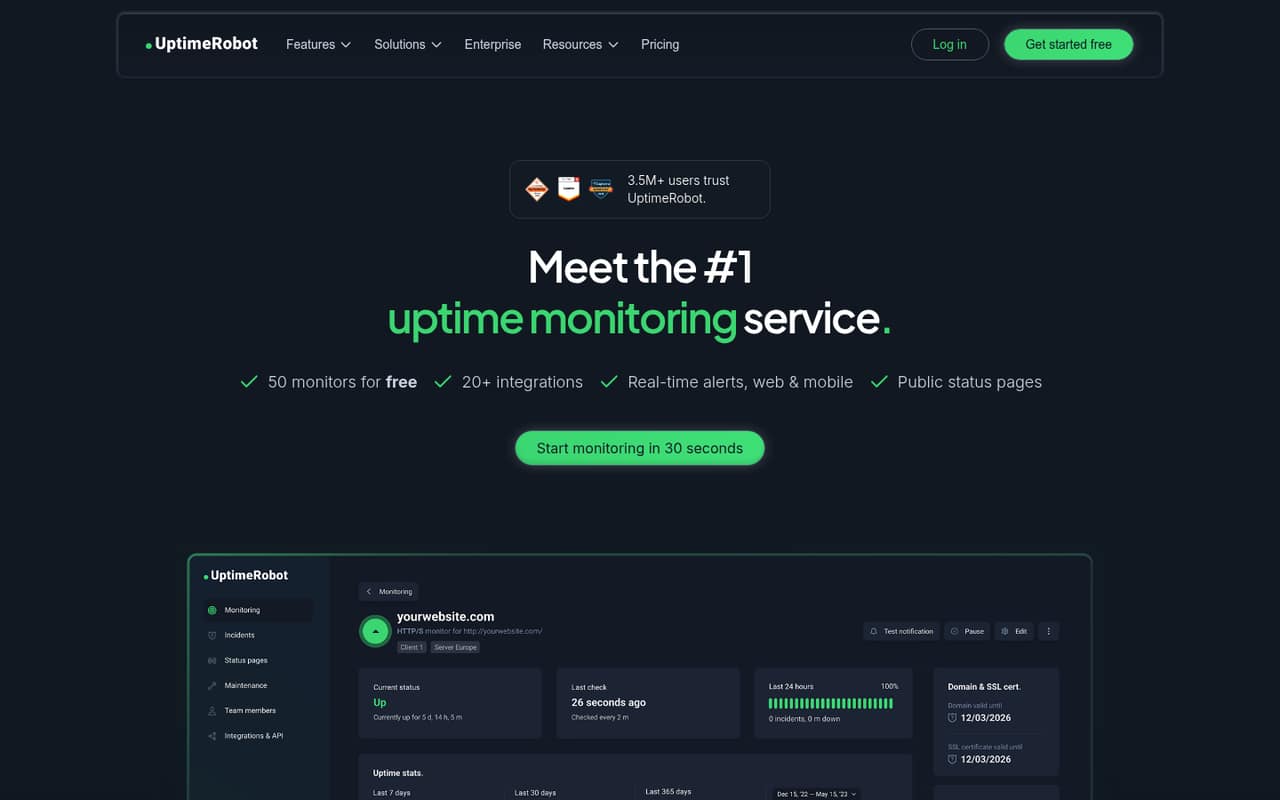
UptimeRobot suits small teams that mainly need to monitor public websites or a few endpoints, and it has a free plan. The listed paid starting price is $9. Its paid option can include shareable status pages, but check the plan’s alerting details and how costs apply to your team before upgrading.
What works
- Free plan includes 50 monitors
- Supports HTTP(S), ping, ports, DNS, and cron
- Monitors SSL certificates and response times
What doesn't
- Free checks run only every five minutes
- Team includes just three seats
- Extra login seat prices are unclear
- Best for production tracingHoneycombHoneycomb
Honeycomb focuses on tracing distributed production services and investigating high-cardinality data. A free tier lets a small team try its observability workflow, while the listed Pro starting price is $150 and pricing is event-based. That makes expected event volume an important budget question. It’s a better fit when tracing is a real need than when basic uptime checks would do.
What works
- Free plan includes distributed tracing and BubbleUp
- Free tier allows up to 20 million events monthly
- Pro includes SSO and Honeycomb Support
What doesn't
- Free plan has only two triggers
- Pro's annual price is not published
- Pro cost above its starting tier is unclear
- Best for on-call responsePagerDutyPagerDuty
PagerDuty is a strong fit when your team needs on-call rotations, escalation policies, or automated incident response. Its free plan supports a small on-call setup, and the listed paid starting price is $21. Treat it as a response tool that can complement monitoring, and confirm what the plan covers for your responders before expanding.
What works
- Free plan includes five users
- Includes an on-call schedule and escalation policy
- Professional includes post-incident reviews
What doesn't
- Free plan allows only one schedule
- Free plan caps monthly phone and SMS notifications
- Professional costs more for each added user

03How we chose
We prioritized products with a free plan or a low listed starting price, then weighed whether the stated use case fits a team of 1–10 and what setup work it asks of them. We also considered plan limits and the possibility that data use or seat costs could raise the bill. Vendor documentation and Reddit reports are useful checks for setup friction and billing surprises; confirm those details for your own workload rather than relying on a starting price alone.
04Choose the smallest tool that answers your questions
Start with the problem you need to catch. If you only need to know whether public websites are reachable, UptimeRobot may be a more direct fit than a broad observability platform. If you need to investigate production application behavior, compare Scout APM, New Relic, and Honeycomb. For infrastructure, consider Prometheus, Zabbix, Grafana, or Checkmk, keeping the setup effort in view.
Free does not always mean easy. Prometheus and Zabbix keep software costs at $0, but require your team to run and maintain them. Grafana has a free tier but a learning curve. Checkmk’s free plan covers up to 100 hosts, with monitoring-rule tuning to account for. Before choosing, ask who will configure alerts, review them, and keep the system working.
05Work out the bill before adding your team
A listed starting price is a comparison point, not necessarily the total for your team. Before paying, ask whether the price changes with seats, data, events, transactions, logs, or monitored hosts. New Relic specifically warrants a check on seat and data costs; Honeycomb uses event-based Pro pricing, and Scout APM has transaction and log limits. Grafana’s usage costs are also worth watching.
Ask the vendor for a cost estimate using your expected usage and number of responders. Confirm what the free plan includes, what happens when you hit a limit, and whether the paid plan is billed monthly or requires a commitment. If your needs are mainly incident coordination, PagerDuty may complement a monitoring tool rather than replace it. Revisit the choice when your team or workload grows.
Questions people ask
Which observability platform is free for a small team?
Prometheus and Zabbix have $0 starting costs, but your team handles running and maintaining them. Grafana, Scout APM, New Relic, Checkmk, UptimeRobot, Honeycomb, and PagerDuty also list free plans or tiers. Check each plan’s limits against your actual use.
What does observability cost for a team of five?
A total for five people isn’t published for these tools. Starting prices include $9 for UptimeRobot, $10 for New Relic, and $19 for Grafana and Scout APM, but seat or usage costs may affect the bill. Ask vendors for a team-specific estimate.
Is self-hosted monitoring worth it for a small team?
It can be, if your team has the skills and time to operate the software. Prometheus and Zabbix have $0 starting costs, but both put setup and upkeep on your team. Compare that effort with the cost of a hosted plan.
Do we need PagerDuty as well as monitoring software?
PagerDuty is aimed at on-call rotations, escalation policies, and incident response. If your monitoring tool does not cover the response workflow your team needs, it may complement that tool. Check the free plan’s small-team coverage and the paid cost before adding seats.